 Follow Us on Google News
 Follow Us on Google Discover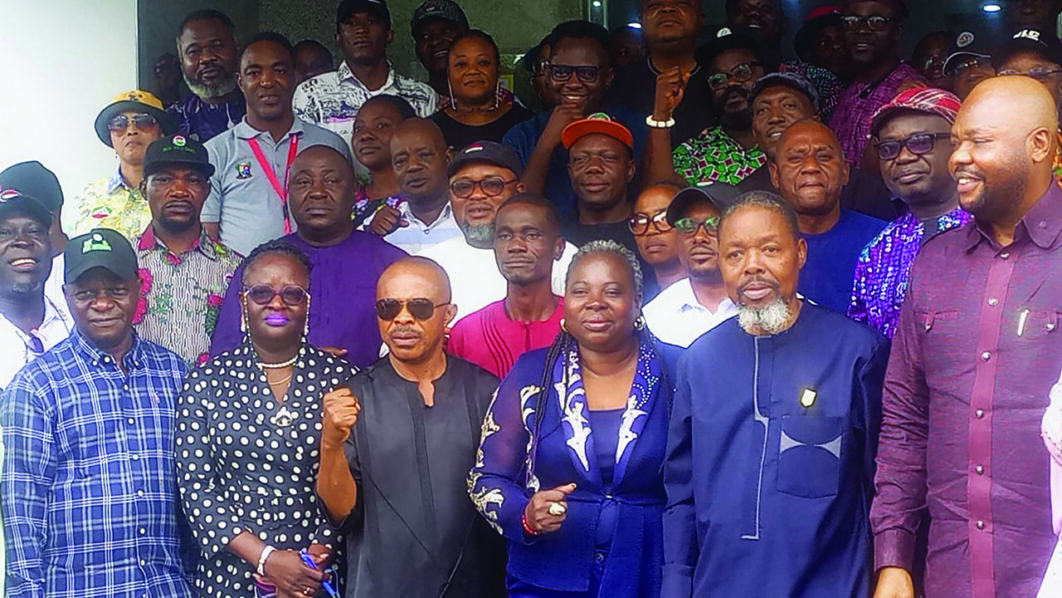
Even though the new minimum wage has legal backing that provides an implementation framework, labour has said that there is still a need to equip members across states to enhance their capacity to effectively negotiate for full implementation, ensuring fair compensation for workers and promoting economic growth, writes GLORIA NWAFOR.
[ad]
The evolution of minimum wage legislation is a testament to the ongoing struggle for economic justice, social equity, and workers’ rights. While significant progress has been made globally and in Nigeria, the challenge remains to ensure that minimum wage levels are adequate to meet the needs of workers and their families, reflecting economic realities.
Organised labour opined that as Nigeria continues to develop, the minimum wage system must remain dynamic, responsive to economic changes, and inclusive of all stakeholders.
According to labour, this will ensure that the minimum wage fulfills its role in promoting social justice, reducing poverty, and enhancing the quality of life for Nigerian workers.
This is coming with the expectations that Nigerian workers will begin to receive their new minimum wage, especially with the newly signed Memorandum of Understanding (MoU) between the government and trade union groups after agreeing on the consequential adjustments in salaries arising from the new minimum wage of N70, 000.
To ensure effective and full implementation, especially across states, the Nigeria Labour Congress (NLC) in partnership with Fredrich Ebert Stiftung (FES) and the International Labour Organisation (ILO), held a workshop on the 2024 National Minimum Wage Act for leadership of state councils in the northern and southern zones recently.
The move, the NLC said, was to ensure that the new wage is implemented in full so that its benefits reach every corner of Nigeria, from the largest cities to the smallest villages.
[ad]
According to Congress, the goal is not just to celebrate the passage of the law; it is to make sure every worker feels its impact in their daily lives.
Speaking on the theme: ‘Strategies for Effective Implementation of the 2024 National Minimum Wage Act,’ during the workshop for the Southern zone in Lagos, NLC President Joe Ajaero said the theme was designed to equip them with the tools needed to make the fight of winning a new minimum wage successfully.
According to him, the gathering is a call to action, a rallying cry for justice, fairness, and the betterment of all workers. He warned that any state council or official that was found colluding with employers, private or public, to deny workers the full benefits of the Act would be appropriately sanctioned.
“When we fight for better wages, we are not asking for charity. We are fulfilling a sacred duty—to build a vibrant economy, to uplift the nation, and to secure the dignity of work. This is a divine responsibility, one that we are bound by conscience and duty to carry out. Know that the eyes of every worker are upon us. They depend on our courage, our resolve, and our unity to carry their voices to the negotiation tables that await us.
“Yet, winning the fight for a new minimum wage is not enough. We must now ensure that it is implemented in full, so that its benefits reach every corner of Nigeria, from the largest cities to the smallest villages. If we faced such fierce opposition at the negotiation stage, then know that the road ahead will not be any easier. Be prepared for insults, threats, and attempts to blackmail you. But remember why we are here: the trust and hopes of our members rest in our hands. Their meals, their homes, and their children’s education depend on our ability to fight for them,” he said.
While the forum raised a work plan for effective implementation, it said there was a need to establish a monitoring team to track the implementation of the minimum wage across various sectors in the state, stating that if negotiations stall or if there was non-compliance, members should consider organising peaceful protests, strikes, or other forms of industrial action to pressure the state government.
While it called for a post-implementation review, it urged the state council’s leadership to conduct an impact assessment by evaluating the effectiveness of the implementation and its impact on workers’ welfare.
Making presentations on developing state-level action plans, Programme Manager, FES Nigeria Office, Remi Ihejirika, said NLC state councils might need to enhance their capacity to effectively negotiate and implement the new minimum wage
She mentioned some likelihood of threats such as employer resistance, stating that employers might resist implementing the new minimum wage, potentially leading to conflicts. She stressed how economic instability or downturns, government backtracking, and security challenges might undermine the implementation of the new minimum wage.
[ad]
However, she urged that by understanding the SWOT factors, NLC state councils could develop effective strategies to navigate challenges and capitalise on opportunities, ensuring successful implementation of the new minimum wage.
Speaking on the basic principles of negotiation, NLC’s Chris Onyeka said parties must ensure that they are faithful to every outcome of such exercise and that the principles of fairness, rightness, and ethics are all embedded in such agreements.
“Power equations should not be aggressively pursued in getting the other parties to accept agreements as that may not leave them satisfied.
“Our minds should always incline to outcomes that carry the need of the majority but also ensure the survival of the minority. It is important to stress that a negotiation is just part of the process but that when we have successfully negotiated, we should faithfully implement it to the latter to avoid the loss of confidence in the process by the parties. That is why outcomes or agreements must be clearly stated, written, and signed as appropriate.”
Similarly, Vice President of NLC, Benjamin Anthony, spoke on how trade union leaders have critical roles to play both in the setting and the implementation phase.
[ad]
Making new minimum wage work
Date: 1 October 2024 9:47am WAT
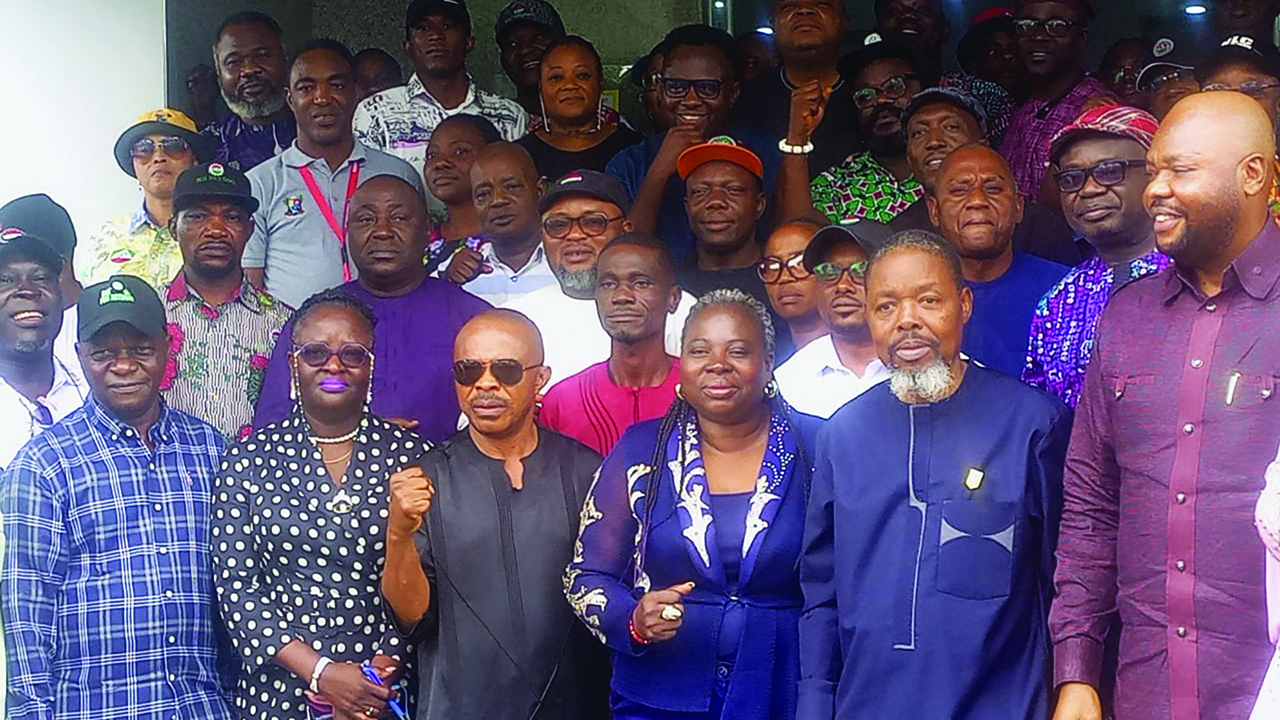
Labour leaders at the 2024 National Minimum Wage Act Workshop for Southern Zone, organised by the Nigeria Labour Congress (NLC) in partnership with Fredrich Ebert Stiftung (FES) and the International Labour Organisation (ILO) in Lagos.
Labour leaders at the 2024 National Minimum Wage Act Workshop for Southern Zone, organised by the Nigeria Labour Congress (NLC) in partnership with Fredrich Ebert Stiftung (FES) and the International Labour Organisation (ILO) in Lagos.

