 Follow Us on Google News


 Follow Us on Google Discover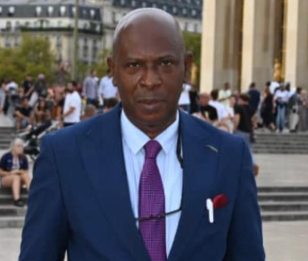
Prof. Ufuophu-Biri, Rector, Delta State Polytechnic.
A VISION LEADER MAPPING THE FUTURE OF DELTA STATE POLYTECHNIC WITH THE M O R E AGENDA.
Can we have a brief insight into your background?
Professor Ufuophu-Biri is the Rector of the Delta State Polytechnic, Otefe-Oghara. He holds a PhD in Communication Arts from the University of Ibadan, MA (Distinction) Mass Communication, University of Nigeria, Nsukka; a master’s degree in industrial and Labour Relations, Delta State University, Abraka; B. A (Hons.) Mass Communication, Delta State University, Abraka; Advanced Diploma and Ordinary Diploma in Journalism from the Nigerian Institute of Journalism, Ogba, Lagos; Certificate in Digital Humanities, Brown University, Providence, Rhode Island, USA; Certificate in TV and Film Camera Operations from the then NTA Headquarters, Victoria Island, Lagos.
He has held different appointments within and outside academic within and outside the University system. He has been Director of Academic Planning, Pre-Degree Programme, HOD of Mass Communication, and Deputy Dean of Student Affairs at Delta State University, Abraka.
During his tenure as the Head of the Department, Professor Ufuophu-Biri made significant strides. He produced the first set of first-class graduates, a total of six. He also established the M.Sc. and PhD programmes in the Department, obtained a full operational NBC License for the University radio station, and secured full accreditation for the Department. These achievements underscore his leadership and commitment to academic excellence.

Professor Ufuophu-Biri’s contributions have not gone unnoticed on the international stage. In 2009, the US Government invited him to participate in the distinguished USA International Visitors’ Leadership Programme (IVLP) as the Distinguished African Broadcasting Lecturer. He is also a pioneer Fellow of the Brown University International Advanced Research Institute (BIARI), Providence, Rhode Island, USA. His influence extends to his home country, with the Delta State University (DELSU) Senate awarding him the Most Hardworking HOD in 2017. His fight against examination malpractice was commended by the DELSU Senate and the State Government in 2005, further highlighting his unwavering commitment to academic integrity.
Professor Ufuophu-Biri has visited and presented papers in over 35 different countries across different continents. He has been a visiting lecturer and external examiner at several tertiary institutions within and outside Nigeria. As a Master of Ceremony, he hosted over 150 ceremonies within and outside Nigeria. His talent extends beyond hosting, as he is also a skilled comedian, short movie producer, and rapper. His influence in the entertainment industry is evident in the many famous comedians and actors/actresses he has mentored.
What are the tools that moulded your career choice, and how do you feel about your present designation?
The tools that moulded my career are positively interwoven. Originally and professionally, I am a journalist. I love journalism. I developed an interest in it from a young age. My love for journalism propelled me to study at the Nigerian Institute of Journalism (NIJ) Ogba, Lagos (one of the few journalism schools in West Africa till the early 1990s. That same love for journalism pushed me to do 18 months of practical training in television production at the then-NTA Headquarters, Victoria Island, Lagos.
In the quest for journalistic professionalism, I had a stint in the Daily Times of Nigeria, where I worked under the then Daily Times City Editor at Kakawa Street, Lagos Island and Onyema Ogochukwu, the then Daily Times Editor at Agidigbi. While training at NTA, I worked under prominent broadcasters such as Gold Oroh, Yusuf Jibo, Peter Igho, and John Momoh (owner of Channels TV). I remember following John Momoh to cover an assignment in Lagos. Then he said he was going to have his private television station. That was in 1992 when the ownership of broadcast stations was the right of the federal and state governments. Shortly afterwards, General Ibrahim Babangida’s regime promulgated the National Broadcasting Commission decree, which deregulated the ownership of broadcasting. And John Momoh, true to his words, became one of the first owners of private television stations in Nigeria (namely Clapper board TV at Raymond Njoku Street, Ikoyi, DBN TV, Awolowo Road Ikoyi, Galaxy TV, Ibadan and John Momoh’s Channels TV, Lagos.
I also remember John Momoh encouraging me to advance my education during the assignment. I trained under other interesting and motivating broadcasters such as Ruth Benemesia Opia, Adesua Onyenekwu, and Abike Dabiri (I followed Abike Dabiri to cover the commissioning of Chevron Headquarters, Lekki, Lagos, in the early 1990s) and Peter Igho, who was very encouraging to me. Peter Igho particularly encouraged me to study Mass Communication at the university level. Since becoming a lecturer, I have met Peter Igho several times in Abuja. On one of the occasions at Ladi Kwali Hall, then Sheraton Hotel, Abuja, during one of the Africast events organised by NBC, I testified before the capacity-filled hall how Peter Igho encouraged me to rise higher in Mass Communication and Journalism.
I look forward to meeting with John Momoh and Abike Dabiri one day. I appreciate their inspiring me to pursue journalism and mass communication to the zenith. They might have forgotten, but I remember.
Later, I studied Mass Communication at Delta State University and founded a campus newspaper called Campus Voice. After graduation, the university Management employed me as a graduate assistant, and I rose to the rank of professor of Mass Communication and Journalism. I had wonderfully talented lecturers who taught me at NIJ, Lagos; DELSU, Abraka; UNN, Nsukka; and the University of Ibadan.
I have always admired journalists and the journalism profession. All my qualifications, except a master’s in Labour and Industrial Relations and a certificate from Brown University, Providence, USA, have been in Mass Communication and Journalism.
With a high degree of modesty, I am delighted to be a journalist and teacher of Journalism and Mass Communication. I am always thrilled to see my ex-students doing well within and outside the country. Many of my graduates are prominent professional journalists in the country’s foremost print and broadcast media houses. Many are doing very well in the film and standup comedy industries.
Being a Mass Communication and Journalism teacher has taken me to different parts of the world. It has also socially and professionally networked me with distinct personalities, including country presidents, state governors, ministers, senators, academics, and other members of the top political class and captains of industries.
Teaching journalism won me the distinguished fellowship of the United States International Visitor’s Leadership Program (IVLP) in the Edward R. Murrow Program for Journalists as a Broadcast lecturer from Africa in 2009. The same year, I also did a fellowship with Brown University, Providence, Road Island, USA, under the Brown University Advanced Research Program (BIARI).
By God’s grace, I am the Rector of the Delta State Polytechnic, Otefe-Oghara. I am very fulfilled and happy with my current job. I get all the necessary support from the Delta State government, the governing council, management, staff and students of the Polytechnic and the Oghara community.
Working at Delta State Polytechnic comes with different challenges; how have you been able to tackle these challenges?
Every institution of higher learning has its own peculiar and general challenges. However, I cannot identify any specific challenge peculiar to the Delta State Polytechnic, Otefe-Oghara. Challenges generally associated with tertiary institutions of learning include dearth of infrastructure, poor management and staff union and student union relationships, student cult activities, student’ deviance and unrest, and inadequate funding.
The above challenges are relatively alien to the Delta State Polytechnic, Otefe-Oghara. The Delta state government funds the Polytechnic sufficiently, putting our staff among Nigeria’s highest-paid tertiary institution workers. Through the generosity of the state government, our students are about the lowest fee-paying students in the country, in addition to the state government bursary for the students annually. We do not suffer from the shortage of infrastructure or infrastructural decay. A cordial and functional relationship exists between the Polytechnic’s management, the governing council, staff, students and the host community. We also enjoy the full support of the state government and interventionist agencies such as TETFUND and regulatory agencies such as the National Board for Technical Education (NBTE).
We have very qualified and dedicated staff, many of whom studied in renowned universities within and outside Nigeria. The staff members are highly motivated, thus ensuring high job performance and optimal productivity. We don’t have challenges from student cult activities and unrest. In essence, we are good to go!
Therefore, I can state that, to the best of my knowledge, I do not see any peculiar challenges in the Polytechnic. We attribute this to the state government’s support, students’ high discipline, dedication and focus on study, and Oghara community’s commitment to ensuring a conducive operational environment.
How would you assess the support of the governor in terms of making provision for the institution to achieve the MORE Agenda?
To understand and appreciate the Delta State Governor, (Rt (Hon) Sheriff Oborevwori’s support for education, we have to recall that he passed the bills that established three additional state universities in the state, thus bringing the total number of state universities to four, while he was serving as the Right Honourable speaker of the Delta State House of Assembly during His Excellency Dr. Ifeanyi Arthur Okowa’s administration. He has transcended this love for education to his administration. The governor’s love and support for the Polytechnic are enormous and largely unquantifiable. The Government provided us with the needed support early this year to secure NBTE full accreditation for our 31 academic programmes. The state government always pays our salaries before the 25th of every month. The state government encourages and supports staff development through training and retraining. The Government has given full academic autonomy and freedom of initiative and development.
The State House Assembly, through its Committee on Education chaired by Hon. Charlse Emetulu, the Secretary to the Government, Dr Kingsley Emu, the State Commissioner for Higher Education, Professor Nyerhovwo Tonukari, and the staff of the Ministry, the State Accountant General, the Ministries of Economic Planning and Finance and the Head of Service, Barrister Reginand Bayoko have provided enormous support to ensure the Polytechnic’s upward developmental mobility.
The M.O.R.E. Agenda is a critical mantra in the Polytechnic. We key into every part of it. The full support the state government is giving to education, and particularly our Polytechnic, is helping to realise the M.O.R.E. Agenga significantly in different ramifications
Kindly share with us your vision for the Polytechnic. Where do you see the Polytechnic in the next 10 years from now?
My vision, and by implication, the vision of the Polytechnic’s management, is to build a world-class polytechnic that produces self-sustainable, self-reliant, highly employable, and competitively sought-after graduates who can stand tall anywhere in the world. We also want more groundbreaking research works, the outcomes of which will be helpful and lucrative to the country’s needs.
In pursuit of these goals, we have invented a fuel-less generator that can run seamlessly for over 21 hours before putting into hibernation for a few minutes. People from different parts of the world have been calling for collaboration. BBC has even sent a team to interview us about this rare innovation and see if it’s working.
The fuel-less generator does not use fossil fuels, wind energy, hydro energy, or biofuel. It uses mechanisms that work symbiotically to generate power. We have other ongoing research efforts that we will soon unveil. When the fuel-less generator goes into mass production and the market, the generator will help solve power problems within the immediate environment and, most likely, the entire country.
We focus on adding value to society through functional and implementable applied research, innovation, and collaboration in technology, science, creativity, artificial intelligence, and software designs and production.
I was recently invited outside the country to speak on the fuel-less generator. The audience was pleased with our innovation and commended Nigeria. We also want to build a strong, efficient, effective, highly trained workforce where over 90% of the academic staff should have doctorate degrees. We also aim to expose our staff to the international community by encouraging and sponsoring them to attend conferences outside of Nigeria and network internationally. We want to increase the global visibility of the Polytechnic. We are already well-known and respected across the African continent. We participate effectively in the Association of Technical Universities and Polytechnics in Africa (ATUPA) activities. Our Polytechnic is very prominent in Nigeria and Africa. We want to improve on this.
We have a strategic development plan for the Polytechnic over the next ten years. In addition to our vision, we will increase the number of academic programmes, acquire more state-of-the-art training equipment, construct ultra-modern buildings for offices, lectures, workshops and laboratories, improve our research, and commercialise our research outcomes.
What is your advice for stakeholders, students, and staff at Delta State Polytechnic, Otefe-Oghara?
First and foremost, I want to thank the above stakeholders for their unquantifiable role in moving the Polytechnic forward. I advise them to continue to support the Polytechnic. We commend and appreciate the state government for all it has done for the Polytechnic. TETFUND and NBTE have done a lot for us. We pray for them to continue supporting us. We also pray that other stakeholders, such as NDDC, NCC, DESOPADEC, and the Central Bank, will help us with infrastructural provision and development. We are partners in progress with the staff, students, and the community. We are on one mission, a mission to success and greater heights for the Polytechnic. Let us work together as we have been doing.

Hon. Sonny Akporokiamo Ekedayen.
Honourable Commissioner for Economic planning Delta State.
AN INNOVATIVE PUBLIC SERVANT COMMITTED TO THE ACTUALIZATION OF THE MORE AGENDA
Can we have an insight into your background, sir?
My name is Sonny Akporokiamo Ekedayen I am of the Urhobo stock from Uvwie Local Government Area of Delta State. I attended St. Thomas Primary School Kano, Urhobo College Effurun and the Federal Government College, Kano for my A’ levels.
For my tertiary education, I went to the University of Lagos where I obtained my first degree in Accounting. I did my National Youth Service in Jos, Plateau State. After youth service. I got my first job as a Management Accountant with Ceramic Manufacturers Nigeria Limited, Kano.
In the course of my work with Ceramic Manufacturers Limited Kano, I qualified as a Chartered Accountant upon passing the qualifying examinations of the Institute of Chartered Accountants of Nigeria.
I was Group Management Accountant, Associated Match, Nigeria Limited in Ibadan, from where I moved the National Economic Reconstruction Fund (NERFUND), Lagos. When NERFUND relocated to Abuja, I seized the opportunity to enroll at the University of Abuja where I obtained a Masters degree in Political Economy and Development Studies.
So, I am a Fellow of the Institute of Chartered Accountants of Nigeria, a Fellow of the Institute of Taxation, an Honorary Member of the Institute of Bankers, and an Associate member of the Nigeria Institute of Management.
I am married, with children.
How do you feel about your current position, and what drives your career?
First of all, I am grateful for the gift of life and the privilege to serve in this capacity. Public office is a trust, and we are here to serve the people. I was appointed by the Governor, Rt. Hon. (Elder) Sheriff F.O. Oborevwori, to serve as Commissioner, which is an honour. It is a call to service and an opportunity to give back to my people and the community. I take this responsibility seriously, and quite honestly, there is nothing more fulfilling than contributing to making life better for others, especially your own people.
Managing a Ministry comes with its challenges. How have you been able to navigate these and achieve the results you’ve seen so far?
The challenges are not different from those found elsewhere. First of all, there was this culture change and shock. For someone who had spent all his life in the private sector, transitioning into public service comes with its own nuances, but the process was smoother than I expected. This was largely due to the quality of staff in the Ministry. The Delta State Ministry of Economic Planning works like a back-office operation. We are not always visible, but we do the planning that helps translate the Governor’s vision into concrete actions.
I my fortunate to inherit a well-structured system with highly competent and experienced staff, particularly the Directors. They made it easier for me to adapt, and I didn’t need to reinvent anything. The structure was already in place and serving the State well. I am also impressed by the work environment, which speaks for itself in terms of comfort and convenience with all its appurtenances. It has been a positive experience so far, with good cooperation from colleagues and staff.
From your perspective, are you assessing support to carry out this Government’s assignments?
Yes. The vision of the Government of Delta State has been rightly encapsulated in the MORE Agenda acronym.
The MORE acronym stands for Meaningful Development, Opportunities for All, Realistic Reforms, and Enhanced Peace and Security. From this acronym, one can infer that this could only come from a mind that really wants to serve, and from a leader that has the interest of its people at heart. Today, the State is seeing more meaningful development across all strata. It is an all-inclusive development agenda. The Governor is desirous is to leave a legacy when he serves out his tenure. He wants to make life better for the people. He wants to leave Delta State better than he met it. And he knows that he is holding that office in trust for God.
You will have noticed that. in the past 15 months since the Governor took the oath office, he has been tackling frontally everything that has to do with staff welfare, human capital development, physical infrastructure, social inclusion among other efforts.
State salary and promotional arrears of workers amounting to about 5 billion Naira were paid off. He also extended this gesture to the Local Government Service, even though autonomous. He used the instrumentality of the state government to guarantee a loan facility for forty billion naira from the bank to all the Local Government Councils to be able to clear their salary arrears as well.
For the schools, over 3,000 essential teaching and support staff were recruited. This is in addition to the 536 recruited to fill vacancies in atleast four of the tertiary institutions owned by the State. This can only come from a Governor who values education and who knows that as a State, one of the priorities of its people is the quality of education. All these he did within the first few months in the life of his administration.
It may also interest you to know that one of the flagship projects the Governor has embarked is the construction of bridges and flyovers in Warri and Effurun axis of the State. He is engaged a construction giant, Julius Berger to execute the job. The central objective is to relieve the pressure and the congestion that part of the State had suffered for a long time. This bold move could only have come from a leader who has the interest of the people he is serving at heart and in keeping with his electioneering promise.
This by the way, is not the only big ticket transaction his undertaking. All across the State, road contracts inherited from the previous administration he has continued to implement. He is completing them, in addition to initiating new ones that are critical to the wellbeing of Deltans. One good example is the State High Court Complex that had been under construction for close to 12 years. This project has been successfully completed and the edifice commissioned by the former President Goodluck Jonathan.
There are also many ongoing road projects across the three senatorial districts that are currently undergoing rehabilitation and re-construction. Our local contractors are happier for it because they are not only getting bulk of these jobs but they are also being paid at every milestone achieved.
It will also interest you to know that Delta was known to be one of the highly indebted States in the country, with a debt portfolio of 465.3billion naira and debt to revenue ratio of 64%. As we speak, that ratio had dropped to 32% and will reduce further by year end because of the huge payment of approximately 161 billion naira as at June this year, representing about 25.3% debt repayment. The State currently has about 303 billion Naira by way of exposure. All all of these have been done without recourse to any form of borrowing. The Governor has not borrowed a dime! His mantra of fiscal discipline has been enthroned in all facets of governance.
The Governor is also very keen in ensuring the State gets value for every kobo spent. Hence you see him most times undertaking surprise inspection visits to project sites. He doesn’t just sit in the office, but goes out ensure that the contractors, work to specification even at great opportunity to executive man hour.
He is also taking very seriously the issue of the provision of social protection and safety nets to the most vulnerable persons who otherwise would have been hopeless. Just like it is across the country, because of the pang of reality of the economic situation and inflation etc a lot more persons have slipped downwards into the rung of poverty. It therefore takes a responsible government to try and reach out to them.
In this connection, the Governor has not only demonstrated capacity but also empathy as he has given grants to over 5,000 brown fields and artisans under the MORE Grant Scheme. But perhaps, the biggest is the Delta Cares Programme. Under this World Bank-assisted programme, the Governor has directly impacted 208,209 persons across the State. This support cut across all six delivery platforms of Fadama, Public Works, Cash Transfers, Livelihood Support, Community Development Projects and MSMEs. For example under the Fadama scheme, over 6,000 farmers were given inputs covering Poultry, Piggery, Fish Farming, Cassava and Maize This is a view to boost food production and enhance food security.
How would you describe the impact of the administration’s efforts in empowering the youth and managing the state’s finances?
Well, the current administration is making significant strides in empowering our youth, particularly through initiatives like the ICT Innovation Hub in Asaba. This existing hub has been expanded to be able to cater to more persons, while six new hubs across the State are in the pipeline. This is addition to a large representation of youths in the cabinet as well as other positions in government.
As for the management of the State’s financial resources, In my opinion, it’s one area the Governor is not been his due credit. His approach is that fiscal disciple, prudence, cost control and expenditure prioritization. there’s one aspect that hasn’t been given enough The Governor is extremely prudent in managing the state’s finances and deserves his flowers!
Can I ask about the 70,000 naira minimum wage?
Regarding the 70,000 naira minimum wage, we’re currently awaiting the official chart from the federal government that is expected to be released soon. However, in anticipation, the State has setup a committee to harmonize and determine what is doable. I’m confident that, in due time, this will also become a reality in Delta State. It is important to mention, that the provision for this increase was made in the current year’s State budget. We anticipated this increase in salaries and provided for it.
Delta is a state with a significant number of educational institutions. How is the government managing the financial responsibilities and funding infrastructural development?
Yes, you’re absolutely right. Delta State is unique in that we have a large number of tertiary institutions—four state-owned universities, three polytechnics two colleges of education to be specific. This is inaddition to over 490 secondary schools and more than 1,200 primary schools! And here’s the remarkable thing, education, from primary to secondary school, is free. So you can imagine the amount of financial resources required to fund this quantum of learning across board. It is a huge investment in the future of our young people.
The health sector, for instance, is looking much better. Our teaching hospitals are receiving the equipment they need to function at a high standard, and we’ve seen the acquisition and delivery of advanced diagnostic tools for the teaching hospitals especially and health institutions across the state. Primary health care centers are also being retooled, renovated, and new ones are being built.
These initiatives reflect the Governor’s commitment to improving both the welfare of the people.
On the funding of infrastructure, Delta is known to be a mono-income state, meaning a substantial portion of our revenue comes from federal allocation, often referred to as FAAC allocation. However, no serious government will be comfortable with this type of squired structure, hence the delibrate decision and action on the part of government to diversify its revenue sources.
What has this administration done in that regard?
The Governor has significantly increased the revenue targets for the State Internal Revenue Service. As at January 2023, the projected revenue was around ₦83 billion. However, as we speak, we’re on track to hit approximately ₦140 billion by the end of this year. This demonstrates a clear commitment to reducing our dependency on federal allocations and ensuring that we have more internally generated revenue to fund critical projects, including education and infrastructure development. Secondly, the State government has signed an MoU with Serendib Capital Ltd in partnership with Eightversa both of the UK to protect, restore and preserve our vast mangrove/ rain forests and seaweed with to view to harvesting carbon credit (blue-carbon) for sale. This project reputed to be the second largest in the world after the one in Indonesia has been approached approved by Verra one of the foremost and US based carbon registries in the world. The State is hoping to realize substantial revenues from the sale of carbon credit in addition to creating plenty job opportunities for our people.It is forward-thinking approach to revenue mobilization that positions Delta for sustainable growth.
In summary, Governor Sheriff Oborevwori’s administration has achieved remarkable progress across multiple sectors—education, infrastructure, financial management, and social welfare—all within a short period and his leadership is quietly and undoubtedly transforming Delta State for the better.

