 Follow Us on Google News
 Follow Us on Google Discover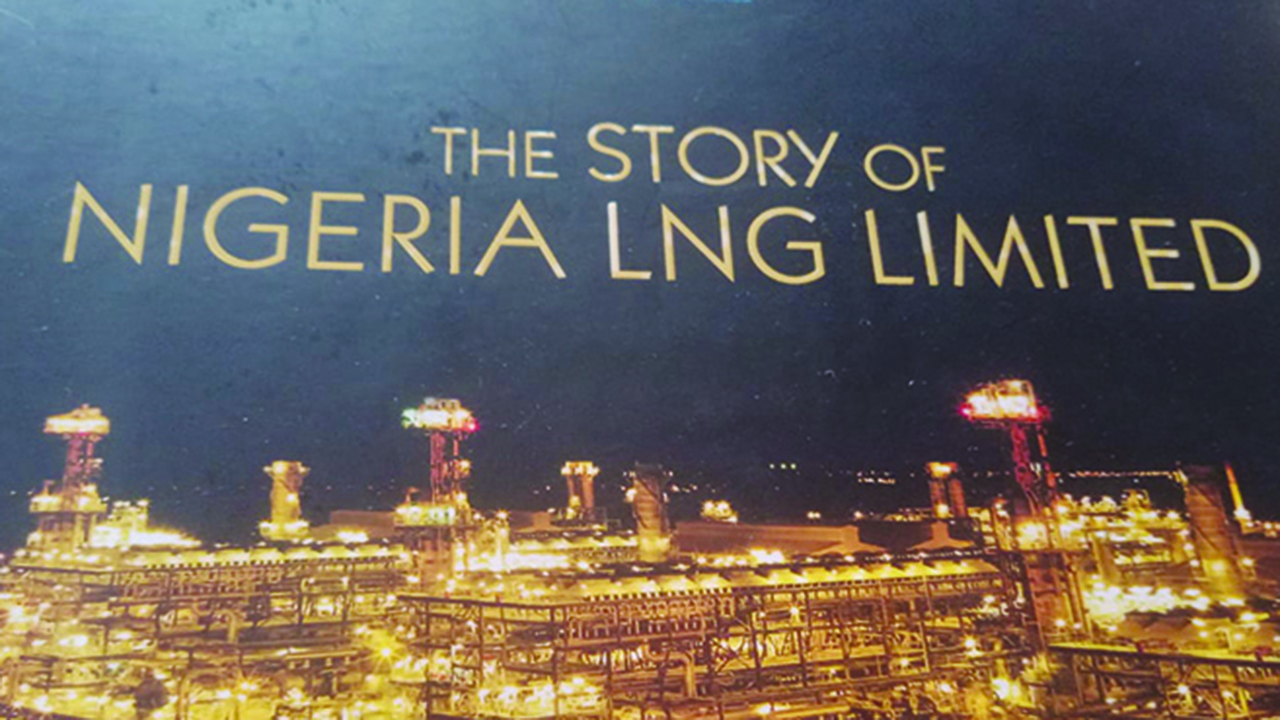

The problem of financing the project led Asiodu to recommend that the government sells five percent of the country’s 60 percent in the joint ventures with Agip, Philips and Shell to raise $500million which was deposited in an escrow account.
There’s enormous power in old school ties. Don Etiebet (Abacha’s Petroleum Minister), Godwin Omene and Brian Anderson, former Managing Director of Shell Nigeria attended Imperial College, London. At a private dinner, Etiebet and Omene enlisted Anderson’s help with major issues – more Nigerianisation of SPDC positions and revival of the LNG project.
Part of their private agenda was to make Omene, Deputy Managing Director (he later became the first indigenous DMD of Shell) and to resuscitate LNG project. They achieved these through deliberate planning and focused execution.
Former Head of State, Gen. Sani Abacha, was undeniably the hero of Nigeria’s LNG project, a project he started under very difficult circumstances. Some of the problems — such as the killing of his friend, Mr. Ken Saro-Wiwa – were self-inflicted.
Yet, it is undeniable that Abacha, Etiebet and his advisers were an astute team. By the time Abacha came to power, the Nigeria LNG project had experienced three cancellations and had turned a circus. To show seriousness, the shareholders agreement was amended to include a clause that any shareholder who withdraws from the project shall not only sell his investment for one dollar, but will also fulfil all its previous obligations.
This clause explained why Shell was unable to withdraw from the project despite wide global condemnation and picketing of its offices. Shell at the time of Saro-Wiwa’s death had invested $800million in NLNG.
Abacha also reduced Nigeria’s equity in NLNG to curtail the overbearing influence of government officials. Several NLNG and NNPC managers were previously sacked. Dr. Ejike Onyia and Dr. Aret Adams were sacked for refusal to employ a car salesman from SCOA motors as General Manager, Commercial in LNG. Mr. Godswill Ihetu was removed by Okongwu for not briefing him adequately, contrary to the dictates of the shareholders agreement that required him to be neutral and maintain an arms-length relationship with shareholders. It was obvious that a firewall between the project and government was necessary.
Gen. Abdulsalami Abubakar relied on the one-dollar clause to force the hands of the shareholders to take the final investment decision on Train 3 in 1999. His directive to the Board was to take the FID “on or before 15th February 1999, failing which before 27 February 1999 Presidential Elections”. ELF uncomfortable with the economics of Train 3, felt unduly pressured by the government and wanted to divest its shares. But it changed its mind because of the one-dollar clause.
Nigeria may have recorded more progress with Brass and OK LNG projects on which $2 billion was wasted if the President Goodluck Jonathan’s regime adopted this clause. Brass LNG project collapsed many times at FID without consequences to anyone. NNPC recently announced plans to restart OK and Brass LNG projects, even without investigating what went wrong with previous efforts.
Theo Oelermans’ appointment as the first expatriate Managing Director was the watershed that changed the tide and fortunes of NLNG. A former Head of Shell Natural Gas Development for Africa during which he played a leading role in marketing LNG in the US and Europe. Appointed General Manager in Natural Gas in Shell Australia in 1982, he supervised the successful restructuring and development of the Northwest Shell LNG venture and marketing in Japan.
“Before I came to Lagos, I had talked to the shareholder, Shell, and said ‘are you really going to be serious about this project?’ And they showed me that they were absolutely serious.
“Every project is different. Every project has its own problems. The main problem in Nigeria was the history of the project. It had been going on in some shape or form since 1963, which is a long time.
“People did not always understand the problem which was caused by change of government. Other countries have similar problems. At a time in Australia, there was a government that wanted to keep all the gas in the country. Economically that was the wrong thing to do and that delayed the country’s LNG project.
“I had set a number of specific targets for myself. One was to restore confidence of the buyers and to get them signed up properly. Second was to get the right sort of people employed, particularly the right sort of Nigerian staff. One set of people I was convinced that I really needed was the legal people and the top person, at the time, in my view, was Sena Anthony.
“I went to see the Group Managing Director of NNPC and said that I would like to have Sena Anthony, please. And he said that I couldn’t have her; that she was important to him. I said ‘Sir, I’m going to come to your office every week to ask for her, so you can as well give her to me now. So I got her. Sena was one of the main contributors to the success of the project.
“My feeling, looking back at all the projects I’ve been involved in, is that the most important success factor is not so much the customer or the shareholders, but the policy of government. The policies of government and consistent support of the government over the years are the most important success factors.”
Fast forward to recent times and give Dr. Babs Omotowa his flowers. He restructured and save NLNG from ravages of world recession. But more than anything else, Omotowa understood that LNG business is not just about liquefaction and shipment of molecules. He was a strong believer in the maxim that a rising tide must lift all boats, insisting that the success of NLNG must rub off on all the stakeholders besides the government and shareholders.
He built 70 houses in Finima Community to compensate families displaced many years previously – but not compensated; built six ultra-modern science laboratories in universities in the six geopolitical zones; drew up a fully-funded N75 billion masterplan with Bonny Kingdom Development Foundation as implementation agency, an Accenture as technical adviser. He provided Buhari Government $2.1 billion bailout funds that enabled states to pay salaries after it assumed office and met an empty treasury.
Omotowa later secured Buhari’s approval for T7 project. He built NLNG’s head office in Port Harcourt, initiated the Bonny-Bodo Road, and awarded a non-variable contract for N120 billion. His successor, Mr. Tony Attah, a wheeler-dealer many considered a trojan horse opened up the contract, which today has been re-awarded for N280billion. Attah built a multi-billion-naira consulate building, sans embassy, in Bonny in a community without good schools, standard hospital and healthcare.
Under Attah, NLNG became gas-stranded and began a downward slide. It presently functions at 40 percent of its installed capacity, a major fall from its high perch as a world-class, first quartile LNG company in the world. For instance, its dividend fell by 43 percent from $1.10 billion in 2022 to N46.2 billion in 2023.

The greatest sacrifice for the NLNG project was made by Finima Community. NNPC and Finima had reached an agreement that the community would be compensated for land on commercial rates. But following the promulgation of the land use decree, the government and NNPC abandoned that agreement. The military administrator of Rivers State, Commander Suleiman Sa’idu revoked all rights of occupancy existing in respect of Finima Land.
The subsequent acquisition was published in the Rivers State Gazette no 198 vol. 11 of 22 November 1979. NNPC applied and obtained a Certificate of Occupancy from Rivers State Government for the parcel of land measuring 596.5 hectares in Finima. Of this land, NNPC set aside 514.63 hectares for exclusive use of NLNG – plant site, residential area and access road.
The title for the land was perfected by Governor Rufus Ada George on 30 April 1993. NNPC acquired an additional 64 hectares of virgin swamp some five kilometers south of Old Finima Town for resettlement of about 350 families displaced to build the plant.
Because NNPC used Finima Land as part of its equity, the foreign shareholders later insisted that the title for the land be issued in the name of NLNG. Alhaji Abba Gana, the first deputy managing director of the company told the story:
“On the day Saro-Wiwa was executed, NLNG and the banks participating on the escrow account signed an agreement. Everybody signed. The MD signed for NLNG. I was witnessing when the news broke that Saro-Wiwa had been executed. The shock in the room was palpable; representatives of Shell, Agip and Elf became apprehensive.
[ad
“Two days later, President Nelson Mandela publicly called on Shell to pull out of Nigeria. It was a serious request and Shell looked for a decent way to get out of the project. By then, we were about 10 days to two weeks away from taking the final investment decision.
“One morning, I came into office and Oelermans was red-faced; very angry. I asked what the problem was and he said that the project was dead. Shell had indicated that the certificate of occupancy for the land on which the plant will be built was in the name of NNPC and therefore not acceptable.
“I was shocked. I told Oelermans that I will try. So, I left London that night and proceeded to Port Harcourt. I went straight to the governor’s office and had audience with him. I told him that Saro-Wiwa was executed in his state and the issue is trying to kill the LNG project.
“After explaining the situation, he called the commissioner for lands and everyone involved and asked me to explain the situation to them. I did. And he directed that a new Certificate be issued before 10 am the next day.
“I requested the governor to issue two certificates, one for the land belonging to NLNG and the other that belonging to NNPC. The following day, I got the two certificates and I immediately faxed the NLNG certificate to Oelermans in London.”
• Ifeanyi Igwebike Mbanefo, former spokesman for NLNG and author of The Story of Nigeria LNG Limited, currently lives in Canada.
[ad]

