 Follow Us on Google News
 Follow Us on Google Discover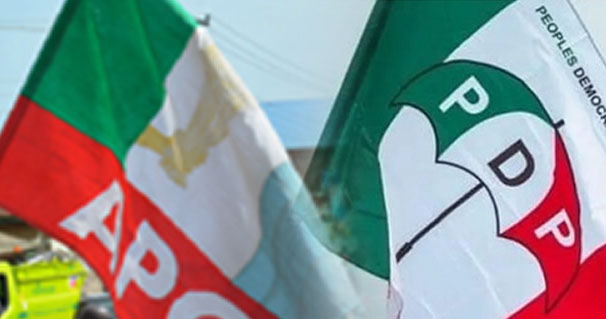

Politics in Nigeria can be likened to a brawl, a noisy and aggressive fight, that is, of persons who have consumed more than a reasonable quantity of alcohol. Ruled by civilians or by soldiers, Nigeria has repeatedly fallen into the hands of brawlers who have repeatedly succeeded in convincing Nigerians that they are leaders. But they are not leaders. They are brawlers. Theirs is a brawl for a bowl, and ours is the bowl and its contents. The bowl contains Nigeria’s wealth. But the people who own the wealth have been dispossessed of it, and are thus reduced to beggars.
[ad]
There were ethnic tensions before crude oil was discovered in Nigeria. But, ever since prospect for oil wealth became part of the story that Nigeria is, the tensions have increased and continue to increase in their intensity. Civilians who ruled Nigeria immediately after independence ruled with a sense of entitlement. They fought for independence, and, so they thought, they ought to be primary, even sole beneficiaries of Nigeria’s wealth.
Alongside that generation of politicians came two factions in the Nigerian military. The less than civil behavior of civilian politicians of the First Republic provided a convenient excuse for the emergence of their “corrective” military regimes. But, prospect for oil wealth largely inspired their intervention in Nigerian politics.
One faction struck on January 15, 1966. Its intervention, by accident or by design, bore ethnic coloration. While it is true that a sprinkling of the coup plotters came from different parts of Nigeria, the execution and outcome of the coup clearly suggested ethnic cleansing. A second faction struck on July 29, 1966 with no effort to conceal its own agenda of ethnic cleansing.
Two ethnically and regionally coloured and loyal military factions dragged Nigeria into war without thinking of the immediate and long-term consequences of their youthful misadventure. While one side of the conflict called it a war to keep Nigeria one, the other side called it a war to defend a people from genocidal vandals. Indeed, a people has the right to defend itself from genocide, its land from vandals. But we have not been sufficiently honest to admit that it was a war by two ethno-regional military factions for control of oil wealth in the region that was proclaimed as Biafra. It was clear that whichever faction won the war would win the oil. Willing to shed blood so as to have oil, atrocities were committed by both sides in the conflict. Innocent civilians were slaughtered in Ore, Asaba, Abagana, Ogoja, Ikot-Ekpene, to mention but these. Whoever cautioned either side to avoid war was branded a saboteur.
[ad]
Now it is important to inquire: who has benefitted from Nigeria’s oil wealth? And the answer is not difficult to provide.
When it was declared at the end of the war that there was neither victor nor vanquished, there were in fact victors and vanquished. The people of Nigeria, not just of Biafra, were vanquished because their land and its riches ended up in the hands of young “victorious” warlords. It’s no news that, in and through what Fela Anikulapo-Kuti called “paddy paddy government,” the biggest beneficiaries of Nigeria’s oil wealth have been the military and their civilian brawler-friends. The rest of us are fighting for the crumbs.
To conceal the crime of these brawlers, a strategy of divide and rule has been designed and is implemented to make the Nigerian believe that his enemy is the man or woman of the other ethnic, regional or religious community. And the rate of efficiency of this strategy has been tragically monumental. It works this way: the oppressed are divided by the oppressor so that, rather than face the oppressor, the oppressed face each other, insult each other in social media, while the real brawlers come up every four years with a sharing formula, a choice of whose turn it is to gain possession of the bowl, and a strategy of manipulating the electoral process. Every four years, the political elite comes up with a pact to decide whose turn it is to sit on the pot of honey that Nigeria’s wealth is.

What has just been described is the story of the political elite and political parties in Nigeria, parties invented as vehicles to convey members of the political elite to the seat of power in Abuja and or in the state capitals. Where a politician sees that a vehicle is full and there is no seat left for him, he looks for another vehicle, that is, another political party. Nigerian politicians change from one political party to another. A politician’s party affiliation changes before you learn to pronounce his name.
[ad]
Political parties in Nigeria are not founded on the philosophy of common good, but on the philosophy of selfish interest, that is, if it can be called a philosophy. That is why a typical Nigerian politician has changed parties not less than twice in his career. Where philosophy counts, such things do not happen. But in Nigeria, philosophy has been banished, and, in the absence of philosophy, we engage in discussions not as lovers of wisdom but as lovers of argument.
Control of party structure is like control of the driver’s seat in the vehicle. Whoever drives the vehicle to the seat of power occupies the seat. Those who assist him to gain control of the steering wheel will become his political appointees.
The godfather, who paid for the vehicle and bought fuel into it, asks for returns. But the godson, once in government, holds the sword. And so, a brawl begins over the bowl and its contents.
What we witness in all the parties is a brawl for the bowl that Nigeria’s wealth is. That is why every political party in the land is currently divided into factions.
Conflicting and competing pronouncements from the judiciary make it impossible to know who really is party chairman in some states. In some other states, intra-party conflict over the bowl has degenerated into a street fight. Institutions of governance have collapsed, fire has been set in some states, there are threats to set fire in some more, and governance has come to a halt at a time Nigeria is in dire need of governance.
The law is broken at will, and the law-breakers are getting away with criminality, because of the brawl for the bowl.
We live on a battlefield of brawlers, and, while the brawlers do their own thing, the real owners of the bowl are impoverished and starving. Whoever wins the brawl of politicians over the bowl, the people of Nigeria, the real owners of the bowl are the losers.
Akinwale is of the Department of Philosophy and Religious Studies, Augustine University, Ilara-Epe, Lagos State.
[ad]

