 Follow Us on Google News


 Follow Us on Google Discover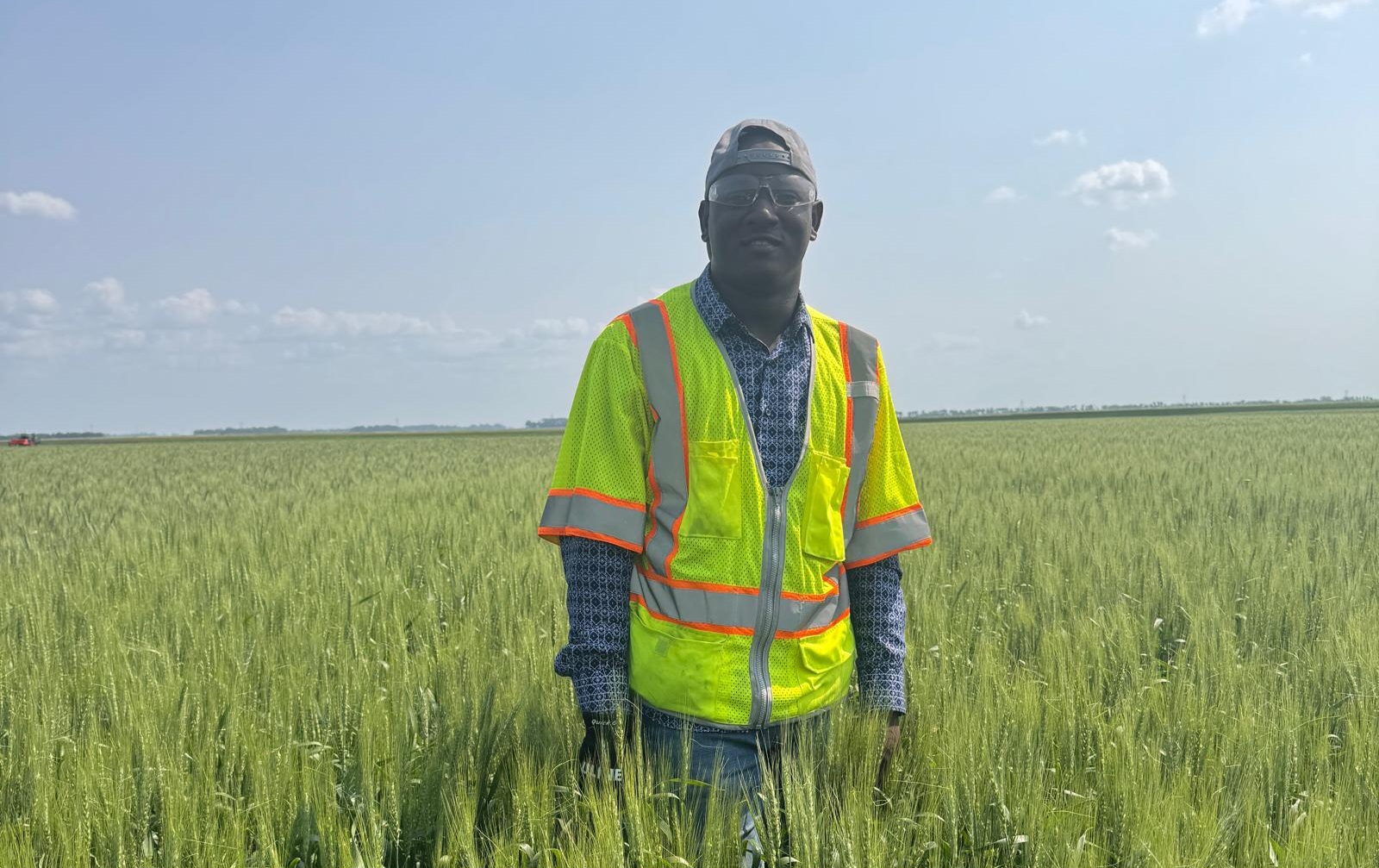
 As the world faces increasing challenges of food security and environmental sustainability, innovative research is offering hope for transforming agriculture into a more efficient and eco-friendly system.
[ad]
For Matthew Abu John, a dedicated doctoral researcher at Michigan State University, this mission lies at the heart of his work: developing sustainable integrated pest and disease management strategies that reduce reliance on chemical pesticides.
His research combines advanced biological control methods, precision agriculture technologies, and ecosystem-based approaches to promote sustainable practices in agriculture.
Matthew’s journey in agricultural science began in Nigeria, where he earned a Bachelor of Science in Botany at Ambrose Alli University. He then pursued advanced studies at North Dakota State University, earning a Master’s degree in Plant Pathology.
Here, he conducted critical research on plant-parasitic nematodes, one of the most devastating yet overlooked threats to agricultural productivity worldwide.
Plant-parasitic nematodes, microscopic worms that feed on plant roots, are known to reduce yields in major crops significantly. Matthew’s work at North Dakota State focused on understanding and mitigating these pests, particularly the root-lesion nematode Pratylenchus penetrans. His research project at North Dakota State University focuses on identifying effective cover crops that can suppress nematode populations in potatoes offering a natural solution to nematode management. Reflecting on his achievements, Matthew highlights his ability to combine rigorous scientific research with practical applications such as helping crop growers identify cover crops for nematode management, and providing farmers with alternative, sustainable control measures.
Now at Michigan State University, Matthew’s work has expanded to focus on integrated solutions that balance agricultural productivity with environmental health. “The overreliance on chemical pesticides is unsustainable and has a negative long-term impact on the environment,” Matthew explains. “My goal is to develop novel, sustainable approaches that enhance crop resilience while minimizing environmental impact.”
His current research integrates precision agriculture technologies, such as real-time disease forecasting systems, to enable farmers to make informed decisions. By analyzing environmental and crop data, these systems predict pest and disease outbreaks, allowing for targeted interventions that reduce the need for frequent pesticide applications.

Matthew aims to collaborate extensively with local farmers, agricultural extension agents, and researchers. Through these partnerships, he hopes to test and implement sustainable pest and disease management techniques on key Michigan crops. His field trials incorporate cutting-edge spore traps and monitoring technologies to evaluate disease pressure and optimize control strategies.
Outreach and education form another cornerstone of Matthew’s work. He conducts extension programs to inform farmers and agricultural professionals about integrated pest management (IPM) technologies. “It is very important to show farmers the economic and environmental benefits of reducing pesticide reliance while maintaining yields,” he says. His outreach efforts are helping farmers embrace more sustainable practices, ensuring their long-term productivity and reducing costs.
Matthew’s passion for problem-solving and commitment to sustainable agriculture have driven his success. His research bridges the gap between science and real-world applications, offering solutions that are both innovative and practical. “Every experiment, every trial brings us closer to a future where farming is more resilient, efficient, and environmentally friendly,” he says.
His work is particularly timely as climate change worsens pest and disease pressures on crops worldwide. By developing ecosystem-based approaches that harness the power of nature, his research contributes to a global movement toward regenerative agriculture.
Looking ahead, Matthew envisions a future where farmers rely on precision tools, biological controls, and sustainable practices to achieve higher yields with fewer resources. His work at Michigan State University will undoubtedly play a crucial role in realizing this vision.

