 Follow Us on Google News
 Follow Us on Google Discover
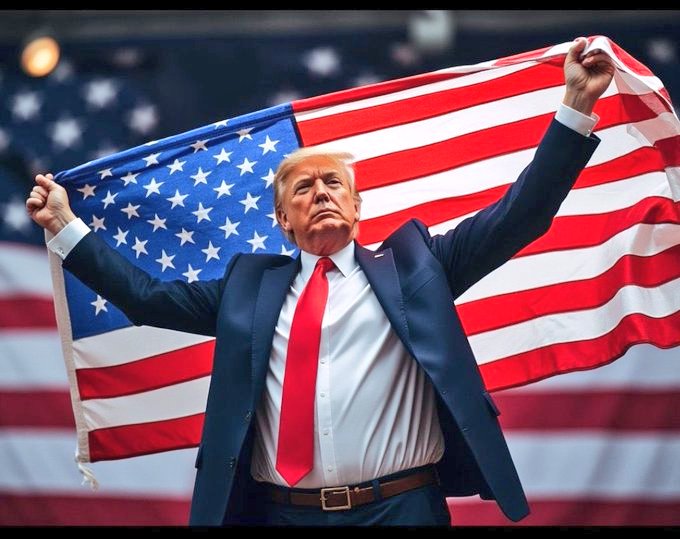
The threat by United States President-elect Donald Trump to impose a 100 per cent tariff on a group of nine nations under the aegis of BRICS highlights the geopolitical tensions between the U.S. and emerging economies. Trump’s threat is predicated on the objective of the nine BRICS countries to attempt to replace the U.S. dollar with another currency. Some observers have postulated that Trump might be betraying a lack of complete confidence in the dollar, an unnecessary fear, given the current strength of the U.S. currency in the global economy. The world watches with keen interest the outcome of this development.
[ad]
The nine BRICS countries are Brazil, Russia, India, China, South Africa, Egypt, Ethiopia, Iran, and the United Arab Emirates (UAE). BRICS was founded in 2009 to advance the interests of emerging economies and reduce their dependence on the U.S. dollar, which remains the most commonly used currency in global commerce. Initially, BRICS comprised only Brazil, Russia, India, China, and South Africa. However, earlier this year, Iran, the United Arab Emirates, Ethiopia, and Egypt formally joined BRICS in the bloc’s first expansion in over a decade. Additionally, 34 countries have expressed interest in joining this coalition of major emerging economies.
Given their shared commercial interests, the BRICS countries are working toward creating a viable alternative currency to rival and reduce their reliance on the U.S. dollar, despite the relative strength and stability of the U.S. economy and the trust global investors and trading partners place in the U.S. government.
According to Trump, “The idea that the BRICS countries are trying to move away from the dollar while we stand by and watch is over. We require a commitment from these countries that they will neither create a new BRICS currency nor back any other currency to replace the mighty U.S. dollar. Otherwise, they will face 100 per cent tariffs and should expect to say goodbye t o selling into the wonderful U.S. economy.”
Trump’s latest economic threat comes just days after he pledged to implement massive tariff hikes on goods imported from Mexico, Canada, and China, effective on the first day of his administration. He stated that these measures would be in retaliation for illegal immigration and the influx of “crime and drugs” across the border.
Some have condemned Trump’s threat and aggressive approach to preserve the dollar’s hegemony, stating that it suggests a lack of confidence in the dollar and could actually accelerate a move away from the dollar by other countries.
Trump’s threat notwithstanding, the BRICS countries have resolved to move away from dollar dependence. Even though a BRICS currency is still in its early stages and faces significant challenges due to the economic and political diversity of its members, it reflects broader dissatisfaction with what some nations perceive as the “weaponization” of the dollar for sanctions and other U.S. interests.
[ad]
The BRICS countries have been increasing their gold reserves index to reduce or eradicate their dependence on dollars. For instance, Russia, India, China, and South Africa, have been exploring ways to reduce reliance on the U.S. dollar, with ideas ranging from trading in local currencies to potentially creating a joint currency. Iran and Russia are finalising plans to end their reliance on the dollars. India and Russia have also adopted a new currency for their transaction to bypass dollars exchange. As South Africa’s largest trading partner, China has reduced its use of dollars.
Understandably, the primacy of the dollar in international trade gives the U.S. a number of advantages, including lower borrowing costs for the Federal Government and enormous geopolitical influence around the world. BRICS currencies may lack the stability and global trust that the U.S. dollar enjoys, leading to potential volatility in trade and reserves.
The dollar is widely accepted and highly liquid globally. Transitioning away from it could disrupt trade and investment due to limited alternatives. Many BRICS countries benefit from dollar-based trade, such as easier access to U.S. markets and financing. Diverse economic systems and priorities within BRICS make it challenging to create a unified approach to reducing dollar dependency. Besides, a shift away from the dollar could lead to initial disruptions in foreign exchange reserves and trade balances, particularly for countries with substantial dollar holdings.
However, the move to replace the U.S. dollar and reduce exposure to the monetary policies of the United States, particularly the fluctuations caused by Federal Reserve decisions, is gaining momentum. This shift aligns with BRICS’ broader goals of promoting economic multipolarity and reducing Western dominance. It encourages the use of local currencies and alternative payment systems, decreasing reliance on a single currency and mitigating the risks of dollar-related economic shocks.
By promoting trade agreements and payment settlements in local currencies, this initiative could boost intra-BRICS trade and foster regional economic cooperation. Over time, it may also enhance confidence in local currencies, potentially stabilising them as they gain prominence in trade and reserves.
If implemented, Trump’s tariffs could significantly impact global trade, including U.S. businesses that rely on imports from BRICS countries. Such measures might provoke retaliatory actions from these nations, further straining international economic relations. Economists warn that such developments could lead to inflation and reduced global economic growth, complicating efforts to stabilize trade networks.
[ad]
More importantly, using BRICS currencies and banking networks outside the U.S. dollar-dominated system could enable member countries, such as Russia, China, and Iran, to circumvent Western sanctions even though the likelihood of creating a new currency remains slim due to the alliance’s economic and geopolitical differences. For instance, in October 2024, Russian President, Vladimir Putin, called for a new international payments system at a BRICS summit, arguing that “the dollar is being used as a weapon.” Similarly, Brazilian President, Luiz Inácio Lula da Silva, proposed in 2023 the creation of a common currency in South America to reduce reliance on the dollar in international trade.
Despite these efforts, displacing the U.S. dollar remains a significant challenge, given its widespread use in global trade. For example, even with the existence of the euro and the growing importance of China’s renminbi, the dollar remains the world’s primary reserve currency, accounting for roughly 58 per cent of global foreign exchange reserves. High tariffs could also lead to increased consumer prices for goods such as electronics, textiles, and commodities imported from BRICS countries. Additionally, retaliation from these nations could harm U.S. exporters, while export-dependent economies within BRICS—particularly China and India, which rely heavily on the U.S. market—might face economic setbacks.
Therefore, BRICS countries need a cautious and a gradual approach. As recommended by Putin “Its time has not come yet. We need to be very careful and act gradually, without any rush,” Putin stated when asked about steps toward developing a common currency. He added that the group was exploring “the possibilities to make wider use of national currencies” and enhancing coordination between their central banks to support trade.
Nevertheless, the debate may well be the beginning of a restructured global economy, with tremendous possibilities, negative and positive, for all countries.
[ad]

