 Follow Us on Google News
 Follow Us on Google Discover
This year, the country’s economic growth will be sluggish and marginal due to dwindling productivity in critical economic sectors like manufacturing and agriculture and low investment levels.
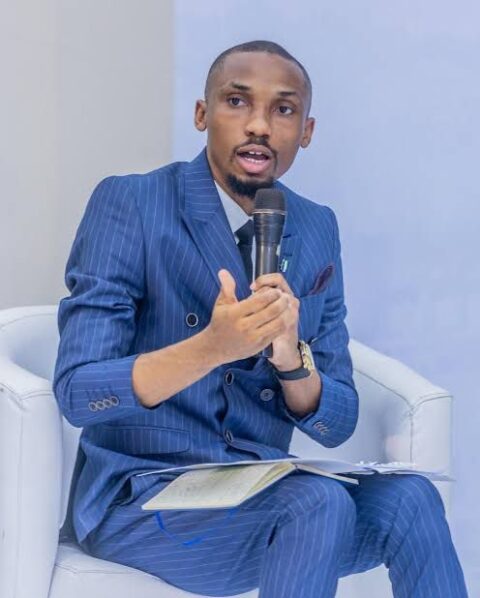
Speaking during Eventhive’s Nigeria Economic Breakfast meeting, Co-founder and Chief Executive Officer of Veriv Africa, Basil Abia, said the services sector, rather than the real sector, would remain the main driver of economic growth.
[ad]
He noted that the sector would, however, be incapable of generating significant jobs.
Touching on inflation, he said it will remain a deciding factor in 2025 but is expected to moderately ease compared to 2024. He said it is projected to average 31.81 per cent in a bull case scenario, 34.52 per cent in a base case scenario and 37.16 per cent in a bear case scenario.
He added that the inflationary pressure will be driven by recurring challenges such as currency depreciation, food inflation due to insecurity, high energy costs and elevated logistics costs.
Pointing out that the year will be one of regulatory shocks compared to last year, which was riddled with price shocks, he advised the government to adopt critical fiscal policy reforms.
“Core goals should include broadening the tax base, incorporating the informal sector through tax digitalisation and renegotiating the country’s existing debt stock. We must also re-assess the country’s monetary policy and the apex bank’s continued focus on increasing the MPR should be complemented by supply-side strategies aimed at boosting productivity in core sectors,” he said.
He also called for clearer regulatory certainty on energy policies, improved diversification of the economy, especially the non-oil sector, tackling worsening insecurity and leveraging pension funds and municipal bonds.
He urged businesses, especially financial services, to embed robust regulatory compliance into their operations, focus on risk management, prioritise security, adopt lean process management to streamline operations, maintain cost discipline and leverage AI-driven analytics. “Fraud is a big issue now and regulators will double down on regulation this year. Q2 2024 saw an increase of 23 per cent in staff-generated fraud,” he said.
Discussing business outlook this year at a panel session, panellists included the Lagos State Commissioner for Commerce, Cooperatives, Trade and Investment, Folashade Ambrose-Medebem, represented by the CEO, Lekki Worldwide Investment, Adeniyi Akinlusi; CEO, Landmark Group, Paul Onwuanibe; Managing Director, NG Clearing Limited, Farooq Oreagba and country representative (West Africa), U.S Trade and Development Agency, Joshua Egba. Others were the chair, Nigerian Economic Summit Group (NESG) and managing partner, Verraki, Olaniyi Yusuf; CEO, Endeavor Nigeria, Ireayomide Oladunjoye and moderated by Lehle Balde.
Onwuanibe said that though businesses are battling risks and uncertainties, they must be able to absorb shocks, be adaptable and think long-term. Oreagba regretted that most institutions no longer provide long-term capital, which he said is essential for economic growth.
“We must derisk the Nigerian economy. Businesses are borrowing heavily and the government has ambitious spending plans, where is the funding going to come from? We must prioritise foreign investments and partnerships that drive economic development,” he said.
On his part, Yusuf said in terms of leading indicators, if the price of crude oil stays steady at $70/80 per barrel, Nigeria’s budget is safe but if it drops, it will lead to serious economic problems. He added that a stable PMI, MPR and active construction activities indicate that economic activities are ongoing. Urging the government on the efficiency of spending regarding the budget, he said less attention should be placed on IGR and more attention given instead to encourage business competitiveness and innovation. “We already have enough policies, consolidate existing policies and embrace fiscal discipline. We should be seeing more of policy execution effectiveness and urgently reduce the gap between what is said and what is actually done,” he said.
[ad]

