 Follow Us on Google News
 Follow Us on Google Discover
Weeks, even months or years before the electoral success that ushered in Donald Trump for a second term of office, few people were left in doubt that his new tenure would be bumpy. His antecedents portend the imminent reality. He was slammed with scores of court cases. He became a felon. And only by a whisker, he cheated death, not once, not twice, the exact figures known only to the security agents. And he’d harboured some bile too and sworn to deal with his detractors. But if there was any consensus among observers that his second term would be tremulous, even Nostradamus would hasten to concede seeing the cyclonic form it is presently taking.
[ad]
Two weeks into President Trump’s assumption of office, a barrage of executive orders bore his imprimatur. As at last count, over a score of his executive orders levitated and whereupon they perched, awe, concussion and consternation suffused the air. They’d hit hard on his perceived personal enemies. They’d battered his friends. But just as they lashed at individuals, nations hadn’t been spared either.
His whims, perhaps, is the only thing that goads him on. And as the trend goes, threnodies, in disparate unfathomable languages and pitches, echo across the globe, from China, Mexico to Canada. And Iran. And Gaza. Every inch of the globe now feels the grips of the new sheriff in town. In the U.S., labour agitations loom large. Many government agencies’ employees fear for their job. The new man in the Oval Office is reimagining things.
He is on an unchartered path since the tempestuous President Richard Nixon’s era, with much gusto to boot, shaking the very foundation of America. Many of his countrymen look askance. They are at a loss, contemplating if what is unraveling before their very eyes is what they had bargained for, whether the humbling reality is the electoral choice they’d made.
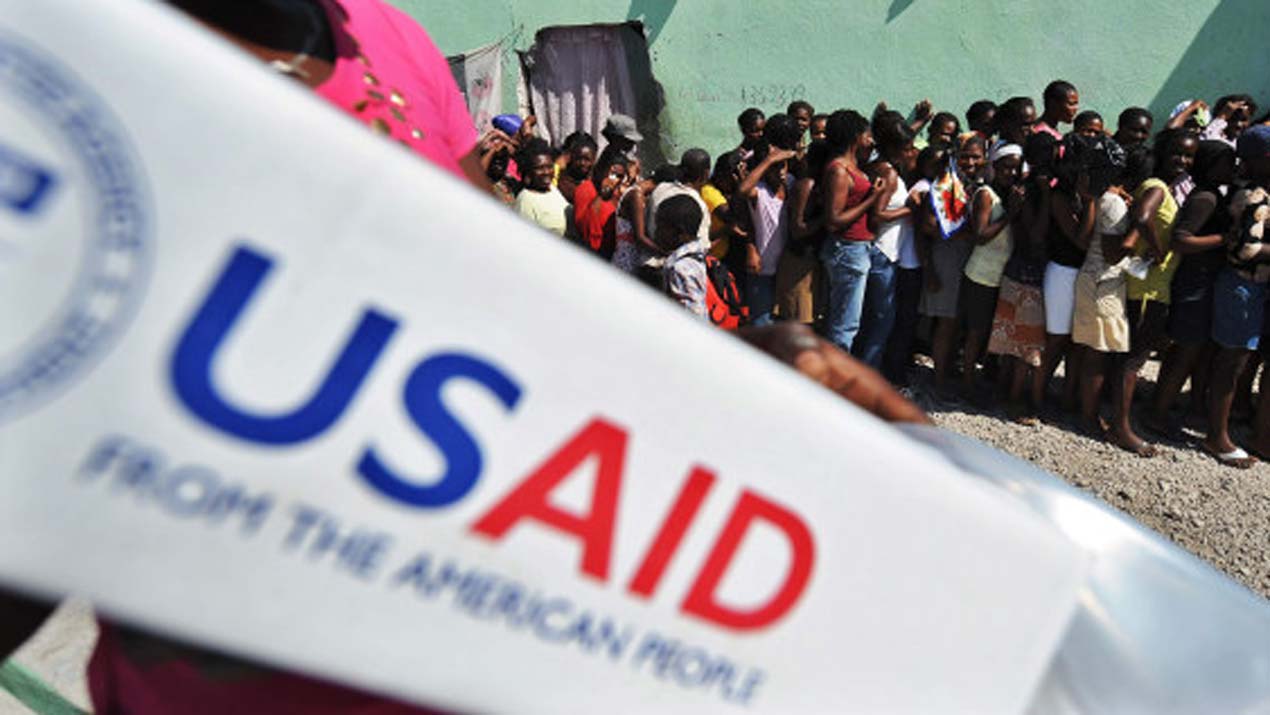
As might be expected, Africa isn’t spared from Trump’s sting! The 47th President of the United States of America’s directive to freeze all his country’s aids for 90days has handed citizens of African countries and their various governments the short end of the stick. The aids, bailouts, if you like, from United States Agency for International Development’s (USAID) which fate now hangs in the balance had in the past offered reprieves to the repressed people of the African Continent. They now wonder if the end is nigh to the supply and provision of medicines and other humanitarian assistance from USAID.
Yet, this singular directive that aimed at stripping needy ordinary Africans and their governments of provisions long taken for granted, that may pull the rug from under their feet, may well be a blessing to the Continent and its people. Long term, should Mr. Trump continue to tighten the finances of USAID, African leaders and their governments would have no option than to fasten their belt and work a little harder for their people.
Trump’s new stand on USAID finances could only nudge them to prioritising their citizens’ needs over and above those of the privileged few on the Continent.

For in the absence of the reliefs offered by the likes of USAID, their oppressed citizens could begin to ask questions, could begin to insist on good governance and transparent election processes to better their lots. In the absence of the drips, the led, the emaciated children of Africa, may as well rise from their somnolence to demand for effective governance to clear their political space of civil strifes that have kept them fettered, that have deprived them of their dignity and humanness.
The poor citizens of African countries need food on their table if not cars in their garage like anyone else in the world, which must come from their governments not from foreign aid agencies.
[ad]
USAID has a lofty goal: working towards reducing global poverty, strengthening democratic governance, and achieving a prosperous world. In reality, however, I dare say that it is the U.S. and its citizens, not Africans, not even other receivers of the agency’s largesse, that benefit the most from its programmes. And that is why the curtailment on its funding has baffled and riled many a rarified mind in the U.S. That perhaps explains why the disenchantment over the curtailment of funding to USAID is loudest over there.
For a take, USAID gestures foster America’s soft power and boost its image, much of which has an unedifying past and a present no less ignoble. Image is priceless. America purchases it on a platter of gold! With USAID funds! Fundings which are largely ploughed back to the U.S. system in forms of contracts awarded to companies in that country on one hand, and as salaries to thousands of its workers over there on anther hand.
Africans and other poor people of the world are mere lousy beneficiaries of the multi-billion-dollar contracts awarded yearly by USAID. While it lasted, the agency provided thousands, if not millions of direct and indirect jobs for Americans in their country and outside it. It kept production lines of its industries in the U.S. roaring.
Africans and other beneficiaries of USAID programmes merely received crumbs at the master’s table. Otherwise, why should resentments against the State Department’s directive, which among others, has furloughed no fewer than 60 USAID career officers and over 600 institutional support contractors be loudest in the U.S. and not in Africa and other places else that the assistances are targeted?
[ad]
For a realiasation, consider this fact about the big budget USAID. In the fiscal year 2023, it disbursed U.S. $72billion of assistance worldwide, 84.4 per cent of which contractors are American companies, 4.3 per cent United Kingdom based ones, with South African holding on to 3.7 per cent of USAID contracts during the year under reference. Lucky Kenyan and Afghanistan’s going concerns undertook minuscule 2.9 per cent and 2.8 per cent of the contracts respectively under USAID, according to DevelopmentAid’s data base on its past awards.
In fairness to USAID which was established 61 years ago, it has its eyes onstimulating the economy of each of the countries where a specific aid support is delivered. A least it states this as its cardinal objective, even when its words are not synchronous with its actions. It has the goal to ensure that local contractors in respective country where supports are targeted can execute 25 per cent of supplies meant for it.
At least that is what it has on paper. As a matter of fact, it set a target date of 2025, this year, the year of our Lord, to achieve the feat. But as of 2023, USAID achieved only but 3.2 per cent local content input! The seriousness attached to empowering beneficiary in-country companies by USAID thus flies in the face. It betrays the efficiency for which the north American country is known.
To be continued.
Bello wrote from Abuja.
[ad]

