 Follow Us on Google News
 Follow Us on Google Discover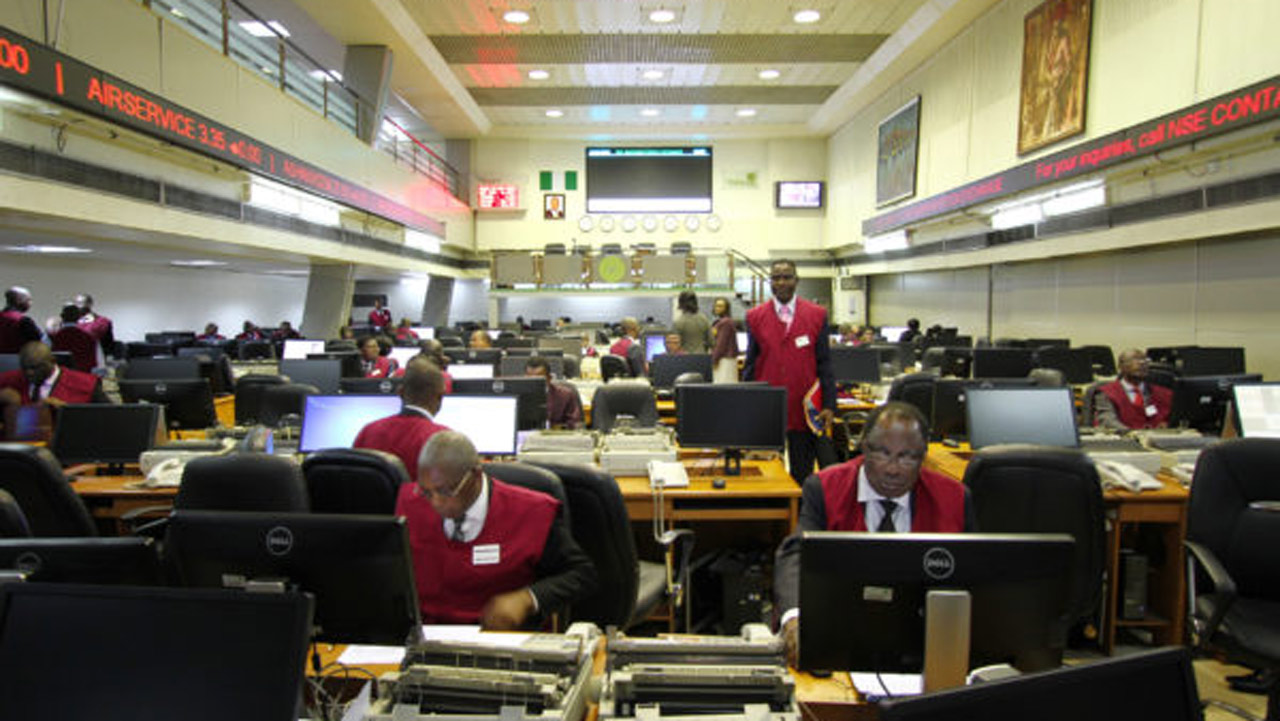
 Riding on January’s gains, Nigeria’s equities market maintained its upward trajectory in February, adding N2.5 trillion to market capitalisation amid strong investor confidence.
[ad]
This marked a stronger performance than January’s N1.94 trillion appreciation, signalling deepening investor confidence in stocks, particularly in the banking sector.
At the close of transactions on Friday, February 28, 2025, the market capitalisation rose by N2.48 trillion or 3.4 per cent to N67.19 trillion from N64.71 trillion posted on January 31, 2025.
Also, the all-share index increased by 3,325.27 points or 3.1 per cent from 104,496.12 points to 107,821.39 points.
This performance represented a significant acceleration compared to January, effectively doubling the previous month’s growth rate.
The banking sector played a crucial role in driving the market rally as the sector rose by 7.5 per cent year-to-date, reaching 1,165.71 basis points from 1,084.5 at the start of the year, emerging as the standout performer.
This surge was fuelled by strong investor appetite for financial stocks, driven by expectations of solid corporate earnings and attractive dividend payouts.

In contrast, the oil and gas sector faced headwinds, with the NGX Oil/Gas Index declining by 5.54 per cent year-to-date to close at 2,561.63 basis points, down from 2,712.06.
The drop was largely attributed to ongoing volatility in global crude oil prices and sector-specific challenges. The insurance sector experienced a slight decline, with the NGX Insurance Index slipping by 0.24 per cent to 716.28 basis points from 718 points.
The industrial and consumer goods sectors recorded moderate movements as investors balanced their portfolios between blue-chip stocks and defensive assets.
The fixed-income market also experienced notable shifts, with the Sovereign Bonds Index appreciating by over four per cent.
This movement suggests that bond yields declined during the month, likely due to increased demand for government securities.
The drop in yields may be attributed to factors such as improved macroeconomic stability, easing inflationary pressures, or expectations of monetary policy adjustments that favour fixed-income investments.
[ad]
The Central Bank of Nigeria’s (CBN) decision to lower interest rates on Treasury bills made fixed-income investments less attractive, prompting a shift toward equities.
Looking ahead, market analysts expect the bullish sentiment in equities to persist into March, driven by the ongoing release of full-year corporate earnings reports.
Historically, earnings season tends to attract heightened investor activity, especially if companies announce strong financial results, dividend declarations, or positive forward guidance.
However, some risks remain, including the potential for profit-taking after recent gains, global market volatility, and policy uncertainties. Investors are advised to adopt a sector-focused strategy, prioritising fundamentally strong companies with attractive valuations.
If corporate earnings meet or exceed expectations, the NGX could extend its rally into the second quarter of 2025, reinforcing Nigeria’s position as one of the best-performing emerging markets of the year.
Vice President of Highcap Securities Limited, David Adonri, said: “The equities market appreciated by 3.2 per cent in February 2025. This doubled the performance in January. The market was propelled by the banking sector which appreciated by 7.49 per cent.
[ad]

