 Follow Us on Google News
 Follow Us on Google Discover
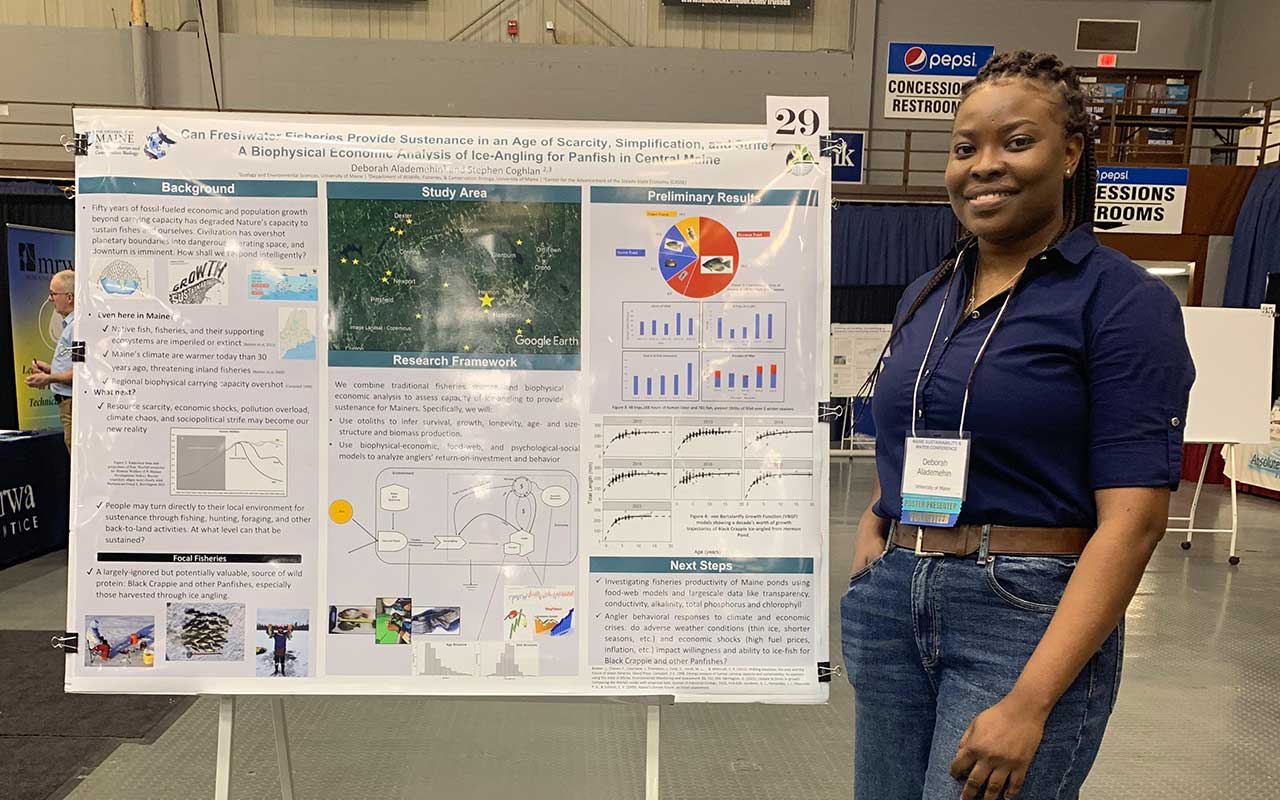 For many, ice fishing is more than just a winter pastime; it is a time-honored tradition that fosters a deep connection with nature. Anglers brave freezing temperatures to drill through frozen lakes and rivers, using specialized equipment like ice augers, short rods, and tip-ups to catch fish. Yet beyond its recreational appeal, ice fishing plays a critical role in food security and ecological research—especially in an era of climate change and economic uncertainty.
[ad]
At the recent 47th Annual Meeting of the Atlantic International Chapter of the American Fisheries Society in Saint John, New Brunswick, Canada, Deborah Alademehin, a researcher at the University of Maine (Orono, ME), shed light on the future of ice fishing amid shifting environmental and economic landscapes. Her research underscores the balance between sustenance, scientific inquiry, and sustainability in a rapidly changing world.
Deborah Funmilayo Alademehin is a researcher in Ecology and Environmental Science at the University of Maine, focusing on freshwater sustenance fisheries. She holds an MSc in Natural Resource Conservation from the University of Lagos and a BSc in Environmental Management and Toxicology from the Federal University of Agriculture, Abeokuta. With experience as a researcher she specializes in fisheries ecology, sustainability, and conservation. She has presented at major conferences, received awards like the USDA-MAFES Research Award, and actively participates in professional societies. Her research integrates science and traditional knowledge to promote sustainable fisheries management globally. Deborah has won several awards – including the American Fisheries Society’s Atlantic International Chapter’s for most unique or innovative research presentation (called the “Soggy Boot Award”, as an homage to fisheries biologists who persevere through fieldwork challenges like leaky waders in cold streams).
While ice fishing is often seen as a leisure activity, it is also a crucial source of nutrition for many. Panfish species like Black Crappie, Pumpkinseed Sunfish, and Yellow Perch provide protein-rich fillets that supplement household diets, particularly in regions where economic instability has made grocery costs prohibitive.
“Maine’s lakes and ponds have long provided reliable access to fish for both sport and sustenance,” Alademehin explained. “But as more people turn to fishing for food security, we need to ask whether these ecosystems can sustainably support the increased demand.”
To address this question, her research employs otolith (ear stone) analysis, a technique that helps determine fish age, growth rates, and population dynamics. The findings will help inform sustainable fishing practices and guide future regulations. Unlike many other states, Maine currently lacks protective regulations on panfish harvests, leaving open questions about long-term sustainability.
Warming winters pose an existential challenge to ice fishing. Rising global temperatures lead to shorter ice-fishing seasons, thinner ice, and more unpredictable conditions, making the practice riskier and, in some cases, less viable. According to climate models, ice cover on lakes in the northeastern U.S. has declined by an average of two weeks over the past century—a trend that is expected to accelerate.
Furthermore, a 2022 study by the University of Wisconsin-Madison found that 15% of the world’s lakes that currently support ice fishing could lose safe ice conditions by 2050, threatening both ecological balance and local economies dependent on winter fishing activities.
Climate change also disrupts fish populations. Coldwater species like Brook Trout and Salmon are seeing population declines, while panfish species may expand their range. How anglers adapt to these shifts remains an open question. Will they switch to targeting panfish, or will declining ice conditions cause ice fishing traditions to fade?
“This is a pressing concern,” Alademehin noted. “If we want ice fishing to remain part of our culture and a source of food, we need adaptive management strategies that balance ecological integrity with human needs.”
While Alademehin’s research focuses on Maine, its lessons resonate globally. Resource depletion, climate instability, and economic pressures are challenges that extend far beyond North America. The Global South, where many communities depend on fishing for subsistence, faces even greater threats from environmental change.
Countries in Africa, Asia, and Latin America can benefit from sustainable fishing practices developed in places like Maine. Scientific monitoring, community-driven fisheries management, and adaptive regulations can help preserve fish populations while ensuring food security.
“A key takeaway is that traditional knowledge combined with modern science creates resilience,” Alademehin emphasized. “By studying how Maine’s anglers adapt, we can extract valuable lessons for communities worldwide.” As climate change accelerates, the future of ice fishing remains uncertain. However, by merging traditional fishing wisdom with cutting-edge scientific research, we can chart a sustainable path forward.
Alademehin’s work highlights the need for data-driven conservation efforts, education on sustainable fishing practices, and policies that protect both fish populations and the communities that rely on them. “At a time when food security and climate resilience are paramount, ice fishing is more than a seasonal sport,” she concluded. “It is a reflection of how communities can adapt to environmental and economic change, ensuring a sustainable future for generations to come.”
The challenge now is clear: Can we safeguard this age-old tradition while adapting to a changing world? The answer lies in science, stewardship, and our collective commitment to sustainability.
[ad]

