 Follow Us on Google News
 Follow Us on Google Discover
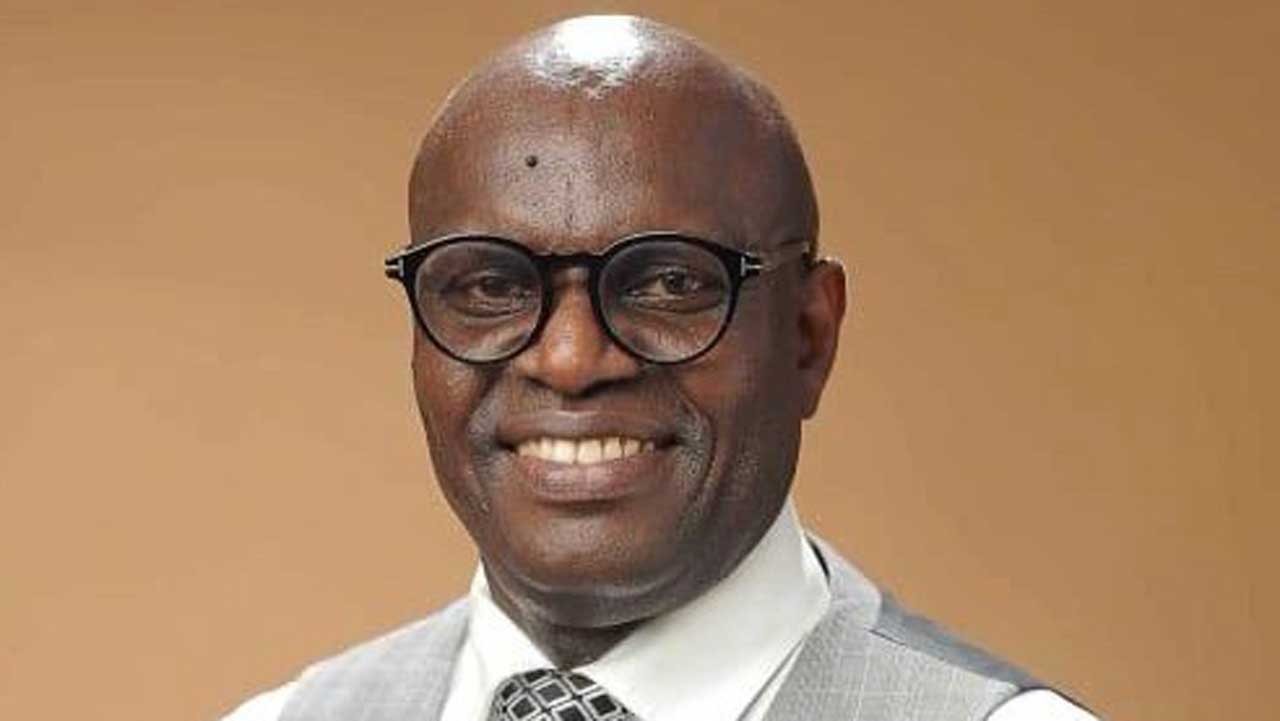 On Sunday, the February 9, I received a frantic call from the Chairman of the Executive Committee of our estate. His voice crackled with urgency and his heavy breathing was audible over the phone. Instantly, I knew I had to see him.
When I met him, his fiery gaze spoke louder than his muffled words. His lips struggled to form the sentence but his eyes had already said it: “Peter Okoloh is dead.” My mind raced, scanning through all the real and imagined Peter Okolohs I had ever known, for the one I knew could not be dead. The Peter Okoloh I knew was an embodiment of good health and unbridled enthusiasm. Yet, as my thoughts scrambled for an alternative, I found none. There was no other Peter Okoloh—at least not one I knew of. The silence between us grew heavier as I struggled to ask the inevitable question: How? How did it happen?
[ad]
Peter Okoloh was the Security Adviser of the Executive Committee of our estate. Before I had the opportunity to know him personally, I had observed his boundless energy when discussing security matters. He had a way of making the complex issue of protecting lives seem simple—his mantra was always the same: “If you see something, say something.” He repeated those words so often that they became etched in the minds of all who listened. When he stood to speak at our estate monthly meetings, the floor became a stage. He gesticulated, demonstrated, and animated his points with passion. “If you see something, say something” was not just a phrase to him; it was his guiding principle for safeguarding lives. Now, those words stand as a lasting tribute to his memory.

By providence, my first personal encounter with Peter was at the gym we both frequented. I was somewhat stunned to discover that he had found the very gym I had considered my own secret retreat. In my mind, I privately referred to it as the jungle—a place stripped of the glitz and sometimes pretentious atmosphere of other gyms. It was an open-air environment with minimal equipment but an incredible spirit. Here, your body was the primary equipment and the instructors were a dynamic blend of high encouragement and sheer force—the best I have ever known.
When I saw him at the gym for the first time, I jokingly told him that as a big man, he belonged in the larger, more glamorous gyms. He laughed and replied that he, a common maiguard (slang for a watchman), naturally belonged here—the jungle gym. And so, our deeper relationship began.
At our estate, Peter Okoloh had previously served as Security Adviser, and when the current Chairman of the Executive Committee nominated him for the role again, it was characteristic of him to accept without hesitation. Working with him in the new committee, where I also serve as Legal Adviser, I developed a close understanding of Peter. During our meetings, I watched as he poured himself into his work with unwavering dedication. He often talked about his ward rounds in the estate during the wee hours of the night—constantly on the lookout, always ready to see something and do something.
A few weeks before the fateful call from the Chairman, he had told me about a near-death experience during one of his patrols within the estate. He had almost stepped off the paved area of a decked, uncompleted one-storey building in the dark, unaware of the open abyss below. As he recounted the incident, his voice carried the weight of what could have happened had he fallen. He ended the story cheerfully, saying that such risks were part of being a common maiguard who kept watch while others slept.
[ad]
The truth is, Peter wasn’t just an ordinary watchman. He was an exceptional security professional who had headed the security departments of two top-tier banks in Nigeria. After leaving the banking sector, he joined others to establish his own private security firm. We often joked about him being the Senior Advocate of Security Matters because he possessed the Certified Protection Professional (CPP) certification—one of the most prestigious credentials in the field.
Although I was not at the gym on that fateful day, sometime around September 2024, he had injured his ankle in a freak lunge at the shuttle on the badminton court. He spoke of the slight discomfort in his ankle and the difficulty in resuming gym activities, but otherwise, he remained his usual ebullient self. Those who encountered him after the incident would hardly have noticed his injury.
To answer my question—how did it happen? —the Chairman, amid sobs, narrated that Peter had decided to undergo surgery for his ankle at Igbobi Orthopaedic Hospital. The procedure had been carried out the previous day, and in fact, the Chairman had spoken with Peter after the surgery. He was shocked that within a few hours, the news of Peter’s death had broken. He, too, wondered aloud: What could have happened afterwards?
What may have happened is what has happened to many in our country—the tragic consequences of a broken healthcare system. The failure of a medical bureaucracy that exists only in name and not in its mandate to preserve lives. I imagine Peter’s final moments—alone in his hospital bed, struggling to stay alive. Perhaps his mind drifted to the countless nights he stood guard for others, unwavering in his duty. Yet, when it mattered most, when his own life hung in the balance, no one stood guard for him. The medical care he needed was absent and in a cruel twist of fate, he became the watcher of his own final goodbye to the world in which he had served as a watchman.
[ad]
Since hearing the news, I have been tormented by one question: What might have happened if Igbobi Orthopaedic Hospital had performed the surgery with the full complement of professionals available, who could have attended to him and monitored any emergency events? What if, even after his unfortunate death, an administrative and public inquiry had been conducted to determine the cause, and the report had been published in a medical journal—redacting the names of the deceased but making the findings public to prevent future occurrences?
What if Igbobi Orthopaedic Hospital and other public and private hospitals in our country-maintained insurance policies to compensate the families of patients who die in circumstances that might have been prevented? What if our healthcare system functioned as it should?
If our healthcare system functioned as it should, you would not be reading this. Instead, you would be reading about Peter’s exploits, his strides in security and his contributions to his community and country. I would still be enjoying the comfort of his friendship and above all, he would be there for his wife and children.
May the Good Lord preserve Peter’s immediate and extended family, sustain his wife, children and all those who loved him.
Airewele is a partner at Rocklegal, a Lagos law firm.
[ad]

