 Follow Us on Google News
 Follow Us on Google Discover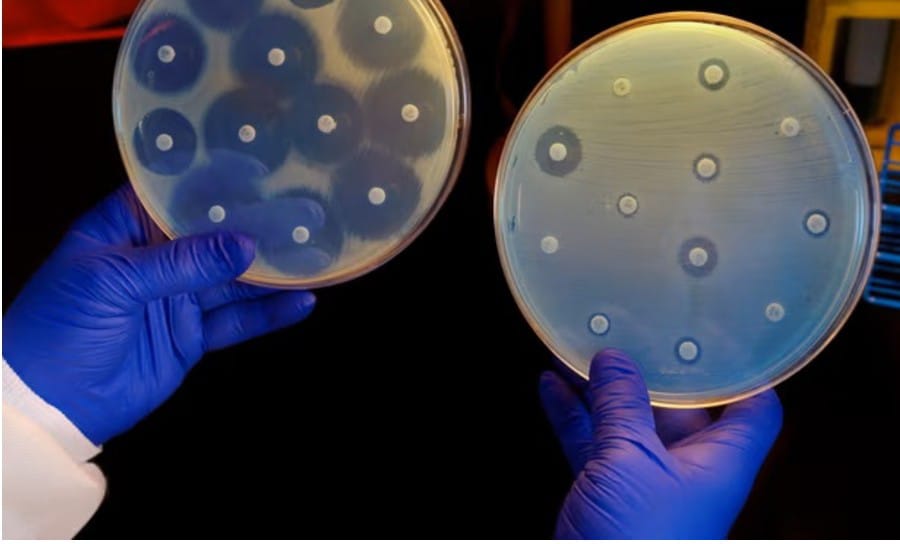
One of the biggest challenges in medical science today is the rise of drug resistance—the ability of bacteria, fungi, and viruses to evade even the most powerful treatments. In hospitals around the world, once-effective drugs are failing, leaving doctors with fewer options to treat infections. It’s a crisis that scientists are racing to solve.
[ad]
For Dr. Odiba Arome , this problem became personal early in his career. As a young researcher, he encountered cases where common antifungal treatments no longer worked. Patients, especially those with weakened immune systems, were left with few alternatives. It was a defining moment—he realised that the battle against drug resistance wasn’t just theoretical; it was an urgent, real-world issue affecting millions.
That realisation led him to what established researchers consider a major breakthrough. In a study examining fluconazole-resistant Candida albicans, Arome and his team identified a previously unknown set of mutations that made the fungus completely resistant to the drug. The discovery had never been reported before and has since been cited multiple times by researchers globally, adding new targets for drug design in the fight against antimicrobial resistance.
But his work doesn’t stop at infections. As a critical contributor to the establishment of the Drug Discovery and Biotechnology Unit, Lion Science Park, University of Nigeria, Nsukka, he is coordinating innovations in AI-powered drug discovery, cancer research, and aging science. His research on Ganoderma lucidum methyl ganoderate E as a potential lifespan-extending compound is part of an ongoing effort to uncover new anti-aging strategies. His work also extends to uncovering genomic alterations, exploring how DNA repair and genetic stability can influence developmental disorders and cancers.
Recognised internationally, Arome was the first Nigerian scientist selected for the ASEAN Talented Young Scientist Guangxi Fellowship, awarded by China’s Science and Technology Department for his work on DNA repair, meiosis, and genome stability.
In this interview with The Guardian, Arome discussed the urgency of drug resistance research, the potential of AI in medicine, and Africa’s growing role in global biomedical science.
What led you to focus on drug discovery, aging research, and antimicrobial resistance?
My interest in these areas developed from a broader curiosity about disease mechanisms and treatment resistance. The fact that some diseases remain difficult to treat due to drug resistance, aging-related cellular damage, or genetic factors makes research in these areas essential. I consider understanding why treatments fail or why aging makes us more vulnerable to disease as important for developing better therapeutic strategies.
One of your widely recognised studies involved identifying drug-resistant mutations in Candida albicans. What did this research uncover?
In that study, we investigated fluconazole resistance in Candida albicans by examining samples from women and dogs of reproductive age. We identified previously uncharacterised mutations that conferred absolute resistance to fluconazole, which had not been reported before. This discovery adds new targets for drug design, which could help in developing more effective antifungal treatments.
The research is relevant because antifungal resistance is a growing concern in healthcare, especially for immunocompromised patients. Since publishing the study, it has been cited multiple times by researchers globally, showing its relevance in the field.
[ad]
You’ve also worked on cancer and aging research. How do these areas connect?
There’s a strong link between aging, DNA damage, and cancer. As we age, DNA repair mechanisms become less efficient, leading to genetic mutations that increase the risk of cancer and neurodegenerative diseases. My research focuses on understanding these processes at the molecular level, with the ultimate goal of providing insights into molecular interventions that can help reduce disease susceptibility.
For example, I’ve studied the lifespan-extending effects of Ganoderma lucidum methyl ganoderate E in Caenorhabditis elegans, a model organism used in aging research. Understanding how certain compounds promote longevity at a molecular level could inform anti-aging therapies for humans.
In cancer research, I’ve worked on MDM2-targeting peptides designed to enhance p53 activity, a key tumor suppressor. Overexpression or hyperactivation of MDM2 leads to excessive degradation of p53, compromising its role as a tumor suppressor. Since p53 plays an important role in preventing uncontrolled cell growth, boosting its function could improve cancer treatment outcomes.
You’ve applied Artificial Intelligence (AI)-based deep learning approach to drug discovery, particularly in de novo design of Pep1 and Pep2, as potential protein interaction disruptors. How does AI improve drug development?
Traditional drug discovery is time-consuming and expensive. AI accelerates the process by analyzing large datasets, predicting drug-target interactions, and identifying promising drug candidates much faster.
In the case of Pep1 and Pep2, we used AI deep leaning approach to enhance the design of these MDM2 peptide binders, with the aim of disrupting its interaction with p53, an important protein whose deregulation is linked to many aggressive cancers. Examples include lung cancer, breast cancer, colorectal cancer, ovarian cancer, bladder cancer, pancreatic cancer, liver cancer, and leukemia. AI allowed us to narrow down drug candidates quickly, focusing on those with high binding potential before conducting laboratory validation. The integration of AI into drug discovery can reduce development costs, improve efficiency, and increase the likelihood of finding effective treatments.
You played a critical role in the establishment of the Drug Discovery and Biotechnology Unit at the Lion Science Park. How does this initiative contribute to scientific research in Africa?
Lion Science Park is Africa’s first university-based science park, established to bridge the gap between academic research and industry. One of the challenges in African research is that many discoveries remain within academic institutions without reaching commercialisation. This initiative helps translate research into practical applications, biotech startups, and industry collaborations.
[ad]
For instance, in the Drug Discovery and Biotechnology Unit, we focus on early-stage drug development and translational research. By creating an innovation ecosystem, we aim to encourage more African-led pharmaceutical advancements and biotechnology enterprises.
Looking at the broader environment, do you think Africa is ready to take on a bigger role in biomedical research
Yes, but there are challenges. African scientists have the talent and research capabilities, but there are gaps in funding, infrastructure, and industrial partnerships. To play a bigger role in biomedical research, we need greater investment in scientific infrastructure, stronger collaborations with global institutions, and more support for research commercialisation.
That being said, initiatives like Lion Science Park and growing interest in AI-driven research show that Africa is making progress. There’s a shift happening, and if properly supported, African-led research can contribute more significantly to global healthcare advancements.
You were the first Nigerian scientist to receive the ASEAN Talented Young Scientist Guangxi Fellowship. What was the focus of that research?
I feel honoured and grateful for that award. That fellowship by China’s Science and Technology Department was a humbling recognition of my work in DNA repair, meiosis, and aging research. My focus was on genomic stability and how DNA repair mechanisms affect disease susceptibility.
One of the studies I worked on involved Caenorhabditis elegans NSE3 homolog (MAGE-1) and its role in genome stability. Understanding how DNA repair proteins function during cell division helps us identify genetic vulnerabilities that contribute to diseases like cancer.
The fellowship was a great opportunity to collaborate with international researchers and apply those insights to my work.
Finally, what do you see as the future of your research?
The future of my research is focused on bridging fundamental science with real-world applications. I want to continue working on AI-powered drug discovery, DNA repair mechanisms, and aging-related therapies, but with an emphasis on translating discoveries into clinical applications.
A key goal is to establish more biotech collaborations and pharmaceutical partnerships that will bring research findings closer to practical drug development and healthcare solutions. Africa has a growing role in global scientific innovation, and I hope to contribute to that momentum by expanding research capabilities and training future scientists anywhere in the world.
[ad]

