 Follow Us on Google News


 Follow Us on Google Discover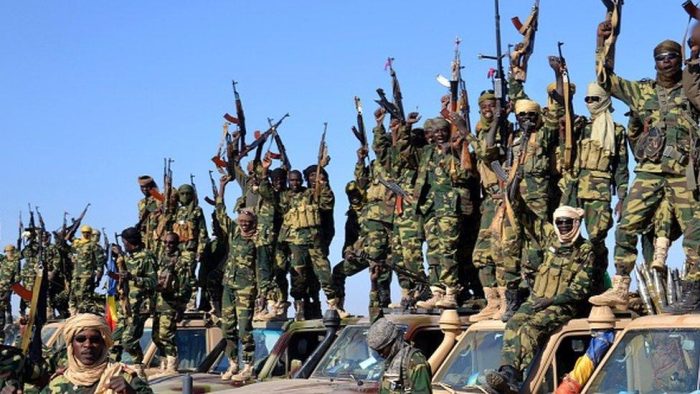
According to the Global Terrorism Index 2025, alongside Afghanistan, Burkina Faso, Mali, Somalia, Syria, Pakistan, Nigeria ranks amongst the top 10 countries most adversely impacted by terrorism.
Between 2011 and 2023, Boko Haram was responsible for thousands of deaths in Nigeria, Cameroon, Chad, and Niger. Yet, Nigeria is the country most affected by BH terrorist onslaught.
In Borno State alone, BH has caused over 38,000 deaths whilst BH and ISWAP actions contributed to the internal displacement of an estimated two million people in Adamawa, Borno, and Yobe States, plus, the external displacement of over 328,000 Nigerian refugees to neighbouring countries, especially Cameroon, Chad, and Niger.
These dynamics stimulate striking posers. Is the extant security strategy wrongheaded? To the extent that cattle-herding has often been utilised as a smokescreen for ferocious terrorist attacks nationwide, should the government impose a nationwide moratorium on nomadic cattle herding until a definitive improvement in national security?
How sustainable is the argument, in the 21st Century, advanced by some, that “nomadic cattle-herding” is a way of life, with the inescapable inference of immutability, in a volatile, uncertain, and complex world, that’s underpinned by rapid advances in artificial intelligence (AI), machine learning, science, technology, engineering, mathematics, critical thinking and problem-solving?
The establishment of Amotekun was a necessary and proportionate response to the breakdown of law and order: should steps be taken to facilitate arming authorised local militias security outfits to complement the gallant, albeit constrained, capabilities of the Nigerian armed forces?

Addressing the posers concurrently, the complexity, scale, typology and prevalence of terrorism and insecurity across Nigeria’s six geopolitical zones self-evidently indicts a defective security strategy. Afterall, what is the point of repeating the same old moribund strategy and expecting different results, whilst innocent lives are being lost and completely upended in swathes?
States and geopolitical zones must be allowed forthwith, to develop, own, and lead security networks to sustainable protect and defend citizens. Critics may challenge that proposition on the grounds that the state police bill is currently making its way through the National Assembly. However, the countervailing, and more compelling argumentation, is why should any further life be lost to terrorism on account of bureaucratic inertia and the determined political will to safeguard lives and property nationwide?!
The desperately heightened state of terrorism and insecurity justifies a declaration of a state of emergency in the worst affected states including, but not restricted to, Benue, Borno, Delta, Edo, Kebbi, Kogi, Ondo, Ogun, Osun, Oyo, Plateau and Taraba states. Is it any wonder, therefore, that Nigeria’s former Chief of Army Staff and ex-defence Minister, (Rtd) General Theophilus Yakubu Danjuma, has recently urged the people of his home Taraba State, not for the first time, to defend themselves against terrorists?
Stating on April 18, 2025 in Takum, “I told you before to rise and defend yourselves, and I’m saying it again this time with even more urgency. Those attacking you are heavily armed. Nobody knows how they got such weapons, but you too should find a way to arm yourselves. Wherever they got theirs from, get yours too.”
Of course, the security of life and property, which is the overriding obligation of government, ought to go hand-in-hand with socio-economic development. As such, explicating the proposition that government ought to facilitate the latter, in concert with the private sector, domestic and international investors, the financial industry, non-governmental organisations is trite.
Nevertheless, the world is dynamic and so should nomadic-herding, which unfortunately in Nigeria, has been utilised by bad actors as a convenient camouflage for extremist terrorism, murder, kidnapping, maiming and raping innocent people. In the overriding interests of security of life and property, Nigeria’s cohesion (or what remains of it!), law and order, this treatise advocates a moratorium on herding, until the security situation improves.
The obvious question as to what the herders should do inevitably follows. By inference, is the emanating question as to the lot of indigenous farmers across the country, landowners, law abiding citizens who have been maimed and dispossessed of their farmlands and homesteads.
What are they supposed to do too? It is proposed that the Federal Government, as a matter of strategic priority, establishes a hypothecated fund to compensate affected parties, administered by the states. This could be in the form of a fractional increase in general taxation in the greater pursuit of peace in the country. These are clearly tough times which demand creative thinking and specific, actionable, realistic, and timebound policies, not inertia!
Philosophically, Boko Haram, ISWAP and other extremist jihadist groups are united in a fundamental objective: the establishment of a religious caliphate and sharia law in Nigeria. However, that objective is fundamentally and diametrically opposed to the pivotal secular configuration of Nigeria’s Constitutional framework.
Importantly, Nigeria is multi-religious, multi-cultural, multi-ethnic and no singular religious code can, nor should, override the heterogeneity of Nigeria’s makeup comprising over 220 million people.
To that extent, there cannot be a meeting of minds between Nigeria’s constitutional imperatives and redlines, explicitly defined in section 10 of the 1999 Constitution (as amended): “the Government of the Federation or of a State shall not adopt any religion as a State Religion”; and the aspirations of the extremist terrorist groups for any Caliphate. The Nigerian armed forces are therefore engaged in a legitimate and just war to safeguard and uphold the Constitutional provisions.
Conclusion
Finally, it is further recommended that 1.) the bill on state police be enacted as soon as possible to complement the gallant efforts of the Nigerian soldiers; 2.) empower and arm regional and state security networks; 3.) impose a moratorium on herding forthwith; 4.) explore a fractional increase in general taxation as a temporary mechanism to compensate affected pastoralists and farmers; 4.) the speedy establishment of a Nigerian Department of Homeland Security to brigade the functions of Nigeria’s Civil Defence and Security Corps, to make it sharper, boost operational agility and effectiveness; 5.) consider incentivising and training willing National Youth Service Corps members, and mercenaries for deployment in the suggested Department of
Homeland security to defend the country. Inertia is not a strategy.
The extremist terrorism besieging the country calls for real leadership, demonstrable political will and action, not pussyfooting nor partisanship. Now!
Concluded.
Ojumu is the Principal Partner at Balliol Myers LP, a firm of legal practitioners and strategy consultants in Lagos, Nigeria, author of The Dynamic Intersections of Economics, Foreign Relations, Jurisprudence and National Development (2023).

