 Follow Us on Google News
 Follow Us on Google Discover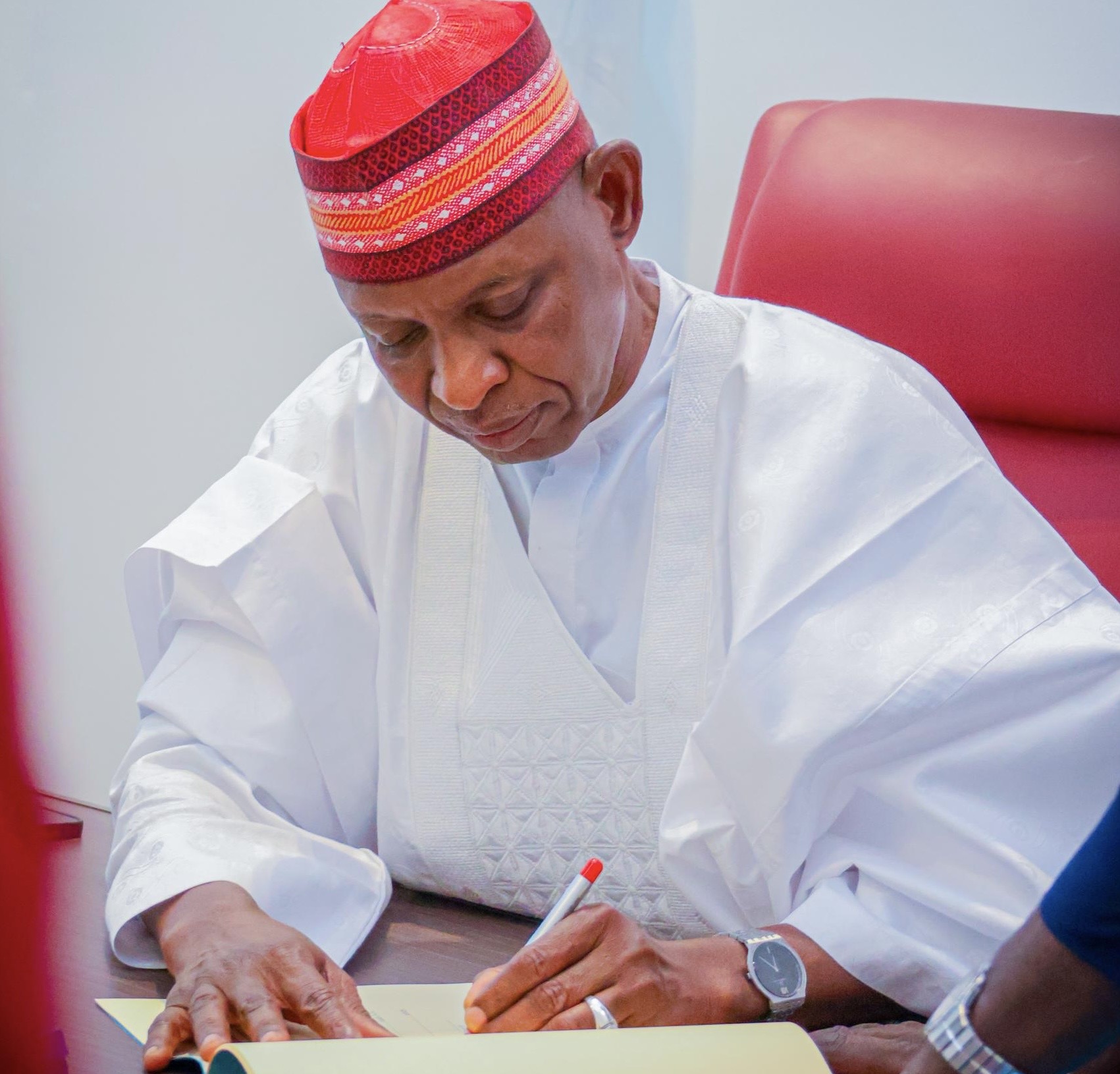
Kano State Governor, Abba Kabir Yusuf, has signed into law four bills for the establishment of new agencies designed to strengthen institutional frameworks and accelerate sustainable development in the state.
The newly established statutory agencies are: Kano State Protection Agency (KASPA); Kano State Signage and Advertisement Agency (KASIAA); Kano State Information and Communication Technologies Development Agency (KASITDA); and Kano State Small and Medium Enterprises Development Agency (KASMEDA).
According to a statement issued by Sanusi Bature Dawakin-Tofa, spokesperson for the Governor, on Friday, the new agencies are now part of the Kano State legal framework and are expected to stimulate innovation, support small businesses, regulate signage and advertising, and enhance public protection and service delivery.
During the brief ceremony, Yusuf described the creation of the new agencies, supported by law, as a significant step towards realising his administration’s vision of a modern, inclusive, and economically vibrant Kano.
He emphasised that the new agencies will play a crucial role in job creation, investment attraction, and the efficient implementation of government initiatives.
“Our mission is to lay a solid foundation for a greater Kano. These laws go beyond policy — they are key instruments of transformation that will help drive our development agenda,” the Governor stated.

He also issued a strong warning that violations of the provisions of these laws will be met with strict penalties, reaffirming his administration’s commitment to upholding the rule of law and ensuring compliance.
The establishment of these agencies reflects Governor Yusuf’s continued efforts to reform public institutions, improve governance, and position Kano as a leading centre for innovation, entrepreneurship, and sustainable growth.
Meanwhile, the Governor also considered assent to another bill for the establishment of an Infrastructure Management Agency that would regulate utility infrastructure and enhance environmental safety.
Besides, the establishment of KASIMA, a new regulatory body, will control, among other things, the erection and installation of utility infrastructure across all public spaces in the state.
The law aims to address the growing concern over the haphazard and unsafe installation of utility facilities such as electricity poles, underground cables, fibre optics, water and gas pipelines, and telecom masts.
Announcing the development, Yusuf described the new agency as a timely intervention to restore order, improve safety, and promote better coordination in infrastructural development across the state.
“KASIMA will bring long-awaited sanity to the way utilities are installed in Kano. The current practice of indiscriminate placement of poles, masts, and cables without regulation has created safety hazards, destroyed environmental standards, and disrupted urban planning,” he said.
The new agency, under the law, will be empowered to regulate and supervise all utility infrastructure in public spaces; issue permits and approvals for any installation; inspect and certify safety compliance of projects; and monitor Radio Frequency (R.F.) emissions from telecom towers.
The tasks of the new agency also include promoting infrastructure sharing (co-location) to reduce duplication; keeping a centralised record of all utility infrastructure across the state; recommending the removal of illegal, abandoned, or substandard structures; and advising the government on infrastructure planning and standards.
The government emphasised that KASIMA is not intended to obstruct development but to ensure that utility installations are safe, organised, and aligned with modern urban planning principles.
“We welcome development and investment, but it must be structured. This agency will ensure that every utility installed in Kano is done with proper planning, safety, and the public interest in mind,” the Governor added.
The law is scheduled to come into effect within the year 2025, with groundwork already ongoing to set up the agency’s leadership, recruit technical staff, and engage with stakeholders, including utility providers and local governments, the statement added.

