 Follow Us on Google News
 Follow Us on Google Discover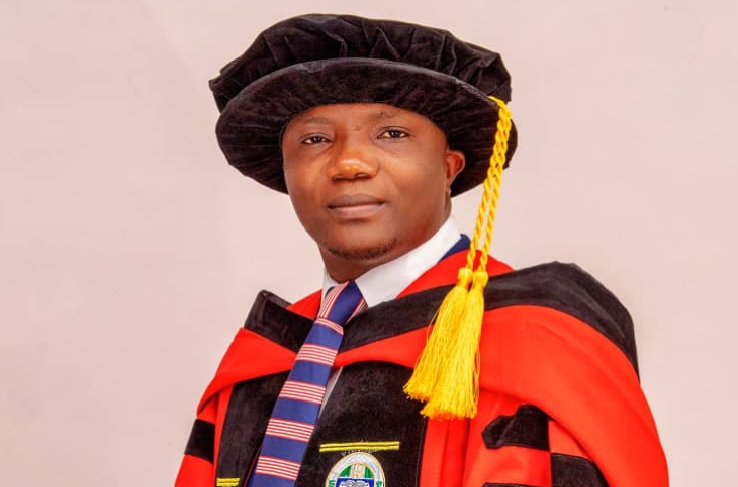
In the face of global concerns on the education sector, and edutech, academic, curriculum reform advocate, and public health expert, Dr. Adewale Adebero, is one of the voices leading the call for practical, sustainable change.
Curriculum reform and digital integration
As Nigeria’s education system stands at a critical junction, Dr. Adewale Samuel Adebero, is among a growing cohort of educators calling for a shift toward competency-based education that integrates practical skills, digital literacy, and critical thinking.
According to him, the current focus on rote learning and examination success has outlived its relevance. “We should not only be asking what students know, but also what they can do with what they know,” he said. “Digital tools, remote learning platforms, and hybrid teaching methods must be mainstreamed if we are to prepare students for a tech-driven world.”
Adebero, who currently lectures at Prairie View A&M University, Texas, United States, is an academic, curriculum reform advocate, and public health expert with over 10 years’ experience in teaching and researching on areas to improve human performance and healthful living through physical activities and education. He has also lectured at the University of Highlands and Islands, UK and the University of Lagos UNILAG).
Structural gaps and
struggles
Despite ongoing policy reforms, the Nigerian education system continues to struggle with issues ranging from underfunding and outdated curricula to gaps in teacher training and student engagement. Adebero, who has contributed to national curriculum development, served as a consultant to various educational bodies, and has teaching experience in several countries of the world (Nigeria, United Kingdom, and United States) emphasises that the disconnect between classroom content and real-world application is widening. “In Nigeria, we are still graduating students who can’t compete globally or contribute meaningfully to the economy,” he said. “We must align our learning systems with the demands of modern society. In the United States for instance, curriculum are been reviewed regularly to reflect what the employers and the community want.”

Benefits of exercise on students performance
As one who has also served as a volunteer for international organisations for the improvement of public health through health education and participation in active lifestyle, Adebero stated that regular exercises and healthier lifestyle have immense benefits for students.
In his publication in the “Journal of Research in Contemporary Issues in Human Kinetics and Health Education”, published by the University of Lagos UNILAG, Adebero is of the view that Physical activities and exercise has the ability to improve academic scores for students.
“Regular physical exercise is the recipe for a healthy living, and prevention of communicable diseases. Physical activities and exercise are of immense benefits to improve the quality of life, reduce or even prevent Cardio Vascular Diseases and promote longevity. Other benefits of exercise highlighted by my study are ability to effectively decrease depression, and help to increase higher academic scores for students,” according to the don.
Development of teachers
Another major concern is the professional development of teachers. Many educators lack access to current training and support systems, limiting their effectiveness in modern classrooms. Adebero believes that teachers must be empowered as leaders and innovators.“ In-service training, peer-led workshops, and motivational incentives should be institutionalised,” he suggested. “Our teachers deserve continuous development opportunities to keep up with global educational trends.”
Multi-sector collaboration
Beyond government efforts, Adebero advocates for multi-sector collaboration involving private organisations, NGOs, and international partners. He points to successful pilot programs where community-led schools, digital education NGOs, and foreign grants have made measurable impacts in the United States and United Kingdom.“We need coordinated interventions,” he explained. “The government cannot do it alone. Innovation often comes from grassroots and partnerships.”
Educational landscape in post-COVID era
In the face of Nigeria’s post-COVID educational landscape, Dr. Adebero’s insights serve as both a diagnosis and a blueprint. With over a decade of experience in health education, curriculum design, and academic mentorship across several continents of the world, he remains optimistic—but insists on urgency. “The time to act is now. Education is national security. If we get it right, we solve half our problems as a country,” he said.

