 Follow Us on Google News
 Follow Us on Google Discover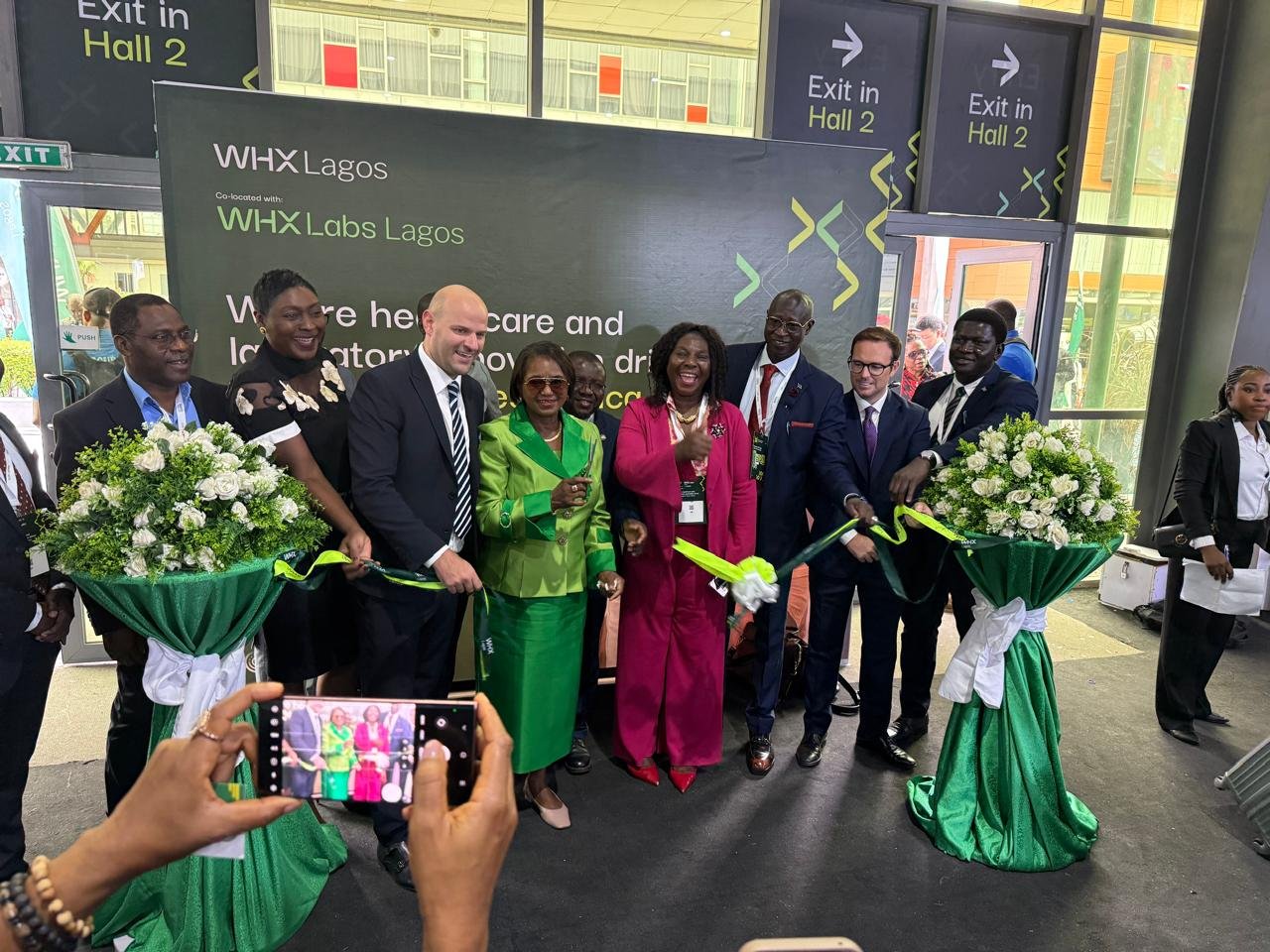
To improve the healthcare system, stakeholders have emphasized the urgent need for a more integrated, equitable, and context-specific approach and the importance of having adequate data management measures to curb inefficiencies obtainable in the sector.
President, Society for Telemedicine and eHealth in Nigeria (SfTeHIN), Dr. Adeolu Arogundade, urged stakeholders to look beyond conventional models and consider the social and infrastructural inequalities that hinder access to healthcare across the continent.
This was during the three-day World Health Exhibition (WHX) conference, themed “Strengthening Healthcare Trade and Innovation Across West Africa,” held in Lagos and organized by Informa Markets.
Highlighting systemic disparities, Dr. Arogundade pointed to regions like Nasarawa in Nigeria, where the number of functioning hospitals per 100,000 people is drastically below national averages.
The situation, he said, reflects deeper social inequalities tied to geography, education, and access. Dr. Arogundade also highlighted the uneven progress in telemedicine.
While mobile access has expanded across Africa, with Nigeria reportedly having around 3 percent mobile telemedicine penetration, he argued that the existence of such services doesn’t translate into real access.

“Most people may own mobile phones, but that doesn’t mean they can use telemedicine effectively. High internet costs and unreliable power supply, particularly in rural areas, continue to block widespread usage of digital health tools,” he said.
He warned that Africa’s healthcare transformation must involve collaboration between the public and private sectors. He called for investment in interoperable systems like electronic medical records (EMRs), locally trained rural health professionals, and renewable energy-powered digital solutions.
Dr. Arogundade stressed the importance of prioritizing Africa’s growing young population. “To close the health gap for the next generation, we must rethink how we train, deploy, and support healthcare workers. Only then can digital health become a truly transformative force, not just a promising concept.”
Chief Executive Officer of SYNLAB, Mr. Kenneth Okolie, called for a radical transformation in how healthcare data is managed across Africa, describing data as the oxygen of effective medical care. He emphasized that fragmented diagnosis and lack of data continuity across health institutions continue to plague the continent’s care systems.
“You go to a clinic, and you’re a new patient every time. There’s no unified system. That’s the challenge we face. The absence of robust data infrastructure makes it difficult for communities to access quality, consistent care,” he added.
Okolie expressed concern over the integration of artificial intelligence (AI) tools that are not validated for African populations, warning that biased algorithms trained on foreign datasets could lead to misdiagnosis and ineffective treatments. He stressed the need for locally sourced data and people-centered governance frameworks that ensure AI systems align with community needs and ethical standards.
Okolie urged African governments and private stakeholders to invest in foundational infrastructure such as roads, clinics, and energy systems to support digital transformation in healthcare. He cautioned that rapid tech adoption without strong regulatory and ethical oversight would build innovation on shaky ground.
“We can’t build AI in hospitals when public health centers don’t even have electronic records. This is not just about catching up with technology, it’s about getting the fundamentals right for a healthcare system that truly serves its people,” he said.
Honorable Commissioner for Health in Lagos State, Prof. Akin Abayomi, noted that the government has launched the Smart Health Information Platform (SHIP), an initiative designed to digitize patient data and transform healthcare delivery across public hospitals.
He added that such an initiative would give real-time data on disease patterns, helping the state make evidence-based policies, as data is the new oxygen for healthcare.
According to him, before SHIP, hospitals in Lagos relied heavily on paper-based systems. Health records were scattered, difficult to access, and often incomplete. “We were dealing in silos. A patient’s file in one hospital couldn’t be accessed by another, even within the same city. That’s not sustainable.”
Abayomi said the SHIP platform aims to correct this by ensuring every patient is assigned a unique health ID, which will be used to track their medical history across facilities. This is expected to reduce medical errors, duplication of tests, and overall costs.

