 Follow Us on Google News
 Follow Us on Google Discover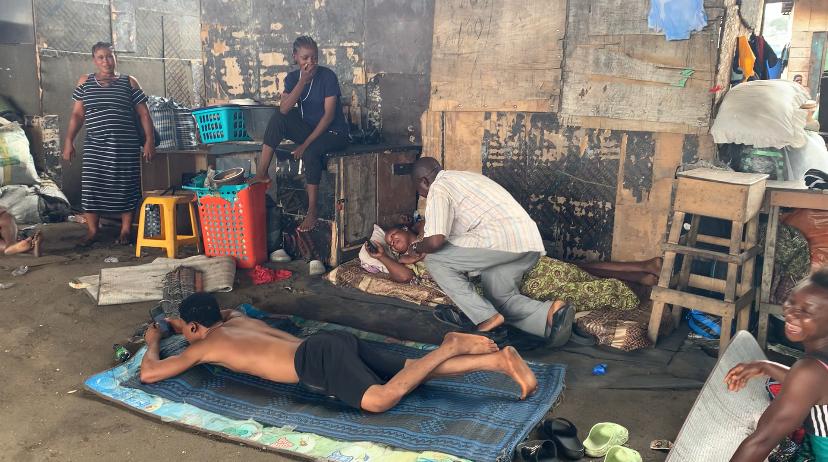
Etched in a corner of Olayinka Tomoloju’s mind are fragments of what used to be her home.
Her home, which once held laughter and gave her warmth, now lies in rubble adjacent to the Eko Bridge in Lagos Mainland.
She lost her home in March when officials of the Lagos State Building Control Agency (LABSCA) stormed Ilaje Otumara, a community in the heart of Lagos Mainland, with caterpillars and thugs wielding machetes and demolished their homes.
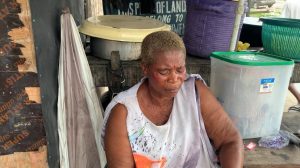
Emotional pain laced her words as she recalled the series of events that transpired on that day.
“I had just returned from the market where I went to buy fish for my business when I heard ‘dem don come o’,” she began.
“As I looked up, I saw caterpillars and ‘area boys’ carrying machetes. They were using machetes and sticks to beat people.”

She told The Guardian she was emotionally unstable, utterly confused, and had no idea what items to pick from her home.
So she stood, watching the caterpillar teeth break into her home, destroying it brick by brick until all that was left was broken bricks, raising dust in the air.
Since then, Tomoloju has been living under the Eko Bridge, a few metres away from the demolished community, with nothing but the few items she could salvage from destruction and memories of what was once home.
First, there were regeneration plans, then threats
One of the community leaders, Jude Ojo, who spoke to The Guardian, said the Lagos State Government had, between 2019 and 2020, hinted at the regeneration and upgrading of the community, prompting them to have a series of meetings with the Lagos State Urban Renewal Agency (LASURA) over the years.
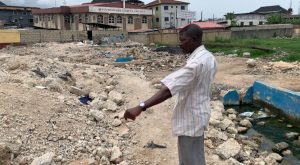
Four years later, on February 11, LASBCA officials went to the community to mark homes for demolition.
Ojo told The Guardian that he found their presence surprising as they had been having dialogues with LASURA over the years.
Ojo’s mind began to brew with questions begging for answers.
Still unsure of why they were there to mark their homes, Ojo and other community representatives led a group of residents to protest at the Lagos State Secretariat in Alausa to appeal to the government to rescind their demolition plans.
“We met with the General Manager of LASBCA, Gbolahan Oki. He told us he would pull down any structure under the powerline, and they were to mark a certain distance of 120 meters away from the canal,” Ojo told The Guardian.
“There is no powerline in the community and under LASBCA guidelines, there is nothing like 120 metres away from drainages. That measurement is a full football pitch and when you mark 120 metres round the community what is left?”
Ojo accused LASURA and Lasbca of lacking synergy despite being under the same state ministry.
“LASURA has been discussing regeneration plans with us, while LASBCA came with demolition. Both agencies are under the same ministry.”
Otumara is a creek, Federal Government property by law – Ojo
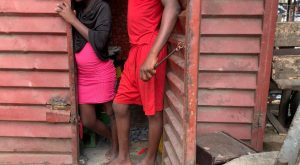
Ojo told The Guardian that the Lagos State Government lacked the jurisdiction to demolish the community, which has been existing for over a hundred years, noting that it was a creek when the first settlers discovered it.
“By law, Ilaje Otumara belongs to the Federal Government since it is a creek. All creeks and water bodies belong to the Federal Government,” said Ojo.
“If the Federal Government wants to claim the land or demolish the community, they know what to do. They don’t just demolish homes like that.
Ojo condemned the demolition of their homes, describing it as a violation of human rights, especially since no resettlement plan was provided for the residents beforehand.
Finding solace underneath Eko Bridge
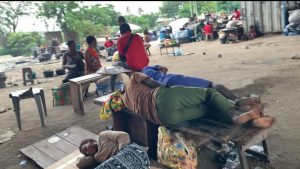
Since their forced eviction and the demolition of their community in March, Ilaje Otumara residents have been taking shelter beneath the Eko Bridge.
The Guardian learned that some displaced residents, with nowhere else to go, were forced to sleep within the premises of a nearby school at night and set up makeshift structures in the surrounding area.
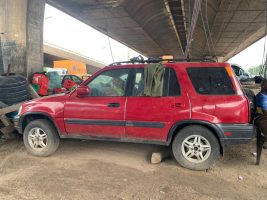
One resident who is a mechanic moved his belongings into his car, where he has slept every night since he lost his home.
Life has remained tough for these residents, who were rendered homeless in an instant. Amid the rising cost of living, many struggle to make ends meet, and decent housing is out of reach.
Ikechukwu Ivo, a 41-year-old groundnut seller and father of five who lost his home in the demolition, told The Guardian that he had no choice but to send his children to the village, unable to bear the thought of exposing them to the mosquitoes and unsanitary conditions of life under the bridge.
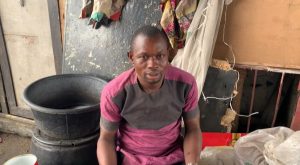
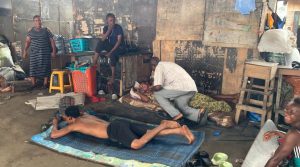
Some other parents live together with their children under the bridge. When The Guardian visited underneath Eko Bridge, where the victims now live, our correspondent saw children with their parents.
The displaced residents went about their businesses when our correspondent visited, while some slept on wrappers they had laid on the floor.
‘What can ₦100,000 do?’ – victims reject insulting compensation
Some sources told The Guardian that Aare Tomori Williams, who holds the power of attorney from the Oloto family, compensated the tenants who lost their homes.
When The Guardian asked how Williams and the Oloto family were connected to the case, Ojo said the Oloto was laying claims to the land, but it was never his to begin with since it was a creek.
“Another misconception people have is that Ilaje Otumara belongs to the Oloto of Oto. Ilaje Otumara is a creek for crying out loud, and all creeks belong to the Federal Government,” said Ojo.
“The place they are calling land now was developed by people who have used their sweat, tears and resources. Now they want to collect it.”
Some residents told The Guardian that Williams offered them N100,000 as compensation, an amount they deemed meagre.
“What exactly does N100,000 want to cover?” Ojo asked.

“Is it for them to move their properties to a new house? That money can never rent an apartment in Lagos.”
Other residents who spoke with The Guardian echoed the same thoughts.
Tomoloju, who lost her shop and her home, said the fish she bought and lost on the day of the demolition were worth over N100,000, and she bought them on credit.
“The money I used to purchase my goods that day was over ₦100,000. I bought fish and other items on that day. I lost my shop and the items I use for my business.
“That 100,000 is not enough to compensate me for what I lost and is insufficient to cater to my needs.”
Their concerns are not out of place.
For years, many Lagos residents have decried the high cost of housing in the state, which has now been made worse with ridiculous agents’ fees and commissions.
The cost of renting a self-contained room ranges between N500,000 and N1 million in some areas in Lagos. For two-bedroom apartments and above, the prices start from N1.5 million in many areas.
This is unaffordable for the victims who lost their homes to the demolition, and the N100,000 compensation is no doubt insufficient to rent an apartment in Lagos.
The Guardian also learnt that not every one of them accepted it when offered.
Some said they perceived it as an attempt to silence their voices and did not accept it for this reason, while others said they didn’t collect it because they deemed it too small.
A woman who had built a house in the community and lost it, Stella Elemosho, said she could not collect it because she was a landlord and would have rejected it if she had been offered that amount as a tenant.
“I am a landlady, so I cannot collect N100,000. Even if I am a tenant and they give me that amount, I can’t take it. What do I want to use it to do?
“Which of my expenses will it cater for? I did not collect it because it cannot cater to my needs.”

