 Follow Us on Google News
 Follow Us on Google Discover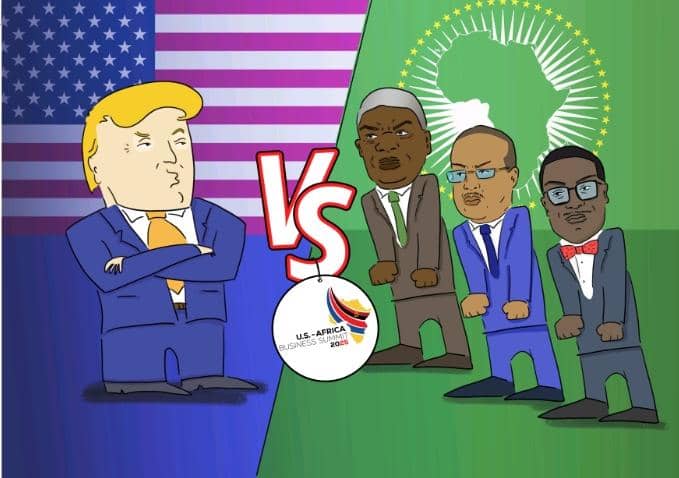
The 2025 U.S.-Africa Business Summit, hosted in Luanda, Angola, served as a stage for mutual disappointment. On one side, African leaders voiced frustration with President Donald Trump’s policies, which had already alienated many on the continent. On the other hand, Western investors expressed scepticism about Angola’s readiness to foster a business environment conducive to foreign capital. What was meant to be a celebration of growing economic ties instead highlighted the deepening divide between Africa’s governance struggles and the rigid, transactional approach of the U.S. under Trump.
One of the central points of contention at the summit was Trump’s policies toward Africa. His imposition of tariffs, ranging from 10% to 50% on several African goods, has hurt trade prospects and raised alarms among African leaders. These tariffs, coupled with the suspension of AGOA (the African Growth and Opportunity Act), left many African nations feeling betrayed. The travel bans targeting African countries, along with significant cuts to U.S. foreign aid for healthcare, education, and democracy programs, further strained relations. Trump’s dismissive rhetoric, including his derogatory “shithole countries” remark, made it difficult for many African leaders to reconcile his administration’s actions with the image of a partner that was serious about collaboration. His more recent comments, calling the small nation of Lesotho “a place no one’s ever heard of,” only reinforced the perception that the U.S. under Trump holds Africa in low regard.
Meanwhile, some business figures, such as Haim Taib, the founder of the Mitrelli Group, expressed disappointment at the level of U.S. representation at the summit, indicating that the U.S. commitment to Africa seemed more rhetorical than substantial. “I expected a little bit more, at least some very high positions to come here,” Taib said, highlighting the lack of top-level U.S. officials in attendance.
The Hill’s coverage of the summit made it clear that corruption remains the primary barrier preventing U.S. investment in Angola. Despite official speeches and promising initiatives, American investors remain cautious and unwilling to back large-scale projects like the Lobito Corridor until meaningful anti-corruption reforms are implemented. Angola’s government, while eager for foreign capital, has done little to reassure investors that their money won’t be lost to opaque networks or political interference.
Angola’s bid to attract foreign investment was dealt another blow at the summit, as analysts and investors alike expressed concerns over the country’s persistent corruption and political instability. Analysts such as Osvaldo Mboco and Crispin Senga emphasized Angola’s failure to create an environment conducive to foreign capital. Mboco pointed out that Angola’s business climate is deterred by “corruption, insecurity, and the lack of infrastructure,” noting that the country is simply “not ready for investment” despite its immense resource wealth. This view was echoed by Senga, who emphasized that Angola’s legal and regulatory frameworks remain inadequate, with unpredictable changes in laws and little enforcement of contracts.
At the heart of Angola’s pitch to international investors lies the Lobito Corridor, a major infrastructure project designed to transport minerals from the Democratic Republic of Congo and Zambia through Angola’s Lobito port. The Lobito Corridor is intended to be a key component in diversifying Angola’s economy beyond oil. However, despite its promise, the project has faced significant hurdles. The French think tank IRIS, which analyzed the corridor’s potential, warned that the project is plagued by political, social, and technical barriers. One of the primary obstacles is Angola’s authoritarian governance and the extremely high level of corruption, which IRIS describes as a major hindrance to the project’s success. Political interference, lack of transparency, and the diversion of funds have made progress slow, with investors hesitant to commit resources to a country that has struggled with governance and development.
Further complicating matters, Angola’s political system remains highly centralized, with the ruling MPLA party maintaining tight control over decision-making. The suppression of political opposition and restrictions on freedom of speech have created an environment where transparency is in short supply. These governance issues, coupled with a lack of democratic reforms, have left both local and foreign businesses wary of long-term investment in Angola. While the country’s natural resources could make it an attractive destination for investment, the lack of reliable infrastructure, legal frameworks, and an open, competitive business environment has deterred much-needed foreign capital.
The Lobito Corridor, once heralded as a flagship project for Angola’s economic diversification, symbolizes the larger issues at play. Despite promises of billions in investments and support from Western governments and financial institutions, the corridor has faced repeated delays, with little progress on the ground. The IRIS report also noted that the logistical challenges of coordinating across three countries—Angola, Zambia, and the DRC—have further complicated the project. Poor infrastructure, inadequate rail connections, and political resistance have made it difficult to execute even basic components of the plan.
As the summit concluded, it became clear that both Angola and the U.S. were left dissatisfied with the results. African leaders did not get the tangible support they had hoped for from Washington, and Western investors remained sceptical of Angola’s ability to deliver on its promises. The divide between Africa’s governance challenges and the West’s demands for reform was on full display, as both sides left the summit with little more than empty rhetoric.
Ultimately, the summit underscored the need for a realignment of expectations on both sides. For Angola, the summit served as a reminder that true progress on economic reform requires not just grand speeches but substantial change in how the country is governed. Until corruption is tackled head-on, and democratic reforms are implemented, projects like the Lobito Corridor will continue to struggle. For the U.S., it’s about finding a balance between strategic interests and supporting democratic development. If both sides can shift from transactional diplomacy to a more collaborative, reform-focused approach, then the promises of the Lobito Corridor and other ventures may yet come to fruition. But until then, the two sides remain locked in a cycle of mutual disappointment, with no clear resolution in sight.

