 Follow Us on Google News
 Follow Us on Google Discover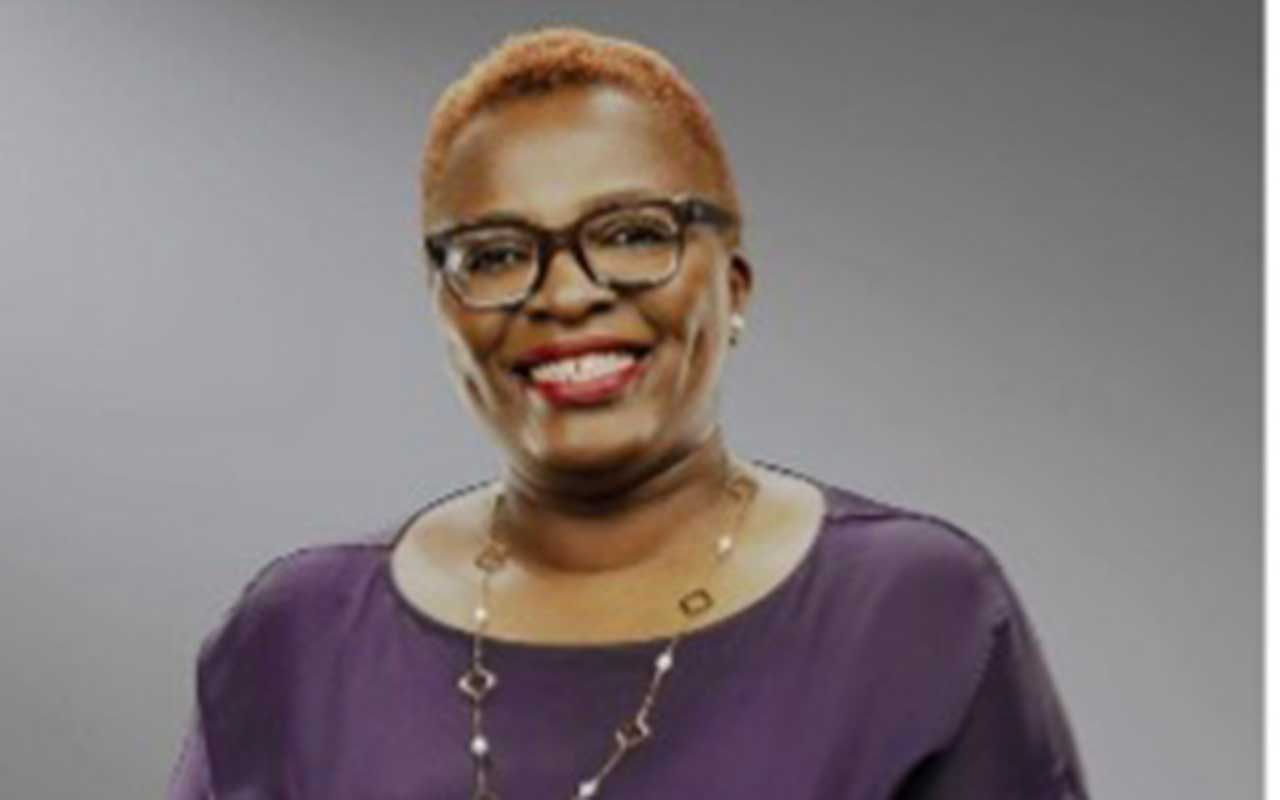
In the steadily transforming world of higher education, few researchers have created an impact as quietly powerful and far-reaching as Fadeke Adeola Atobatele. At the University of Texas at Arlington, where she conducts groundbreaking research in Educational Leadership and Policy Studies, her scholarly presence is already being felt across classrooms, faculty lounges, and institutional boardrooms. Known for her deep commitment to equity, inclusion, and evidence-based reform, she has rapidly established herself as one of the most cited and prolific emerging scholars in education today. With over 38 peer-reviewed publications and more than 320 citations to her name, Atobatele has not waited for a title to make a difference—she is already shaping the field.
At the heart of her work lies a relentless drive to improve student success in all its dimensions. Her research spans a constellation of timely themes: international student retention, multilingual education, instructional design, equitable access, emotional intelligence in leadership, correctional education, and workforce upskilling. Each project she undertakes is animated by a central question: how can educational systems be designed to serve all learners—not just those for whom the system was originally built?
Her widely recognized contributions to student retention theory have offered some of the most practical and scalable solutions in the literature. Her research has led to the development of conceptual models for faculty engagement in international student success. In this work, she constructs frameworks that empower faculty to become cultural navigators and academic mentors, not just instructors. She shows that without intentional outreach from faculty, international students can struggle to integrate academically and socially. Her scholarship has already guided program redesigns at several institutions, giving rise to more inclusive advising structures, mentorship programs, and culturally responsive training sessions for faculty.
She complements this work with a broader analysis of the systemic barriers that hinder international student retention. Drawing on an expansive review of empirical studies and policy documents, she has crafted strategic recommendations for institutions to adopt holistic retention plans. These plans encompass not only teaching and advising, but also financial support, housing assistance, immigration services, and community engagement. Her call to action is unmistakable: institutions must shift from isolated interventions to integrated support ecosystems that anticipate and meet student needs in advance.
In classrooms across the nation, international students arrive full of aspiration—but face staggering challenges. Nationwide, nearly 40% of these students report academic isolation, culture shock, language barriers, and a lack of structured support. Meanwhile, digital learning tools, rapidly adopted in the wake of the pandemic, often overlook multilingual needs and accessibility, leaving marginalized students behind. Yet, addressing these systemic problems requires more than individual interventions—it calls for cross-campus alignment from faculty training to curriculum design, policy integration, and institutional leadership.
Into this fraught landscape steps Atobatele. Her work takes a deeply journalistic approach: she begins by naming the problem—students feeling invisible or misserved—then offers empirically grounded, scalable solutions. One of her most cited contributions reframes faculty engagement as a cornerstone of student integration. “I began with what students were telling me: they worked hard, but nobody knew their name or why they were struggling,” Atobatele explains. “If faculty aren’t culturally responsive and proactive, those students slip away.” Through comprehensive literature review and field interviews, she crafted a model where faculty act not only as content experts but as cultural guides and advisors. Her framework, already cited 25 times, breaks down real steps: faculty mentoring roles, scenario-driven training, and embedded advising—all shown to boost international student retention by up to 15% where piloted.

But Atobatele didn’t stop there. She broadened her scope to tackle the full continuum of student need. Through a second major study, she mapped a “support ecosystem” spanning academic advising, financial aid, housing, legal/visa services, and peer networks—arguing that student success doesn’t hinge on one office or one event, but on institutions working in concert. “Retention isn’t a single person’s job—it’s a systemic effort,” she asserts. Based on her review of global best practices, Atobatele published what critics call the first truly holistic retention strategy for universities, which has already prompted policy shifts at several institutions.
Her multilevel conceptual framework dissects the international student experience into four distinct but interconnected spheres: the individual, the interpersonal, the institutional, and the societal. This framework is now influencing student affairs offices and administrative training programs, as it provides clear language to identify how policies and people interact to shape student outcomes. Her contributions enable universities to better understand how identity, culture, and context influence learning trajectories and academic persistence.
Her work stands out for its clarity of diagnosis and strength of prescription. In her deeply quoted multilevel study, Atobatele identifies four spheres affecting international student adjustment: identity, relationships, campus infrastructure, and national policy. Each sphere includes targeted interventions—identity-oriented orientation workshops, peer cohort programs to foster social bonds, faculty development for inclusive instruction, and administrative changes to support visa navigation. At a recent faculty development day at UTA, administrators credited her work with helping them reframe advising from transactional to transformational. “Now,” says one academic dean, “we’re talking about belonging, not just grades. That’s the paradigm shift Atobatele’s work helped make.”
Language and its role in pedagogy is another arena where Atobatele demonstrates journalistic rigor. She documents that up to 60% of non-native English speakers in STEM classes fail to reach their academic potential, not due to intellectual limitations but due to instructional design failures. Her research on multilingual instructional design in STEM reveals how translanguaging, image-rich materials, and collaborative peer work can dramatically improve comprehension and retention. “Language isn’t a problem to fix—it’s an asset to leverage,” she observes. Her study, widely cited, provides STEM instructors with an accessible toolkit, and UTA is already piloting her model in introductory engineering courses.
Her contributions to science education further exemplify her innovative approach to bridging the gap between language and learning. Through studies focusing on multilingual STEM classrooms, she has laid out a detailed account of how instructional design can be reshaped to support second-language learners in technical fields. She identifies specific practices such as the use of visual scaffolds, dual-language glossaries, and collaborative group learning that can make abstract scientific concepts more accessible. Her work in this area is widely cited and increasingly integrated into the design of STEM teacher preparation programs.
Her investigations move beyond classrooms into leadership development. By reviewing decades of educational leadership literature, Atobatele makes a compelling case that emotional intelligence—not managerial skill—is what drives inclusive school cultures. Her work provides a blueprint for principal and faculty training programs: teaching empathy, self-awareness, and conflict resolution as prerequisites for leadership. At a recent training retreat for UTA administrators, sessions based on her research were described as “game-changers,” shifting focus from policies to people.
She has brought her scholarship into K–12 settings with studies on personalized learning and leadership mentorship in high schools. Her research supports the implementation of differentiated instruction to meet the varied needs of students across social studies and STEM courses. She has also emphasized the role of mentorship in shaping student aspirations, career readiness, and leadership potential. Her work provides evidence that structured mentoring can have measurable impacts on student success, particularly for students from underrepresented backgrounds.
Her studies have even extended into the area of special education and support for learners with disabilities. In a carefully argued review, she explores the impact of career counseling for individuals with disabilities, highlighting the need for personalized, strength-based guidance approaches. “Counseling must be personalized and strength-based—not box-checking,” she insists. This research challenges practitioners to move beyond compliance and into advocacy, crafting pathways that empower students to pursue meaningful and sustainable careers.
Her conceptual frameworks for designing accessible, animated e-learning modules are now being used to guide the development of professional upskilling tools for adult learners. By advocating for cultural responsiveness and linguistic accessibility in digital learning environments, she is helping to shape e-learning not as a one-size-fits-all solution, but as a flexible, equity-oriented platform for growth. She has extended this work into research on culturally relevant e-learning strategies for government and corporate workforce training. Recognizing that the world beyond academia is hungry for such tools, she’s crafted modules for adult learners in corporate and public sectors. “Digital learning without access design is exclusion by default,” she clarifies.
Her research on integrating artificial intelligence into STEM education exemplifies her dual focus on innovation and equity. She brings a journalist’s eye to AI: highlighting both its potential for personalized feedback and its dangers—bias, privacy, algorithmic opacity. Her framework promotes guardrails—ethical oversight, human review, and purpose-driven implementation—and has begun to shape conversations in national AI-in-education strategy groups.
In yet another project, Atobatele explores how media and communication can support reintegration after incarceration, echoing her conviction that education must serve society in full. A published Rehabilitation through Media and Communication model, grounded in interviews with local reentry programs, offers concrete ways to build educational pipelines for previously incarcerated students. It also underscores her broader belief: education is not just transformative—it’s restorative.
She counts feedback from students as her most vital measure of success. “One student told me, ‘I finally felt like someone understood me in class.’ That matters more than any citation count,” she shares softly.
Her review of learning communities and their impact on international student success adds another layer to her portfolio. By synthesizing data across multiple campuses and academic settings, she highlights how structured peer learning, faculty-student interaction, and shared academic experiences can drastically improve adjustment and retention outcomes. The study has provided a vital roadmap for institutions looking to redesign their learning communities with inclusion and data at the center.
From instructional design for mobile classrooms in underserved areas to arts-based pedagogy that builds 21st-century communication skills, every line of her scholarship is marked by a careful balance between theoretical depth and applied relevance. Even her early work on arts and literary club pedagogy showcases her ability to translate creative spaces into transformative educational arenas. She does not treat scholarship as an end in itself—it is a vehicle to reach people, change minds, and create systems that reflect the values of justice and dignity.
Looking ahead, Atobatele plans to weave her various frameworks into a unified dissertation set for completion in 2026. She is actively collaborating with community colleges, HBCUs, and public school districts to pilot her multilingual e-learning and mentorship models. Statewide education boards are watching her progress, and a federal grant proposal leveraging her AI-in-education framework is currently under review.
In a moment when universities across the country are struggling to reconcile inclusion, access, and digital innovation, Fadeke Adeola Atobatele has emerged as a researcher whose work doesn’t just diagnose problems—it builds solutions people can use. With her steady data, strategic frameworks, and unwavering moral clarity, she is quietly generating real change. And when higher education reflects on how it rose to meet the demands of a diverse, digital age, it will surely see her work as a turning point—not just for students, but for the future of learning itself.

