 Follow Us on Google News
 Follow Us on Google Discover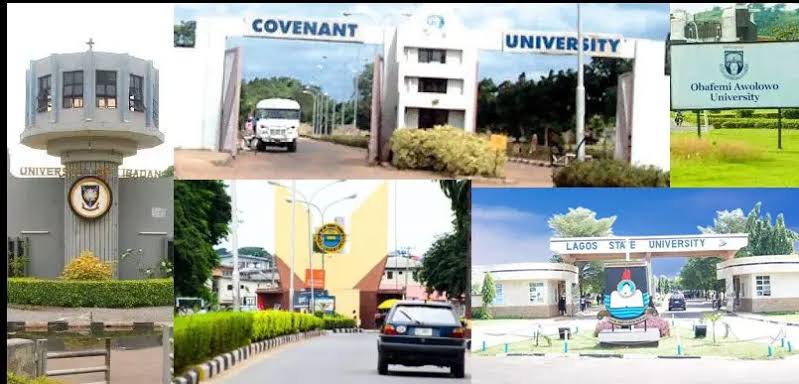
The University of Nigeria, Nsukka (UNN) has emerged as the highest-funded federal university in Nigeria’s 2025 national budget, receiving an allocation of ₦44.4 billion.
Meanwhile, Lagos State University (LASU) has become the most sought-after institution by candidates in the 2025 Unified Tertiary Matriculation Examination (UTME), drawing a record 79,000 first-choice applicants.
According to data from the Budget Office of the Federation, UNN led the pack of top 12 federal universities by budgetary allocation, followed by Ahmadu Bello University (₦39.8bn), University of Calabar (₦39.7bn), University of Maiduguri (₦34.2bn), and Nnamdi Azikiwe University (₦31.8bn).
Others on the top 12 list include University of Benin (₦30.3bn), Bayero University (₦29.3bn), University of Ibadan (₦27.8bn), University of Uyo (₦26.9bn), University of Lagos (₦24.6bn), University of Jos (₦24.2bn), and Obafemi Awolowo University (₦23.5bn).
While UNN ranked top in funding, the Joint Admissions and Matriculation Board (JAMB) data showed that LASU received the highest number of first-choice applications in the 2025 UTME, overtaking older federal universities.
The Lagos-based institution was followed by the University of Lagos (UNILAG) with 58,645 applicants, the University of Ilorin (UNILORIN) with 56,734, and the Federal University Oye-Ekiti (FUOYE) with 52,103 candidates.

Nnamdi Azikiwe University (UNIZIK) also appeared on both lists, ranking fifth in budget and receiving 51,467 UTME applicants. Others among the most preferred universities include the University of Ibadan (48,291), University of Nigeria, Nsukka (46,542), University of Benin (45,686), and Obafemi Awolowo University (43,777).
The figures reveal a clear distinction between financial backing and candidate preference. While older universities dominate the budget ranking due to size and research capacity, newer or state-run institutions like LASU are winning over prospective undergraduates with reputation, location, and perceived accessibility.
Education analysts say the figures present an opportunity for universities with high applicant demand to push for better funding, especially amid growing concerns over infrastructure, faculty welfare, and research support in Nigerian universities.
The divergence also raises questions about what factors most influence a student’s first choice cost of attendance, proximity, programme offerings, or prestige and whether federal allocatialignsync with enrolment trends and future workforce needs.

