 Follow Us on Google News
 Follow Us on Google Discover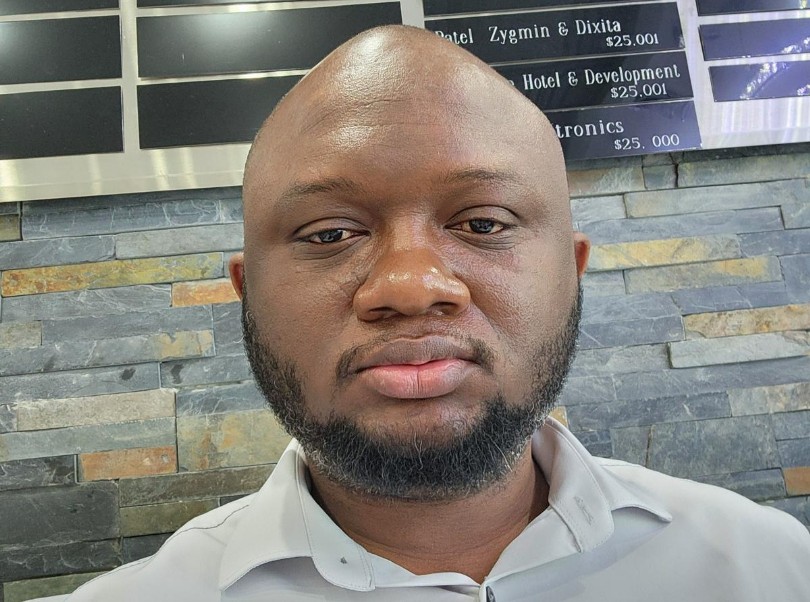
Emmanuel Durowoju’s dual work in semiconductor engineering and advanced battery materials positions him at the forefront of global clean energy innovation
Emmanuel Durowoju, a Nigerian engineer and researcher, is emerging as a key voice in the global movement for clean energy and sustainable technology. With cutting-edge work in lithium-ion battery research and semiconductor manufacturing, Durowoju is helping drive energy reliability, efficiency, and innovation.
Currently serving as a Module Engineer at Intel Corporation in Hillsboro, Oregon, Durowoju focuses on optimising semiconductor fabrication processes—an essential component of modern electronics. But it is his pioneering research into lithium battery technologies, particularly from his time at Texas A&M University–Kingsville, that is earning attention from sustainability experts.
Durowoju’s work centres on improving solid-state electrolytes in lithium-ion batteries. He used machine learning models to investigate the ionic conductivity of advanced materials like Lithium Indium Hexachloride and its doped variants with Molybdenum and Cerium. These studies aim to improve battery performance, safety, and longevity.
“The future of clean energy relies significantly on our ability to innovate battery storage technologies, Durowoju said. “Enhancing electrolyte materials through predictive modelling allows us to push the boundaries of battery performance, safety, and sustainability.”
These advancements are critical for the global shift toward renewables. Better batteries not only support the integration of solar and wind power into national grids but are also essential for electric vehicles and large-scale energy storage.
His research in sustainable materials science has been published in multiple scientific journals. At Intel, he builds on this expertise by applying machine learning to semiconductor manufacturing. His paper, Machine Learning-Driven Process Optimisation in Semiconductor Manufacturing: A New Framework for Yield Enhancement and Defect Reduction, outlines how data-driven approaches can stabilise plasma etching, reduce defect rates, and improve manufacturing efficiency.
Durowoju’s contributions have led to measurable outcomes: higher production yields, reduced material waste, and enhanced equipment efficiency. These benefits are not just industrial—they support broader goals of environmental sustainability.
“Semiconductors underpin all modern electronic devices,” he said. “By improving manufacturing efficiency and integrating sustainable design principles, we reduce energy consumption, conserve materials, and develop technologies that support a more sustainable future.”
By bridging semiconductor fabrication with advanced battery research, Durowoju exemplifies the kind of cross-disciplinary innovation needed to tackle today’s energy challenges.
As the world faces increasing climate threats, researchers like Durowoju offer real-world solutions grounded in science and driven by purpose.
“Our energy future depends on persistent innovation,” he emphasised. “Whether in a cleanroom at Intel or a research lab in Texas, the goal remains the same—developing solutions that are safe, efficient, and sustainable.”
With a career that spans continents and disciplines, Emmanuel Durowoju represents a new generation of engineers: technically skilled, globally aware, and committed to powering the clean energy transition.

