 Follow Us on Google News
 Follow Us on Google Discover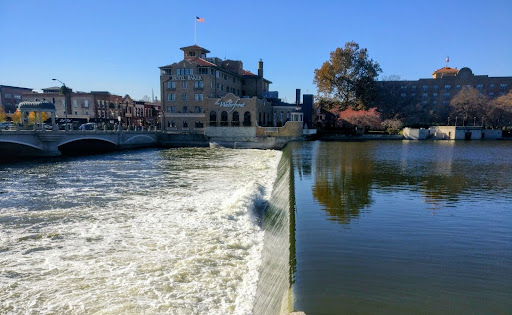
There are people who voice their horror and resentment at the pollution and degradation happening all around the world today. While many of these outcries do encourage action, most of them remain only as noise. Then there are people who choose to actually do something about it instead of just creating noise about it. Rishab Mahajan is one such individual. In 2010, an oil spill had devastated Michigan’s Kalamazoo River, and traditional cleanup methods threatened to cause more ecological damage than the disaster itself. Mahajan’s solution, however, would challenge everything the industry knew about environmental remediation.
While most would only see Christmas trees as seasonal ornaments, Mahajan saw a solution to the oil spill. These holiday decorations became the unlikely heroes in his strategy to trap oil-contaminated sediments without extensive dredging. The method worked so well that Louisiana adopted similar techniques to combat wetland loss. This moment marked the beginning of a career that would redefine how America manages its watersheds.
Mahajan, a board-certified water resources engineer, had spent over 15 years developing solutions that save communities millions while protecting public health. His work spans from the Fox River in Illinois to contaminated waterways across the nation, with each project building on lessons learned from unconventional thinking and rigorous scientific analysis.
The Fox River Challenge
Mahajan’s most significant victory came along the 98-mile stretch of the Fox River, where nutrient pollution threatened water quality for over 300,000 Illinois residents. Traditional approaches would have cost communities approximately $145 million in treatment plant upgrades. His team discovered something remarkable: removing specific dams could eliminate the need for these expensive infrastructure projects entirely.
“This project is critical in ensuring a cleaner Fox River, which serves as both a drinking water source and recreational activity venue for several communities in the Greater Chicago area,” Mahajan explained during his work on similar water resource challenges. His philosophy centers on finding solutions that benefit both communities and ecosystems without breaking municipal budgets. The Fox River Implementation Plan became a template for watershed groups across the nation. Multiple communities now use Mahajan’s methodology to address nutrient-related pollution in their streams. The Sanitary District of Decatur, the Metropolitan Water Reclamation District of Greater Chicago, and numerous other municipal clients have adopted his strategies.
The Fox River Study Group honored Mahajan with an award for his instrumental role in guiding the region toward cleaner, safer, and more beautiful waterways. His presentations at the Water Environment Federation Technical Exhibition and Conference from 2018 to 2023 shared these breakthroughs with over 21,000 water quality professionals worldwide.
Going Beyond Traditional Boundaries
Mahajan’s influence extends far beyond individual projects. As co-author of the Water Environment Federation’s publication “Stormwater, Watershed, and Receiving Water Quality Modeling,” he has created resources that guide industry professionals globally. Dr. Chein-Chi Chang, former WEF Watershed Management Chair and Bedell Award recipient, praised the manual as an essential reading for water industry professionals.
The book represents more than technical guidance. It bridges the gap between complex scientific modeling and practical application, making advanced water management techniques accessible to engineers worldwide. This sharing of knowledge accelerates progress across the entire field. His role as First Vice Chair of WEF’s Watershed Management Committee places him at the center of industry evolution. Mahajan reviews technical workshop proposals for WEFTEC, evaluating submissions that shape professional development opportunities for thousands of water quality experts. This responsibility positions him as a gatekeeper of scientific advancement in the field.
With Rishab Mahajan’s contributions came the validation of professional recognition. The American Academy of Water Resources Engineering awarded him Board Certification, the highest accreditation available in water resources engineering. This distinction recognizes not just technical proficiency but ethical awareness and adherence to best practices in water resources management.
Changing National Standards
Rishab Mahajan’s work addresses challenges that extend across state lines and international borders. His development of Nutrient Assessment Reduction Plans for Illinois streams has become a model for other states grappling with similar pollution issues. The methodology he pioneered helps communities meet Clean Water Act obligations while maintaining economic viability. He has provided invaluable assistance to over 1000 clients nationwide, helping them meet their regulatory obligations through a combination of advanced numerical modeling and comprehensive data analysis.
Flood risk mapping represents another area where his expertise protects lives and property. Working with Kane County and the Chicago Metropolitan Agency for Planning, Mahajan’s team is developing maps that help communities prepare for increased precipitation patterns. These maps guide urban planning decisions, insurance assessments, and emergency preparedness strategies. Mahajan’s approaches have proven that environmental protection and economic development can advance together rather than in opposition.
Mahajan’s work clearly illustrates how individual innovation can help change entire industries for the better. His methods now influence policy decisions, guide infrastructure investments, and protect public health across multiple states. The engineer who once used Christmas trees to clean up oil spills has become the architect of improved watershed management.

