 Follow Us on Google News
 Follow Us on Google Discover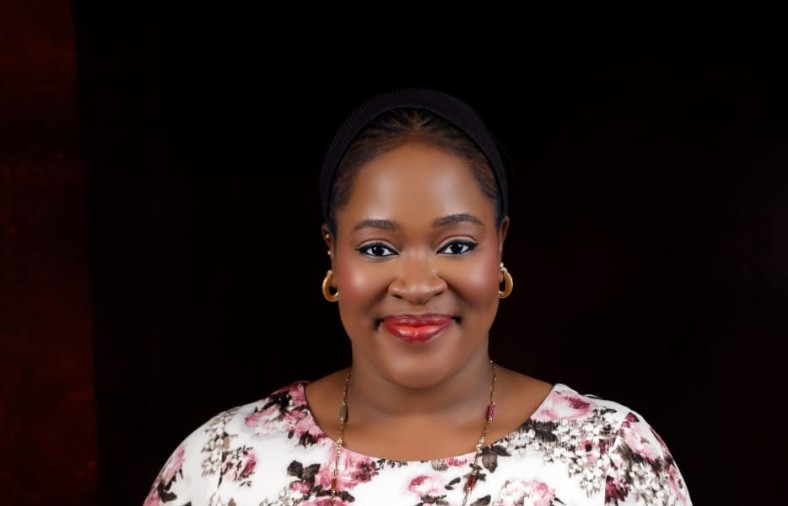
COVID-19 exposed the fragility of Africa’s health systems, highlighting gaps in funding, data, and preparedness. Maureen Amaonosi Oyarekhua, a development finance expert with extensive experience in sub-Saharan health programs, speaks to The Guardian about how strategic, data-driven financing can transform access to care. She shares insights on domestic resource mobilisation, integrating health services into national insurance schemes, and the reforms needed to make Universal Health Coverage a reality across the continent.
To begin, can you share a bit about your professional journey and what led you into public health systems financing?
My journey began with a solid grounding in finance and economics, earning a degree in Accounting from the University of Benin. However, I was drawn to the intersection of economic policy and social impact, which led me into development finance and eventually into public health. Over the past decade, I’ve worked across sub-Saharan Africa supporting the design and implementation of health financing models that have strengthened public health systems. My core motivation has always been to use data-driven financial strategies to ensure that underserved populations, particularly women and children, get the health services they need without falling into poverty.
COVID-19 shook health systems globally. From your perspective, what are the key lessons for Africa in financing public health in a post-COVID world?
COVID-19 was a stark wake-up call. It exposed the fragility of our health systems and the consequences of chronic under-investment. The first lesson is the critical need for resilient, domestically funded health systems. Africa can no longer depend predominantly on donor funding. Second, health financing must be data-driven through reliance on accurate disease burden forecasts, cost-effectiveness models, and fiscal impact analysis. Lastly, integration is key: siloed vertical programs must give way to holistic health system strengthening that can respond to both pandemics and routine health needs. COVID-19 taught us that emergencies don’t wait for procurement cycles or bureaucratic approval. We must build systems that can respond in real-time.
In your work within the UN System and before that at ARFH, you’ve supported the successful implementation of multimillion-dollar health portfolios. Can you explain how strategic financing decisions can shift health outcomes in practical terms?

Take reproductive and maternal health, for instance. In Nigeria, the challenge isn’t just service delivery; it’s inequitable access and inefficient spending. There was an Initiative designed to develop subnational financing models that aligned actual population health needs with local budget allocations. This meant using real-time data to forecast where maternal health resources would save the most lives. By integrating disease surveillance data, this multi-year program re-prioritised resources to underserved LGAs, trained over 70 finance officers on budget impact modelling, and introduced incentives for performance. These efforts increased reproductive health service access for over 3 million women and girls. So, strategic financing isn’t just a spreadsheet exercise; it’s a life-saving intervention.
Nigeria signed the Abuja Declaration to allocate at least 15% of its budget to health. We’re still far from that. What’s holding us back?
Two things: competing priorities and weak evidence-to-policy translation. Health competes with infrastructure, education, and defense in budget allocations. Without strong data showing the economic return on health investments, health is often sidelined. That’s why it’s important for development partners to focus heavily on economic evaluation and fiscal space analysis, tools that speak the language of finance and/or economic planning ministers. For example, cost-effectiveness analysis was recently used to demonstrate that increasing funding for family planning could avert $4 in health and social costs for every $1 invested. We must make health financing a macroeconomic priority, not just a humanitarian one.
You’ve worked extensively on programs aimed at integrating health financing into national insurance and budget systems. How realistic is Universal Health Coverage (UHC) for Nigeria?
UHC is absolutely possible, but not with our current trajectory. For Nigeria to achieve UHC, we need to pool more domestic resources, expand enrollment in health insurance, and ensure that funds actually reach frontline providers. Projects must embed reproductive health financing into national health accounts and integrate RH services into NHIS benefit packages. It’s not enough to say services are “free”; we need structured purchasing arrangements, predictable funding flows, and accountability mechanisms. With political will and robust data systems, UHC can move from aspiration to reality.
Let’s talk about data. You are a strong advocate of evidence-based decision-making. How has data or the lack of it affected health financing decisions in Africa?
Data is the cornerstone of effective health financing. But in many cases, nations in sub-Saharan Africa are working with incomplete, outdated, or fragmented datasets. The community of practice must deploy integrated surveillance systems and analytics platforms to track maternal deaths, service uptake, and commodity availability in real time. This will enable the redirection of resources when disease patterns shift. For example, during the COVID-19 pandemic, predictive modelling was used to prevent disruptions in maternal health services in some countries in sub-Saharan Africa. Without real-time data, our decisions will always be reactive in nature, not preventive. So yes, data deficits create funding gaps, and fixing this must be a national priority across the continent.
What reforms are needed now to secure sustainable financing for health in Africa?
First, we need domestic resource mobilisation. Governments must dedicate more fiscal space to health. Second, strategic purchasing is key as we must pay for results, not just inputs. Third, capacity building is important as budget officers and planners must be trained in health economics and forecasting. Fourth, we need to decentralise financial autonomy to states and LGAs. And finally, citizen engagement requires that the people demand accountability for health spending. These reforms require political courage and long-term commitment, but they’re absolutely necessary.
Finally, what keeps you going, and what’s your vision for the future of public health financing in Africa?
What keeps me going is the knowledge that every sound health financing decision can translate to a life saved. I’ve seen ladies access family planning services for the first time, communities get maternal care where there was none, and local health budgets grow because someone used the right data at the right time. My dream is a continent where health financing is not donor-dependent, but country-owned, where ministries of finance and/or national planning see health as an investment, not a cost. I want to see a generation of African health economists and health financing leaders who will champion this cause with rigor, empathy, and innovation.

