 Follow Us on Google News
 Follow Us on Google Discover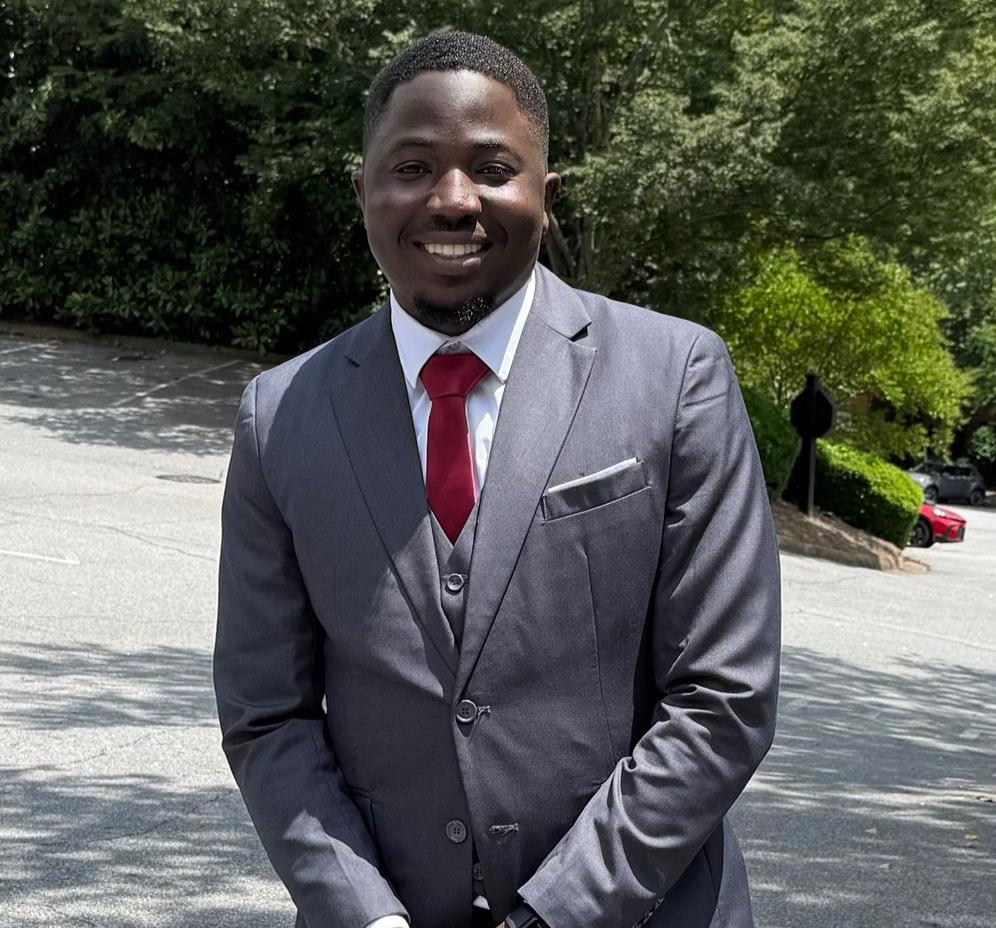
In this soul-stirring interview, we spoke with Kayode, a remarkable young Nigerian redefining the landscape of food science and bioresource engineering on a global stage. Kayode reflects on his origins, his purpose, and his vision for Africa’s future in food and environmental innovation.
Who is Kayode Taiwo?
I’m a researcher, a dreamer, and a doer. At my core, I’m someone deeply committed to solving real-world problems using science and innovation. I’m currently a researcher at the University of Georgia, USA, with a focus on sustainable systems, waste valorization, and bioresource engineering. But beyond the titles and labs, I am from Ogbomosho in Oyo State, and my background has proudly shaped me into the way I am today. My work and identity are rooted in the idea that science should serve humanity, especially underserved communities. So, most of the work I am doing now is not just research that won’t leave the lab but rather research that can transform the economic lifestyle of a country. Some of the work I have done is already being implemented on a large scale, and this is part of what gives me happiness.
What exactly do you do as a scientist and sustainability innovator?
I often tell people that I am a translator—I translate waste into value, ideas into impact, and science into solutions. My research focuses on transforming food and agricultural waste, materials that most people discard, into usable energy, biofuels, and high-value products. To put the problem in perspective, in the United States alone, between 30–40% of the entire food supply is wasted annually. If such wastage exists in a developed country, one can only imagine the higher percentages in developing nations, and that is why I am passionate about this work.
To address this challenge, I have worked on developing scalable and modular technologies that valorize food waste while simultaneously generating clean energy. Importantly, these solutions are designed to ensure that we are not creating new problems while attempting to solve existing ones. Beyond food waste, plastic pollution is another area of interest to me. Now, I am developing some bio-based plastics from food waste materials that are both biodegradable and highly recyclable. This work aligns with initiatives of Lagos State Government’s vision for zero plastic waste. Ultimately, my goal is to create scalable, practical solutions that empower communities in Nigeria, Africa, and beyond to tackle waste, energy shortages, and food insecurity simultaneously.
What inspired you to walk this path from Nigeria to becoming a published scientist?
To be honest, it started with questions. Why is there so much food waste in Nigeria? Why are we importing things we can grow or manufacture? Why do rural communities still lack clean energy? During my undergrad at the Federal University of Agriculture, Abeokuta, I worked on fruit juice formulations—simple at the time, but it opened my eyes to how much value is locked inside our local produce. That spark led to a passion for food systems, value chains, and waste recovery. I began seeing waste as wealth. That mindset shaped every decision that brought me here. Now at UGA, I’ve found myself surrounded by tools and opportunities to turn that passion into research, and that research into real-world change.
At such a young age, you have already received awards and presented your work to international experts in your field. What factors contributed to achieving these milestones?
First and foremost, I attribute my achievements to God, who is the ultimate enabler of all things. I am grateful to have reached these milestones at a relatively young age. One factor that has been instrumental is my desire to challenge the status quo. I am always asking myself how problems can be solved more effectively. I also place a strong value on mentorship and never hesitate to seek guidance when needed.
Maintaining a positive mindset, whether or not anyone is watching, has also propelled me forward. These values have opened doors, such as being the only researcher selected by my department to present my work to professors at the college level for the impactful Research Award. I have also had the privilege of presenting two of my research projects in Toronto, Canada, at the Annual Conference of the American Society of Biological and Agricultural Engineers, as well as receiving departmental awards that recognize exceptional contributions in science. I remain deeply grateful for these platforms, which have allowed me to share my work and continue pushing the boundaries of innovation.
How do you measure the impact of your work?
I measure the impact of my work in two main ways: through academic recognition and real-world application. On one hand, I have been fortunate to publish in high-impact journals, which shows that my research is contributing to the global body of knowledge. On the other hand, many of the technologies I have worked on are being applied in real-life settings, and seeing them make a difference reinforces that the work is meaningful. I have always maintained that research loses its value if it remains confined within the four walls of the laboratory. For me, true impact comes when scientific discoveries move beyond theory to create solutions that improve lives, industries, and the environment.
How financially rewarding is the field you’ve chosen?
The beauty of my field is that it is not only intellectually fulfilling but also commercially viable. Areas such as biofuels, green chemistry, and waste-to-energy are billion-dollar industries, and with the right skills and positioning, professionals can secure lucrative roles. But for me, it goes beyond financial reward; it is about purpose. I wake up every day knowing that my work could help clean a river, feed a child, or power a home. That is a kind of wealth money cannot quantify. My background as a Christian has also shaped my belief that money is not the ultimate measure of achievement or satisfaction. Many of the world’s most renowned scientists did not die as billionaires, yet their innovations continue to transform lives and shape the future. During my time at Federal University of Agriculture, Abeokuta, volunteering with Junior Chamber International taught me that service to humanity is truly the best work of life. My life is built around this perspective, striving to make impact rather than chasing wealth for its own sake.
If you had the chance to advise the Nigerian government today, what would you push for first?
Invest in sustainable processing technologies and in young scientists. Nigeria produces enormous agricultural waste, yet we import fertilizers and energy. If even 20% of that waste is utilized, we’d cut imports, create jobs, and stabilize food prices. But investment alone is not enough; there must be trust in youth-driven innovation. Give youths pilot funding, create supportive policies, and open up access, especially to rural communities, and then agriculture can be transformed from survival to sustainability.
Looking globally, what’s the single biggest obstacle to achieving food sustainability?
The single biggest obstacle is fragmentation. Too often, we treat food, energy, water, and climate as separate issues, when in reality they form one interconnected system. Policymakers, scientists, and industries frequently work without cohesion, which slows down progress and leads to duplicated efforts or gaps in implementation. The truth is that the biggest obstacle is not technology—we already have many of the tools we need—but rather coordination. Until we begin to see these challenges as part of the same system, scalable solutions like circular food systems, integrated resource management, and climate-smart agriculture will remain underutilised. Greater collaboration, systemic thinking, and global partnerships are essential if we are to meet the urgency of the food sustainability crisis.
Do you have any advice for upcoming scientists?
My advice to upcoming scientists is threefold. First, stay curious and never stop asking questions, as curiosity is the fuel of discovery. Second, focus on impact, not just publications. Research confined to the lab has little value unless it solves real-world problems. Third, seek mentorship and collaboration. No one achieves great science alone, and learning from others accelerates growth. Above all, keep integrity and purpose at the centre of your work, as science done with honesty and a genuine desire to serve humanity will always stand the test of time.

