 Follow Us on Google News


 Follow Us on Google Discover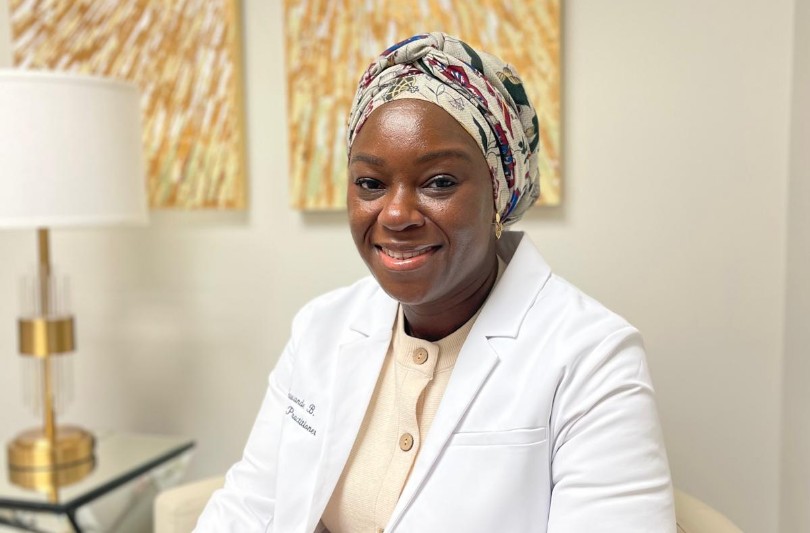
For decades, women’s healthcare in Nigeria has largely focused on maternal and child health, leaving midlife issues like perimenopause, menopause, fibroids, and metabolic disorders in the shadows. Yewande Banire, a U.S.-trained and board-certified medical provider and founder of Serenara Wellness in Nigeria and Serene Infusion & Wellness Lounge in the United States, believes the silence around these conditions has created both a health and economic crisis.
Yewande, who holds dual master’s degrees in Family Practice and Nursing Education, is on a mission to reshape the conversation around women’s health in Nigeria. Drawing from her clinical experience in the United States, she is introducing a model of care that places perimenopause and menopause at the centre of midlife healthcare. “These are not fringe issues. They affect every woman, yet so many go unheard or untreated,” she explains.
In the United States, where Yewande established her first practice, conversations about hormone health and midlife transitions are slowly becoming normalised. Women have greater access to hormone replacement therapy, telehealth consultations, and wellness programs that address physical, emotional, and metabolic challenges. She believes Nigeria must begin to adopt similar models, but with cultural sensitivity at the forefront.
“Nigeria needs an approach that does not just copy the West but reflects our realities,” Yewande notes. “In our culture, women are often encouraged to suffer in silence, dismiss their symptoms, or treat menopause as something shameful. That has to change.”
Her newly launched Serenara Wellness is breaking new ground as Nigeria’s first women’s hormone telehealth and concierge medicine clinic. The goal is to make expert care accessible to women across the country, whether they live in Lagos or smaller towns where specialised healthcare is scarce. Through digital consultations, Serenara aims to provide evidence-based guidance, treatment, and education without the barrier of distance.
For Yewande, the work is not only medical, it is advocacy. “Women’s health is political,” she has said, pointing to the social and economic consequences of neglect. She admits the journey has not been easy, but she now embraces what she calls her

“impact-making era,” pushing forward with conviction that change is both necessary and possible.
The focus is firmly on perimenopause and menopause, life stages that bring symptoms ranging from hot flashes and insomnia to mood changes and weight fluctuations. Left unaddressed, these symptoms can affect relationships, workplace productivity, and overall quality of life. “When a woman cannot sleep through the night, struggles with memory, or feels constant fatigue, it is not just her health that suffers. Families, workplaces, and even economies feel the ripple effect,” Yewande says.
Fibroids and PCOS are also part of her radar, but she emphasises they belong to a broader midlife health spectrum. What unites them is the silence that too often surrounds them. “Women deserve language, tools, and spaces where they can ask questions without judgment. Too many are left confused, searching online, or relying on myths,” she adds.
Through Serenara Wellness, Yewande hopes to inspire policy changes, cultural shifts, and greater public awareness. Her team echoes this passion, often celebrating her for breaking barriers and creating spaces where women feel seen, heard, and supported.
Her message is clear. Women in Nigeria cannot be left behind in the global movement to prioritise midlife health. By blending U.S. models with Nigerian realities, Yewande is determined to ensure that women do not just survive these transitions; they thrive through them.

