 Follow Us on Google News
 Follow Us on Google Discover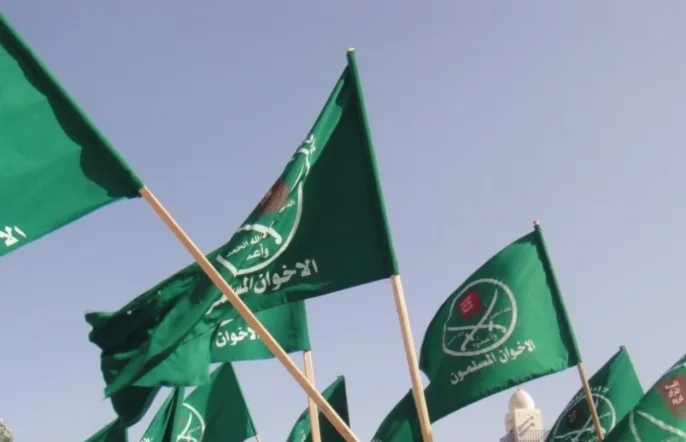
Kenya has officially designated the Muslim Brotherhood and Hizb-ur-Tahrir as terrorist entities under the Prevention of Terrorism Act (Cap. 59B), marking a major step in the country’s counterterrorism efforts, according to reports on the“Star” website.
The declaration, contained in Legal Notice No. 157 of the Kenya Gazette Supplement, was issued on September 19, 2025, by Interior Cabinet Secretary Kipchumba Murkomen under Section 3(3) of the Prevention of Terrorism Act (Cap. 59B).
According to the order, known as the Prevention of Terrorism (Declaration of Specified Entities) Order, 2025, the designation takes immediate effect and will remain in force until revoked either by the Cabinet Secretary or a court ruling.
“The declaration shall remain in force until it is revoked by the Cabinet Secretary or by order of the court,” Murkomen stated in the notice.
The proscription criminalises membership, support, fundraising, or propaganda activities linked to the two groups. Under the Act, the government is also empowered to freeze assets, ban public meetings, and prosecute individuals who maintain ties with designated entities. Security agencies will now have expanded powers to investigate suspected cells, disrupt financial or logistical networks, and detain suspects under court supervision.
Kenya’s move places it alongside Egypt, Saudi Arabia, the United Arab Emirates, Bahrain, and Russia, which have long designated the Muslim Brotherhood as a terrorist organisation. The inclusion of Hizb ut-Tahrir — a transnational movement advocating for the establishment of a global Islamic caliphate — reflects what officials describe as a strategy to prevent radical mobilisation before it takes root.
The Muslim Brotherhood, founded in Egypt in 1928 by Hassan al-Banna, is regarded as the most influential Islamist movement of the 20th century. It combines religious revivalism with political activism and has inspired branches across the Middle East, North Africa, and beyond. While it has at times engaged in electoral politics, it has also been accused of laying the ideological groundwork for extremist groups such as Hamas, which many countries classify as a terrorist organisation.
For supporters, however, the Brotherhood is seen as a movement for social reform, welfare provision, and political participation — a dual identity that continues to divide opinion.
Kenya’s decision signals a shift in domestic security priorities. Analysts say the designation is intended to sever ideological and financial pipelines that could fuel radicalisation in the Horn of Africa, particularly among vulnerable youth populations. It also strengthens Nairobi’s ability to track and dismantle transnational networks operating under the guise of charitable or political activity.
The announcement comes against the backdrop of Kenya’s long battle with terrorism, particularly attacks linked to al Shabab, the Somalia-based al Qaeda affiliate. The Westgate Mall siege in 2013, the Garissa University attack in 2015, and the DusitD2 hotel complex assault in 2019 left hundreds dead and scarred the nation’s security landscape.
Kenya has since expanded its counter-terrorism measures, combining military operations in Somalia with intelligence gathering, border security, and rehabilitation programmes for former fighters. Officials argue that outlawing groups such as the Muslim Brotherhood and Hizb ut-Tahrir reflects a preemptive approach, aiming to counter ideological extremism before it translates into violence.
While the immediate trigger for the new designations remains unclear, the government maintains that the order is indefinite unless overturned. For Kenya, the decision marks both a domestic security measure and an alignment with regional and international partners pressing for tougher action against global Islamist movements.
Do you want me to recast this with a diplomatic/foreign policy angle — focusing on Kenya’s alignment with Middle Eastern and global powers — rather than just domestic security?

