 Follow Us on Google News
 Follow Us on Google Discover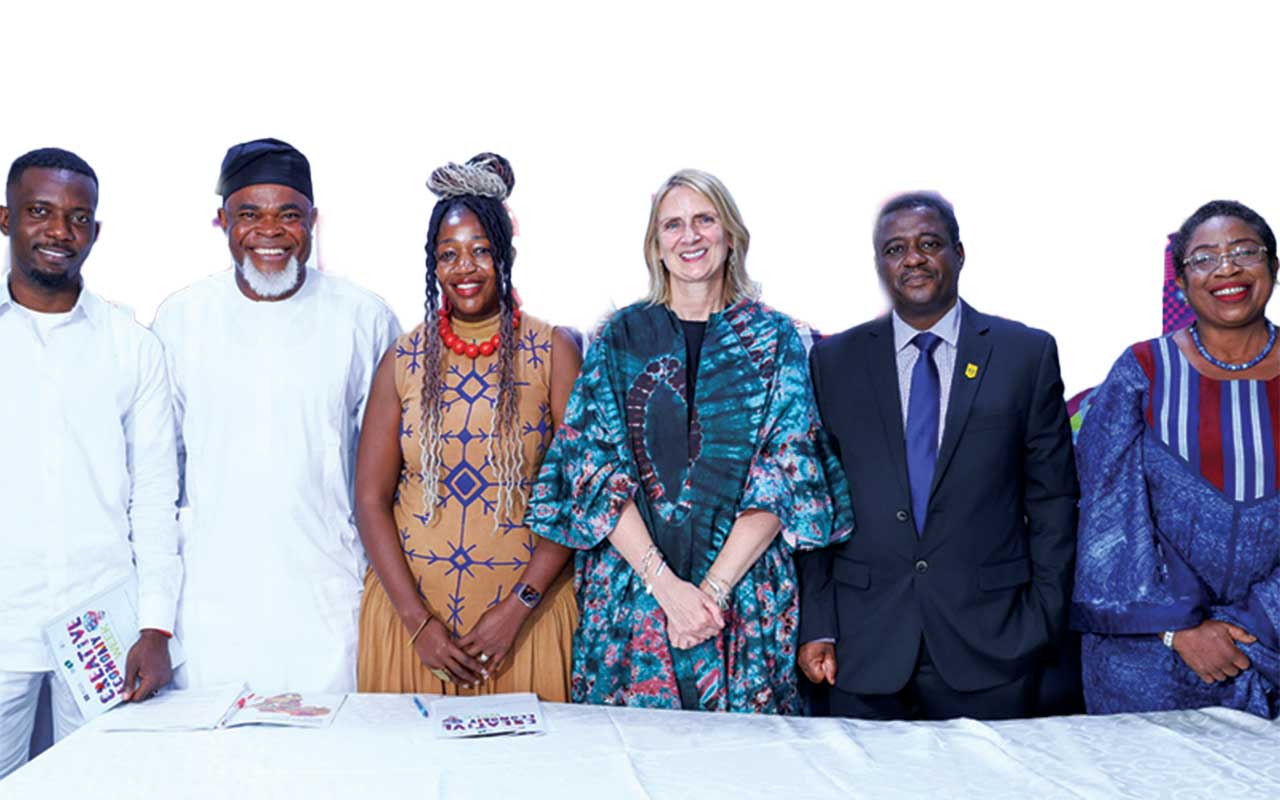
The just concluded Creative Economy Week, 2025, no doubt, served as a veritable platform for creative talents to connect with potential investors.
With the theme, Building Futures Through Creativity, there were series of events lined up for the week, one of which was the cocktail hosted by the British High Commission and co-hosted by the British Council, Nigeria. It was an evening for networking and building bridges of friendship among stakeholders.
In attendance were visual artists, fashion designers, film makers, culture enthusiasts and practitioners.
The British High Commissioner to Nigeria and UK representative to ECOWAS, Dr. Richard Montgomery, in his remarks, said the week was more about innovations, inspiration and job creation in both UK and Nigeria.
He noted that the creative economy is a priority for the UK government, especially the private sector, with over 2.4 million jobs created in the UK.
He also believed that there is a huge potential in Nigeria to create more opportunities, particularly for the young people.

“And that’s why the creative economy is one of eight sectors that are prioritised in the agreement between the UK and Nigeria, called the Enhanced Trade and Investment Partnership, which was agreed last year by our respective ministers.
“And for the UK, we already have a big ecosystem for our music, film, sports, arts and cultural goods. These are areas that we export around the world, a real growth engine creating jobs for us as it will in Nigeria.
“So, for Nigeria, which is itself growing, we believe that we can be a gateway for your exports across the world. And we know that Nigeria has such huge potential with its young, capable, innovative and dynamic population.
“You have already begun to take over parts of the world with some of your creative industries – Nollywood, the Afrobeats music craze and you also have a growing impact internationally for your fashion as well a huge growth in digital design and digital content creation.”
Also speaking, the Country Director, British Council, Nigeria, Donna McGowan, said that over 60 different activities were planned in different cities across the country as well as in London for the celebration of creativity.
“It is really about celebrating the importance of creativity to Nigeria and the impact that this has on the wider economy, employability, inclusive growth and international connections. And the more partnerships we have as a result of that, the better. So, we are all looking to see how we can create greater collaboration and more opportunities for cooperation between the UK and Nigeria across the wider creative sector.”
McGowan said the creative economy in Nigeria, which is undergoing huge growth, fueled by the globally recognised sectors such as film, fashion and music led by a new generation of talent, is shaping culture beyond the borders of Nigeria.
She however believed that with greater focus on policies, enabling framework and skills development, so much more can be achieved, given the huge youth population.
“While we bring together partners from government, the private sector, investors, the creative sector, creative and cultural leaders, educators and, of course, young people, there is need to focus on skills development, capacity building, creating and facilitating opportunities for international collaboration, and that is through market access, national, regional and global platforms”, she said.
The Minister for Arts, Culture, Tourism and Creative Economy, Hannatu Musa Musawa, was represented by the Permanent Secretary, Mukhtar Yawale Muhammad.
She noted that while governments could sign treaties and corporations sign deals, the most enduring bond between nations are, however, forged in the fires of shared creativity.
“They are composed in the rhythm of a song, stitched into the fabric of our fashion, framed in the lens of a film, and brought on the stages of our theatres,” she said.
For the Head, Arts and Culture, British Council Nigeria, Harry Kesiena, the Creative Economy Week was more than a calendar of events but also a platform that connected talent with opportunities, creativity with investment and Nigeria with the UK and the rest of the world.
He added that building a future as a creative requires resilience and commitment. According to him, it requires you to run the extra mile, to hone your craft, nurture it like a child suckling.
“You burn the midnight candle until there are streaks of melted wax on your table. It requires discipline, resilience, a spirit fortified with purpose so that even when doubt wears its ugly head, you are not left shaking.
“To be an artist is an art in itself, it is drawing the line between inspiration and drive. We carry our worth on our shoulders because we know that not everything can be paid for by exposure. We walk tall because we walk in the light of those that came before us, a generation that created a shift led us to this era where prosperity and passion are not mutually exclusive, they are both within your grasp,” he said.
A visual artist and arts administrator, Dr. Ngozi Akande, commended the efforts of Nigerians in marketing the country’s arts and culture digitally.
According to her, “Nigerian fashion is all over the globe, we have our film and music also trending. So, we are doing well in the creative industry. We are going with the trend and we hope to remain relevant in the scheme of things.
“We have already started; digital exhibitions are all over the social media. We may not have gotten to where we should be but we are making efforts,” she said.

