GDN SIDEBAR
For years, the story of Afrobeats has been told through the faces of its stars, the performers, the producers, the brands. But behind the hits lies a different kind of artist: the songwriter.
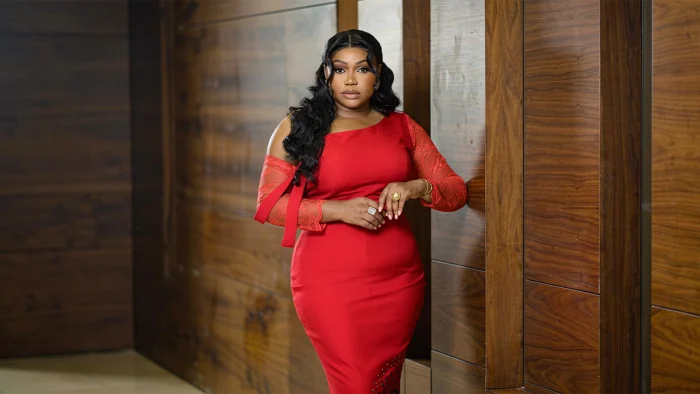
And in that increasingly recognised space, Omolola Omoniyi has carved out a distinctive voice that is redefining how Nigerian pop music is written, structured, and felt. Best known for her work on Zlatan’s Omo Ologo EP (2023) and the viral Lagos Anthem (2020), Omolola represents the growing sophistication of Afrobeats songwriting.
Yet her influence stretches further across collaborations with emerging and established artists, where her words have quietly shaped mood, melody, and message. Her collaborations with Oberz, particularly on Maranma and Uju, illustrate her versatility. In Maranma, Omolola crafts a lyrical narrative that balances tenderness and tension, turning a love song into an emotional conversation.
The phrasing is delicate, and the repetition in the chorus builds a sense of intimacy that suits Oberz’s vocal texture.
Uju, on the other hand, leans into pop sensuality, and Omolola’s melodic pacing gives the song its hypnotic pull. Both tracks reveal her ability to adapt writing style to an artist’s emotional register, a skill that separates a songwriter from a lyricist.
Across her catalogue, Omolola’s pen blends the immediacy of street language with the discipline of poetic form. On Omo Ologo, her writing transforms slang into symbolism; on Oganigwe, she constructs a multi-layered verse that allows different dialects to coexist in rhythm.
Her writing is at once streetwise and sophisticated, accessible to the listener, yet rich enough to invite closer reading. Critically, Omolola is not without areas for growth. Occasionally, her hooks rely on formulaic repetition; a feature of Afrobeats designed for virality but one that risks predictability when overused.
Yet she often subverts this by embedding subtle shifts in phrasing or tone, allowing familiar forms to carry new emotion. It’s a mark of craft, and an awareness of the delicate line between commercial demand and creative depth.
As Afrobeats expands globally, writers like Omolola are becoming central to its sustainability. Her songs have collectively surpassed over 100 million streams across Spotify, Apple Music, and Audiomack, with active audiences in Nigeria, the United Kingdom, the United States, Canada, and Ghana.
But the numbers tell only part of the story. What sets her apart is an ability to give artists lyrical identities, voices that sound authentic and human in an increasingly digital soundscape.
Her work with Zanku Records has become a touchstone for this new wave of songwriting professionalism. Whether scripting Zlatan’s self-affirming verses on Omo Ologo or shaping Oberz’s emotional confessions on Maranma and Uju, Omolola’s writing expands the expressive vocabulary of Afrobeats. She brings coherence to chaos, rhythm to feeling.
Proving that behind every anthemic hook lies a quiet discipline of thought and structure. In an industry that often measures value by visibility, Omolola Omoniyi stands out for turning invisibility into influence. Her artistry is not loud, but its echo is everywhere ,in the songs people dance to, sing along with, and live through.
And perhaps that is her greatest contribution: she makes Afrobeats not just sound global, but feel deeply personal.