 Follow Us on Google News
 Follow Us on Google Discover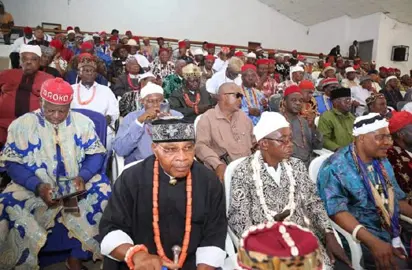
With the death of Dr. Victor Omololu Sowemimo Olunloyo (April 14, 1935 – April 6, 2025) and that of the Awujale of Ijebuland, Oba Sikiru Kayode Adetona (May 10, 1934 – July 13, 2025), Ogbagba Agbotewole II, the final chapter of emergency rule in Western Nigeria of 1962 has been closed. Historians will have to draw the final curtain on that tragic event. Incidentally, both men died during the emergency rule declared by President Bola Tinubu GCFR, on Thursday March 20, 2025 in Rivers state.
Olunloyo and the Awujale served as Commissioners/Ministers during the emergency rule in Western Nigeria under the administration of Dr. Moses Adekoyejo Majekodunmi (17th of August 1916- 11 April 2012). He served as administrator of Western Region from 29 June 1962 – December 1962).
The emergency rule in Western Nigeria was effected on May 29, 1962, when the then Prime Minister, Sir Abubakar Tafawa Balewa (December 1912 – 15 January 1966), tabled a motion in the House of Representatives in Lagos. The motion was passed by 232 to 44.
Alhaji Sir Tafawa Balewa exercised his new prerogative to appoint his doctor friend, Senator Chief Moses Adekoyejo Majekodunmi, the Minister of Health who still belonged to no party, as administrator. Stanley Wey and others would have rather that for appearances’ sake the administrator had not been so obviously a personal friend of the PM, but they held their peace.
Majekodunmi had in fact proposed the then Chief Justice of the Federation, Sir Adetokunbo Adegboyega Ademola (February 1, 1906 – 29 January 29, 1993), but for Sir Abubakar Tafawa Balewa (December 1912-January 1966) had commented that this would permanently compromise his judicial position, and on the spur of the moment responded, “What about you?’’ The doctor, still determined to see to the opening of the Lagos State Medical College, agreed provided that, to universal inconvenience, he retained his full federal portfolio.
On resumption as Administrator, Majekodunmi appointed Olunloyo and the Awujale, as Commissioners/Ministers. He also appointed Captain Murtala Ramat Mohammed (November 8, 1938- February 13, 1976), who had just returned from military operations in the Congo, as his ADC. He later became Nigeria’s Head of State between July 27th, 1975 and February 13th, 1976. They were appointed along with others on June 4, 1962.

Others appointed as Commissioners/Ministers were Chief S. O. Adedeji—Chieftaincy Affairs; Mr. V. Owolabi Esan—Finance; Mr. A.M. Laosebikan—Home Affairs; Mr. Abdul Yesufu Eke—-Information; Mr W.G. Egbe—Justice; Mr. Olajide Esan—-Labour; Chief J.O. Fagbemi—Lands and Housing; Chief E. A. Adeyemo—Local Government; Mr. B.O. Mark Uzorka—-Midwest Affairs; Mr. J. Oyegoke—-Office of Administrator; S.L. Edu—-Health and Social Welfare and Dr. Adegbite—-Trade and Industry.
Also sworn-in as Commissioner/Minister was Chief Thompson Adogbeji Salubi (1906-1982), the Akaborode of Urhobo land in the present Delta state. Chief Salubi led the Urhobo Progressive Union for twenty years. He was appointed Commissioners/Ministers for Education.
He also appointed Engineer Adeniyi Williams (1907-1999), the Gboyegun of Oye-Ekiti as Commissioner/Minister for Works and Transport. Mr Adeniyi Williams was the son of Mr. Phillips Williams, a foremost Nationalist, whose cotemporaries included Herbert Macaulay.
His classmates at the Cambridge included Justice Adetokunbo Ademola and Sir Francis Akanu Ibiam (29 November 1906 – 1 July 1995), who later became Governor of the Eastern Nigeria. He was also the father of Chief Olufemi Adeniyi Williams (86), a Lagos Socialite and former Managing Director of OBM, a foremost Advertising Agency, who later became Chairman of Island Club, Lagos.
Majekodunmi also swore in Prince Daniel Adeleke Ademiluyi (10 September, 1913-20 September, 1985) as Commissioner/Minister of Agriculture and Natural Resources. Prince Ademiluyi was the son of revered Ooni of Ife, Ajagun Lawarikan, who ascended the throne in 1910. He was an aristocrat from Ile-Ife, the cradle.
Prince Adeleke Ademiluyi was elected to the Western House of Assembly in 1954 to represent Ile-Ife Central. Prince Ademiluyi’s political career saw him appointed as Parliamentary Secretary in the Ministry of Trade and Industry from 1954-1959. He later became Chairman of Western Nigeria Development Corporation from 1963-1966. He was the father of the famous journalist, Prince Kanmi Ademiluyi.
Others appointees were Oba of Benin, Akenzua II, The Osemawe of Ondo, Oba Tewogboye II, the Olubadan of Ibadan, Oba Akinyele, the Olu of Warri, Erejuwa II and the Oluwo of Iwo, Oba S.O. Abimbola. Two Ministers Messrs S.T. Rufai and F. Lamina were appointed to assist in two Ministries including the Ministry of Justice.
The appointment of the Obas was an acknowledgement of the contribution of traditional rulers in Nigeria’s struggles for independence. No doubt, the traditional rulers were involved in pre-independence struggles for Nigeria’s independence like the politicians.
For example, at the London’s Nigeria’s Constitutional Conference on Monday 27 July, 1953, the following traditional rulers attended the conference.
The Ooni of Ife, Sir Adesoji Aderemi, the Olowo of Owo, Sir Olateru Olagbegi (1910-1998) -(regional Minister without portfolio), the Obi of Idumuje Ugboko Kingdom in Aniocha North in Delta state, Obi Justin Nkezie Nwoko (1926-1955) and the Emir of Katsina, Sir Usman Nagogo Dan Muhammadu Dikki (1905-18 March 1981), 47th Emir of Katsina.
Others who attended the conference were Chief Bode Thomas, Chief S. L. Akintola, Chief Arthur Prest, Chief Obafemi Awolowo, Western Regional Minister of Local Government, Chief Rotimi Williams, S. O. Shonibare, S. O. Awokoya, Chief Anthony Enahoro, Latifu J. Dosumu, Mrs. Tanimowo Ogunlesi, G. C. Nonyelu, Alfred Ogbeyiwa Rewane and Mallam Mudi Sipikin.
Others were Dr Nnamdi Azikiwe, K. O. Mbadiwe, E. O. Eyo, Mallam Bello Ijumu, Kolawole Balogun, Mazi Mbonu Ojike, N. P. Birabi, V. A. Nwankwo, N. N. Mbile, L. P. Ojukwu, E. G. Gundu, D. C. Osadebay, Mrs. Margaret Ekpo, Chief H. Omo Osagie, Chief Yamu Numa, Chief F. S. Edah, Ahmadu, Sardauna of Sokoto, Abubakar Tafawa Balewa and The Hon. Aliyu, M.H.R., Makama Bida.
The rest were Abba Habib, Pastor David Lot, Mallam Ibrahim Imam, Mallam Saladu Alamanu, G. U. Ohikere, Benjamin Akiga, Mohammadu Ribadu, Mallam Dauda Kwoi, Shehu Ahmadu, Sarkin Shanu, Mallam Nuhu Bamalle, Mallam Aminu Kano, Mallam Abubakar Zukogi, E. M. L. Endeley, Rev. J. C. Kangsen, Eyo Ita, A. C. Nwapa, Okoi Arikpo, J. A. Wachuku and Dr. E. U. Udoma.
Let’s take a look at the profile of other traditional rulers appointed as Ministers by Dr. Majekodunmi as Administrator.
Oba Samuel Omotosho Abimbola was the Oluwo of Iwo between 1958 and 1982. He was one of the most respected Kings in Yorubaland at that time.
Oba Isaac Babalola Akinyele (April 18, 1882 –May 30, 1965) became an active member of the Christ Apostolic Church and was, for a long, its head in Ibadan. He also became a chief and thus rose steadily in the traditional hierarchy headed from 1936 by an Oba, the Olubadan.
He became Otun Balogun and then, in late 1953, Balogun. Problems were expected because the title had close associations with the traditional Yoruba religion, which make it difficult for a devout Christian to hold it. But the problems were overcome and Oba Akinyele rose steadily towards the Oba’s throne.
Oba Isaac Akinyele was involved in politics, as a party supporter of the Action Group (AG). His political interests conflicted with those of the National Council of Nigeria and the Cameroons (NCNC) which controlled the Ibadan District Council, and its local boss, Adegoke Adelabu. In February 1955, he was elected Olubadan of Ibadan having previously served as Chief Judge.
Oba Akinyele’s rule was soon engulfed in the turbulent political developments in Western Nigeria, the result of the growing rift in the Action Group between its leader, Chief Obafemi Awolowo (6 March 1909 – 9 May 1987) and his deputy and Premier of the Western Region, Chief Samuel Ladoke Akintola (6 July 1910 – 15 January 1966) in 1962.
This came to a head when Alhaji Chief Dauda Soroye Adegbenro (1909-1975), the Balogun of Owu and the Ekerin of Egbaland, Chief Awolowo’s supporter, was appointed premier by Governor Sir Adesoji Aderemi, the Ooni of Ife.
Disorder broke out in the House of Assembly as the new Premier was presenting his government for vote of confidence and following the subsequent outbreak of violence both among their supporters outside, the Region was placed under a state of emergency.
The government was suspended and as sole Administrator of the West was appointed in the person of Dr Moses A. Majekodunmi.
Teniola, a former director at the Presidency wrote from Lagos.

