 Follow Us on Google News
 Follow Us on Google Discover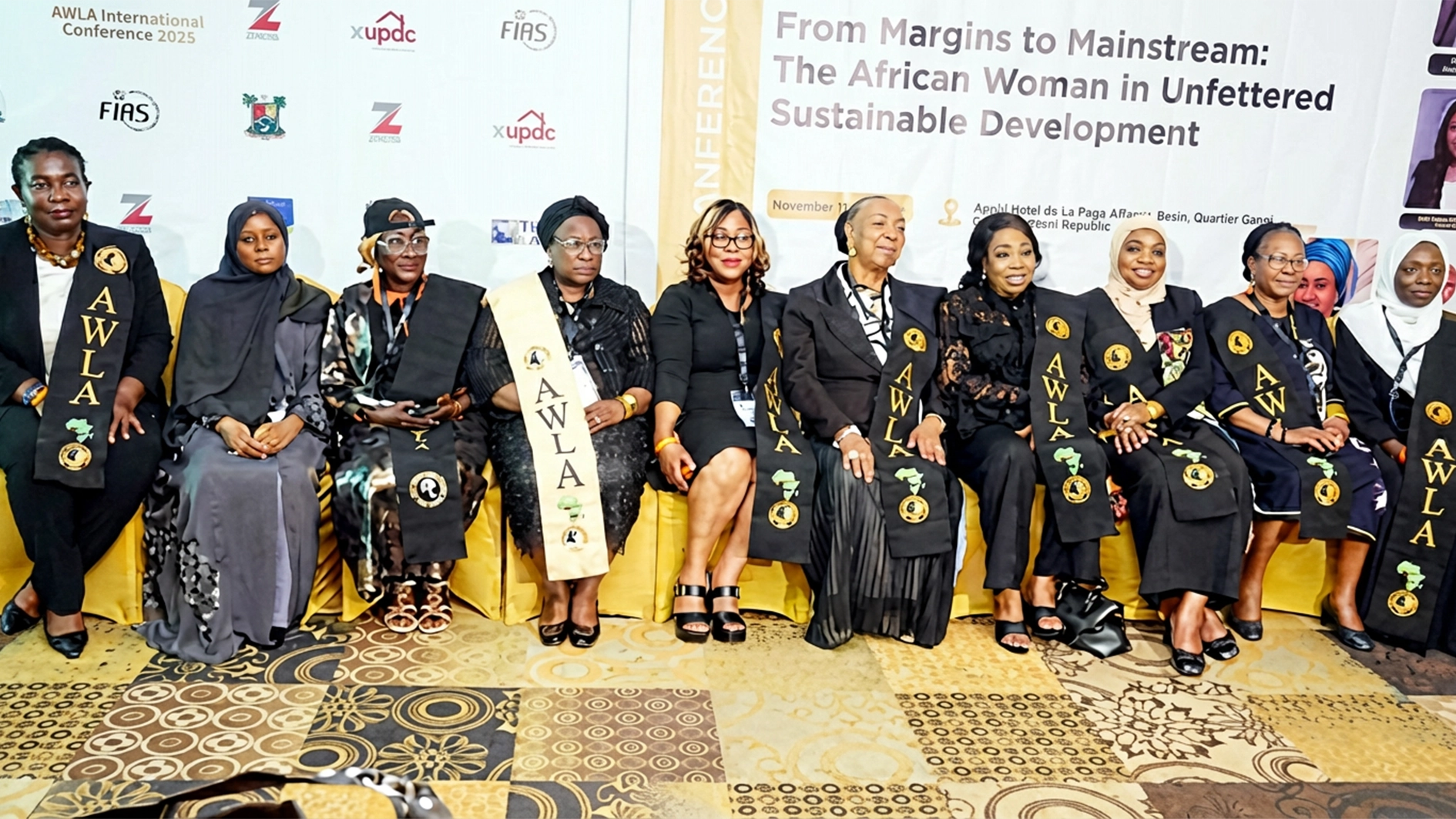
Leading African jurists and advocates have called for necessary reforms that will address the deep fractures in the continental justice system.
The call was made recently at a five-day African Women Lawyers Association (AWLA) conference, which was held in the Republic of Benin.
Themed, ‘From Margins to Mainstream: The African Woman in Unfettered Sustainable Development’, participants drawn from across Africa spoke against the deep fractures in the continental justice system, which they said, silenced women, discouraged young legal professionals and weakened institutions over time.
They decried that legal and governance systems are failing half of their population and squandering its greatest demographic opportunity, insisting that genuine development demands fair courts, inclusive leadership and deliberate reforms that guarantee equal footing for women and young people in the legal space.
The President, International College for Diplomatic Affairs (ICDA), Dr Tasie Njemonwu Daniel, urged African governments and professional bodies to accelerate the inclusion of women in the legal and diplomatic sectors, warning that societies with few women in decision-making roles risk governance failures and weakened justice systems.
Daniel said global conversations on development currently centre on inclusion, a principle he described as essential to both nation-building and international diplomacy. He noted that the same emphasis dominated discussions at the recent United Nations Second World Summit for Social Development in Doha.

He warned that no society progresses sustainably when its people are excluded based on geography, language, gender or background, adding that African women lawyers play a crucial role in ensuring that no demographic is left behind.
Daniel further commended AWLA for its growing global footprint with active members based in France, Germany and other parts of the world, stressing that the association’s work demonstrated that being an African woman lawyer is not about skin colour or physical location but commitment to continental progress.
He argued that countries with a low number of female lawyers experience poor governance and, in some cases, long-standing dictatorships.
According to him, Cameroon and Equatorial Guinea illustrate how decades of male-dominated decision-making can produce leadership detached from justice and accountability.
He believed that increasing the number of women in legal professions would strengthen institutions and promote balanced decision-making as they bring perspectives shaped by their experiences as caregivers, community leaders and advocates. He therefore urged AWLA members to condemn violence against women and girls.
A senior official of Global 50-50, a UK-based independent research organisation monitoring gender justice in health, law and related sectors, Govindi Deerasinghe, representing Executive Directors of the initiative, Prof Sarah Hawkes and Prof Kent Buse, feared Africa is lagging behind global targets on gender equality despite three decades of international commitments since the Beijing Declaration.
Deerasinghe noted that women across the continent remained significantly underrepresented in parliaments, cabinets, local government and crucially, in the law and justice system.
She warned that without necessary reforms and expanded women’s access to leadership, the continent may miss out on Sustainable Development Goals 5, 10 and 16, which focus on gender equality and strengthening of institutions.
Also, Prof. Ogugua Ikpeze, speaking on behalf of retired United Nations Dispute Tribunal Judge, Justice Nkemdilim Izuakor, warned that African development will remain stunted if women continue to face systemic bias in the justice system.
Speaking on ‘Bench of Bias: When Justice Goes Astray’, Prof Ikpeze recalled the persistent ways judicial bias undermines women’s rights and institutional integrity.
She emphasised that although African women are central to agriculture, trade, governance and community cohesion, they have continued to operate from society’s margins.
Ikpeze frowned that women till the land but rarely own it, contribute substantially to informal economies but lack legal protections, lead homes but remain underrepresented in leadership and bind communities while often denied social justice.
According to her, development cannot be considered genuine if women remain excluded, and that justice cannot be claimed fair when the system itself marginalises half of its population.
She argued that while women are increasingly rising to leadership across professions, the justice system still reflects deep fractures of inequality, noting that judicial bias, whether personal, pecuniary or official, occurs when decisions are influenced by factors outside the facts and the law.
Ikpeze linked biased bench to situations where domestic-violence survivors were blamed for not leaving sooner, women’s property claims dismissed as against culture, sexual-harassment cases trivialised; female litigants interrupted or doubted and women lawyers treated as less competent.
“Such patterns turn courts into spaces where discrimination is normalised and justice becomes unevenly distributed.
Speaking on Empowering Tomorrow’s Leaders: Unleashing the Potential of African Youth in Law, Lawyer with Pather and Pather Attorneys Inc., South Africa, Zahra Abdul, called for urgent and deliberate investment in African youth, warning that the continent risks squandering its most powerful demographic advantage if young people are continually excluded from meaningful professional participation.
Abdul said Africa stands at a decisive moment, with more than 60 per cent of its population under the age of 25, with a global projection that by 2030, African youth will constitute nearly half of the world’s young people.
She described the trend as a “demographic window” that will not return, stressing that failure to harness it could turn the population boom into a liability.
She noted that despite the advantages, an increase in youth unemployment persists across the continent, with South Africa recording some of the highest rates globally.
Abdul argued that the legal profession, which plays a central role in governance, justice and policy formation, cannot afford to treat youth marginalisation as a secondary issue.
Highlighting the structural and cultural barriers faced by young lawyers, she said exclusion often stems from subconscious biases that equate age with competence and limit young professionals’ access to responsibility.
According to her, gatekeeping practices rooted in fear rather than malice have continued to deprive youth of the opportunities they need to grow.
Abdul emphasised the need for practical exposure, structured mentorship and youth-focused professional networks to strengthen capacity across the sector.
She also urged institutions to foster environments where young practitioners feel secure enough to ask questions, challenge ideas respectfully and participate fully in legal discourse, noting that emotional safety remained essential to creativity and critical thinking.
Calling for reforms in legal education, she said universities must integrate African jurisprudence, digital literacy, governance training and community-based justice systems to produce graduates equipped for the realities of the continent.
She also recommended the establishment of youth legal councils, national and regional forums as well as platforms that allow young people to present research and policy ideas, stressing that young Africans do not lack intelligence or ambition but suffer from limited access and exposure.
Speaking on ‘The Ethics of Surrogacy: Balancing the Rights of Intended Parents, Surrogates and Children, Marian Nanorki Darlington attributed the rise in surrogacy globally to infertility, medical constraints and diverse family structures.
She, however, listed ethical challenges to include risk of exploitation in low-resource settings, commodification of reproduction and human life, emotional and psychological impacts for all parties and cross-border legal conflicts.
Barr Darlington emphasised the need to enact clear statutory frameworks for surrogacy, protect surrogate health, consent and compensation rights.
Prof. Kemi Pinheiro (SAN), speaking on ‘The Allyship Agenda: Men as Catalysts for Gender Equality in Africa’, emphasised that sustainable progress on the continent depends on men using their influence to dismantle structural inequities that have historically limited women’s opportunities.
He reflected on how gender inequality is embedded in cultural norms, institutional habits, hiring practices, historical narratives and subconscious assumptions, adding that structural constraints have kept African societies below full potential by restricting half of their talent base.
He invoked the legal maxim ubi jus ibi remedium, where there is a right, there must be a remedy, to buttress that correcting gender imbalance is not optional but a legal and moral obligation.
Prof. Pinheiro described male engagement as a strategic necessity across Africa, where leadership in law, politics and business remains predominantly male, stating that because men hold the majority of decision-making positions, their participation in the equality agenda determines whether reforms succeed.
The Senior Advocate argued that male allyship is critical to implementing major continental frameworks such as the Maputo Protocol and the African Union’s Strategy on Gender Equality and Women’s Empowerment.
These instruments, he said, cannot deliver meaningful results without the backing of those, who control political power, legislative influence and institutional budgets.
He added that male voices carry cultural legitimacy in many African societies and when men champion inclusion, they redefine leadership in a way that disrupts entrenched patriarchal norms.
Reflecting on his four decades in legal practice, he emphasised the essential role of AWLA in advancing women’s rights and elevating women within the legal profession. He argued that AWLA’s strategic strength lies not only in uplifting women lawyers but also in integrating male allyship as a tool for systemic reform.
He encouraged the association to train and position members for opportunities, organise forums that educate men on allyship and foster a culture where collaboration rather than competition drives progress.
Looking ahead, Prof. Pinheiro outlined support for women’s representation on boards, panels and judicial bodies; mentoring young female lawyers; ensuring gender-balanced briefing in high-stakes litigation; and reforming recruitment and promotion practices as key actions male leaders can take to accelerate gender equity.
The SAN added that the power within institutions gives male leaders a decisive role in shaping who advances and whose voice is amplified.

