 Follow Us on Google News


 Follow Us on Google Discover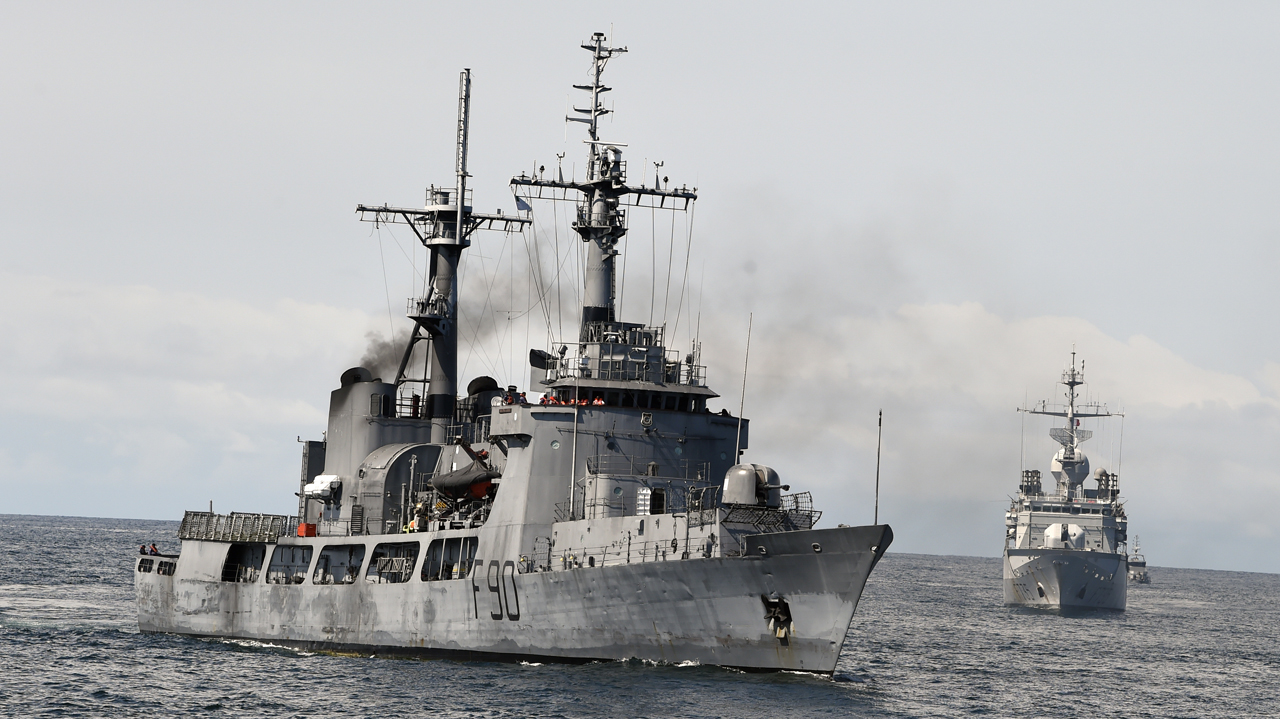
Despite Nigeria’s $195 million investment in the Deep Blue Project to combat piracy and other maritime illicit activities in the Gulf of Guinea, the Republic of Korea has committed an additional $3 million to support the International Maritime Organisation’s (IMO) SMART-C Maritime Security and Counter-Piracy project in the region.
The late President Muhammadu Buhari launched the Deep Blue Project in 2021 to strengthen maritime security, involving personnel from the Nigerian Armed Forces, Air Force, Army, Navy, Police, Department of State Services and officers of NIMASA.
Among the project’s anti-piracy assets designated to patrol the busy shipping lanes, identify potential threats and respond swiftly to piracy are 600 specially trained interdiction troops, 16 armoured coastal patrol vehicles, four drones, two special mission vessels, 17 fast interceptor boats, two special mission aircraft for the exclusive economic zone (EEZ) surveillance and three helicopters for search-and-rescue operations.
Despite the positive results recorded, as evidenced by Nigeria’s removal from the global piracy list, the IMO and the Republic of Korea (RoK) have launched the SMART-C Maritime Security and Counter-Piracy Project, designed to strengthen the capacity of Gulf of Guinea coastal States to combat piracy and other maritime illicit activities.
The initiative directly addresses the United Nations Security Council’s recent calls for enhanced international cooperation and robust support for regional nations and institutions working to combat piracy and ensure international peace and security in the region.
The new project operates under the existing IMO-RoK Sustainable Maritime Transport Cooperation (SMART-C) Programme, established via a Framework Agreement signed on 28 November 2023.

The project aims to strengthen the maritime security capabilities of the Gulf of Guinea coastal States. This includes enhancing regional cooperation, developing institutional capacity, and strengthening human resource development across the fight against piracy, armed robbery and other maritime crimes.
A key focus of the project is to develop sustainable regional training capacity, as an inception study will assess current training needs and facilities, to strengthen one or more existing institutions to deliver regional programmes.
According to the Secretary General of IMO, Arsenio Dominguez, this alignment will be conducted in accordance with the Yaoundé Code of Conduct, relevant IMO maritime security instruments and international maritime law.
He said this cooperation between the IMO and the Republic of Korea represents a significant commitment to strengthening the security framework essential for safe and sustainable maritime activity in the Gulf of Guinea

