 Follow Us on Google News
 Follow Us on Google Discover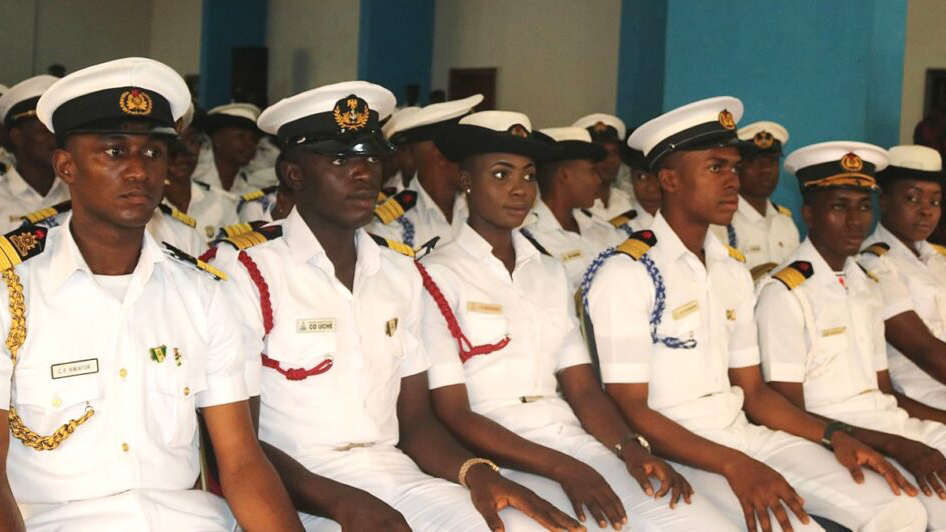
The untapped, exportable seafaring workforce remains one of Nigeria’s biggest lost opportunities. While countries with smaller maritime traffic have identified the value of the global seafaring market and are earning billions of dollars in remittances to boost their gross domestic product (GDP) and public revenue, Nigeria continues to grapple with a debt-funding crisis, ADAKU ONYENUCHEYA reports.
Nigeria continues to acquire debt to finance infrastructure and recurrent expenditure. Yet, one of the low-hanging economic assets and least capital-intensive revenue opportunities is left idle.
The overlooked asset represents a powerful, strategic and immediate contributor to realising the President Bola Tinubu administration’s ambitious $1 trillion economy by 2030 if harnessed.
With a large maritime traffic and vast coastline, Nigeria is missing in the billion-dollar seafaring industry. Other countries with less maritime traffic, such as the Philippines, India, Indonesia and Ghana, are exporting thousands of their seafarers yearly, earning billions of dollars in remittances and strengthening their global maritime workforce influence.
However, Nigeria has thousands of trained cadets and certified seafarers, but few opportunities to deploy them, making the country lag in the global seafaring market.
Maritime training institutions across the country — from the Maritime Academy of Nigeria (MAN), Oron, to private academies and offshore training centres, churn out hundreds of cadets every year, who struggle to obtain mandatory sea-time experience.

To become a full seafarer, a cadet requires sea-time — a mandatory onboard experience that allows them to sit for certification examination and qualify to sail on the vessel for global trade.
In addition, seafarers trained under the National Seafarers’ Development Programme (NSDP) are also left behind, as a large number are without employment.
Of the about one million certified seamen globally, only 78,000 come from Africa. Nigeria occupies a very small fraction of the number. The certificates of competence (CoC) issued to seafarers by the Nigerian Maritime Administration and Safety Agency (NIMASA), which are still not widely accepted on board global vessels, restrict professional opportunities compared to seafarers from other countries.
The big challenge
Most Nigerian-trained cadets never get sea time because the private individuals in the country own very few ocean-going vessels, while the country’s lack of a national fleet to provide cadet berths is also a hurdle.
Even the few vessels do not provide the sea opportunities for them. The Cabotage Vessel Financing Fund (CVFF), intended to empower indigenous shipowners, remains trapped in a web of policy inconsistencies and bureaucratic bottlenecks.
Other structural problems include weak collaboration between maritime institutions and the shipping industry and regulatory inconsistencies.
Due to the supply chain challenges, these trained cadets become stranded investments and wasted resources both for the individual and the nation.
Additionally, certified seafarers who have completed their sea-time training and graduated continue to face unemployment due to the unavailability of vessels to engage them.
According to industry data, over 4,000 certified professional seafarers are unable to secure sea time or trade placements, with Nigeria’s maritime talent wasting away in silence, according to the President, Merchant Seafarers Association of the USA Inc. and Nigeria, Prof. Alfred Oniye.
“Nigeria has the talent but not the vessels. Cadets graduate from maritime academies only to face a dead end, no sea time, no certification, no career. They are trained to navigate oceans, weather storms, and steer vessels across continents. Yet, thousands of Nigerian seafarers remain stranded, not at sea, but on land. It’s a national paradox, training professionals for an industry that doesn’t absorb them,” he lamented.
President of the African Shipowners Association (ASA), Captain Ladi Olubowale, raised an alarm that the country’s maritime manpower is fading, as the number of active Nigerian seafarers between 2015 and 2023 dropped by nearly 40 per cent.
Olubowale warned that by 2026, Nigeria may face a shortfall of 96,000 trained maritime professionals. According to the ASA president, without manpower, ships are just steel floating on water, stating that it is people who make vessels operate, ports function and logistics move.
“We must rebuild the seafarer pipeline – through structured cadetship programmes, scholarship bonds, and employment quotas linked directly to CVFF-financed vessels.
“When Nigerians operate Nigerian ships, the value chain expands domestically. More taxes stay home, more jobs are created and local businesses, from ship chandlers to port services, grow. Each new vessel creates an average of 40 direct jobs and 200 indirect jobs in the maritime economy,” he said.
The Head of Research, Sea Empowerment and Research Centre (SEREC), Dr Eugene Nweke, said Nigeria risks losing its global manpower competitiveness.
According to Nweke, Nigeria has over 4,000 trained and certified seafarers, yet underutilised due to limited sea-time opportunities and migration of skilled workforce to foreign fleets.
He highlighted the root causes as the lack of a national fleet to absorb cadets, weak industry–academia collaboration, regulatory gaps, poor succession planning and fading manpower, all of which are diminishing Nigeria’s maritime heritage.
Meanwhile, other countries have turned their seafarers into a national export, earning billions in remittances and global prestige, while Nigeria, Africa’s largest economy, continues ignoring this low-hanging fruit.
Missing out on a billion-dollar industry
Over 4,000 trained Nigerian seafarers, ranging from deckhands, officers, cadets and marine engineers, roam the job market today, qualified but largely idle, whereas several countries have leveraged targeted policies to transform their seafaring sectors into global economic assets.
The Philippines currently exports over 400,000 seafarers globally and earns an estimated $6 billion to $7 billion yearly from their remittances.
Oniye said the success of the Philippines’ seafaring sector is backed by a robust ecosystem of training, certification and international partnerships, ensuring that their maritime labour force is among the most sought-after in the world.
Nweke explained the Philippines’ Seafarers’ Revolution, stating that in the 1970s, the country faced a severe unemployment crisis, which turned into maritime manpower export. He said this was backed by deliberate reforms that transformed a national challenge into a global opportunity.
According to industry data made available by Nweke, the Philippines, to date, supplies over 25 per cent of the world’s seafarers, with more than 500,000 Filipinos working across global fleets.
Indonesia follows close behind with over 300,000 seafarers on foreign-going vessels, while India contributes a rapidly rising pool of highly technical maritime professionals.
Nweke said India’s Maritime Cluster Model with the Sagarmala Project and Maritime India Vision 2030 demonstrated how coordinated policy can modernise an entire maritime ecosystem.
He said that through the establishment of ship leasing hubs, tax incentives for local shipowners and structured maritime university–industry collaboration, India has risen to become the third-largest global seafarers’ supplier, while ensuring steady growth in domestic ship ownership.
Also, Ghana responded to the collapse of the Black Star Line with a coordinated, transparent and homegrown approach to fleet revival. Ghana’s strategy included government collaboration with Ghana Commercial Bank to finance ship acquisition, preferential flagging and local crewing policies to support indigenous ownership and a maritime skill acceleration programme (MSAP) to boost manpower.
The impact, according to Nweke, is a rebirth of small-tonnage indigenous fleets, rising local employment and enhanced participation in the African Continental Free Trade Area (AfCFTA) maritime trade.
Meanwhile, Nigeria is not new to success. The country’s now-defunct National Shipping Line (NNSL), established in 1959 as a joint venture with Elder Dempster Lines, once operated 24 vessels and employed 4,000 Nigerian crew.
Nweke said the cadetship pipeline, tied to the Maritime Academy, Oron, produced skilled professionals who were respected globally. He said many of today’s senior maritime practitioners trace their careers to the NNSL era, proof that Nigeria’s maritime excellence is not a fantasy, but a lived reality that was allowed to fade.
This untapped exportable workforce represents one of Nigeria’s biggest lost opportunities.
Way forward
Oniye said despite the creation of the Ministry of Marine and Blue Economy in 2023, Nigeria’s maritime sector contributes less than 0.1 per cent to Gross Domestic Product (GDP).
He said, yet an estimate shows it could generate $44 billion yearly if properly harnessed. Oniye said to unlock this potential, Nigeria must enforce the Cabotage Laws – prioritise Nigerian vessels and crew in coastal trade, create sea time programmes by partnering with global shipping lines to place cadets, export maritime labour by positioning seafarers as skilled exports, like nurses or engineers, as well as invest in infrastructure by building shipyards, simulators and certification centres.
Nweke called for policy recalibration for Nigeria, which includes operationalising CVFF transparently, establishing a national fleet Development PPP model, introducing the Maritime Manpower Integration Policy, reviewing the Cabotage Act for fiscal incentives and aligning with the blue economy strategy with the Africa Continental Free Trade Area (AfCFTA) logistics goals.
“The vessel of national maritime prosperity cannot sail on policy papers — it requires financing, winds, a crew and a leadership compass,” he stated

