 Follow Us on Google News


 Follow Us on Google Discover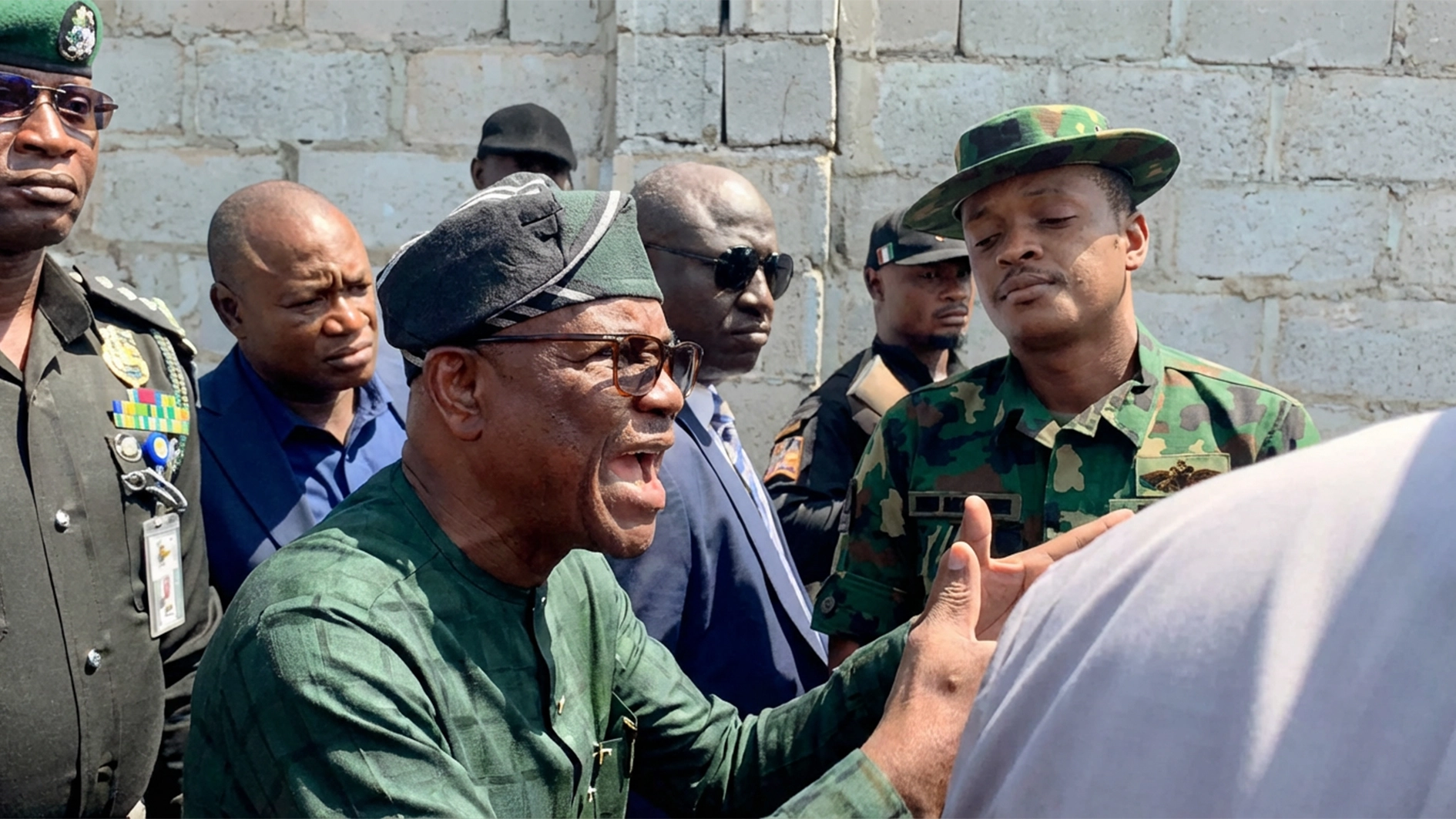
The recent clash between the Minister of the Federal Capital Territory (FCT), Nyesom Wike, and a Navy officer identified as Lt. A.M Yerima embodies Nigeria’s declining institutional integrity. No doubt the incident constitutes a national embarrassment, but it is a natural consequence of operating a system founded on impunity. The incident ought to be embarrassing for both the executive arm of government and the military, as it depicted an unnecessary show of power. And it could have been avoided had the officials involved paid greater attention to due process.
The feud occurred when armed military officers led by Yerima, allegedly acting on the instructions of a former Chief of Naval Staff, Vice Admiral Zubairu Gambo (retd.), resisted efforts by the Minister to halt work on a disputed parcel of land at Gaduwa District of the FCT.
As reported, Wike visited the site after officials of the FCT Administration (FCTA) were allegedly denied entry by the military officers stationed there. However, the soldiers, led by Yerima, refused to yield ground, prompting the FCT Minister into a heated verbal exchange with Lt. Yerima.
Public reactions to the incident have been mixed. While the FCT Minister has come under public criticism over his stance, particularly the use of uncomplimentary language on Yerima, some have blamed the naval officers for disrespecting constituted authority. What is clear is that there is a dispute on the propriety of the land in issue, and the two sides needed caution to resolve it without subjecting the authority of either the minister or the Nigerian Navy to disrepute.
On the one hand, it should be clear that the Minister is imbued with the legal right to enter any land within the FCT. Even then, the principle of military command and obedience to orders equally deserves due cognisance and respect.
Section 11 of the LUA empowers the Minister “to enter upon and inspect any (FCT) land comprised in any statutory right of occupancy or any improvements effected thereon, at any reasonable hours in the daytime, and the occupier shall permit and give free access to the [Minister] or any such officer to enter and inspect.”

Further, the Minister has the power to revoke any statutory right of occupancy where the holder is in breach of the terms of issue. Property owners are required to notify the FCTA before alienating their proprietary rights and interests to a third party. In the same vein, developers are required to remove illegal or unapproved structures if so directed by the Authority.
Notwithstanding, the rights and powers of the Minister are only exercisable within the ambit of the law. The constitution grants every Nigerian citizen the right to acquire and own immovable property anywhere in Nigeria, and prohibits any person or authority from interfering with this right except as permitted by the constitution.
It has been established in a plethora of cases that the only legal means through which a Governor or FCT Minister can compulsorily acquire a landed property from citizens is by a court order. To do otherwise will amount to self-help, which the Nigerian law seriously frowns at.
Where a property is a subject of dispute, any attempt by government officials to forcibly gain entry, recover possession, and or demolish any structure thereon contravenes the law. The proper thing to do under such circumstances is to seek judicial intervention.
Therefore, by the combined provisions of the 1999 Constitution and the Land Use Act (LUA), the FCT Minister is vested with the control and management of all the land comprised in the FCT. However, he holds the land in trust and should administer the same for the use and common benefit of all Nigerians.
Whether or not Wike followed the laid procedure in asserting his claims over the land in dispute, it is ludicrous for him, as a person of authority, to demand by fiat that a military officer disobey his superior. And by engaging in a verbal altercation with a soldier, the FCT Minister might have unwittingly acted in a manner scarcely dignifying of his office. There are definitely other ways he could seek to enforce his authority, including engaging with the appropriate hierarchy of the military.
Rather than approach the judiciary (the sole authority clothed with legal and coercive powers to make a binding decision), the disputants engaged in power play. Either party could have obtained a court order restraining the other from taking any adverse action until the core issue was resolved.
It is time to restore the days of national institutional dignity and the dignity of public officials, who at all times should act within their constituted authority and in dignified manners. There should be no room for willful abuse of official powers; neither should public officers, be they civilians or military, arrogate unto themselves powers not legally conferred on their offices.
Impunity, ineptitude, indiscipline, and corruption are high in the public sector, but these should not be allowed to destroy the strong ethical and moral foundation upon which the Nigerian system was built. Public officers should make conscious efforts to accord due regard for the rule of law and mutual institutional respect. Wrongdoings should be sanctioned.

