 Follow Us on Google News


 Follow Us on Google Discover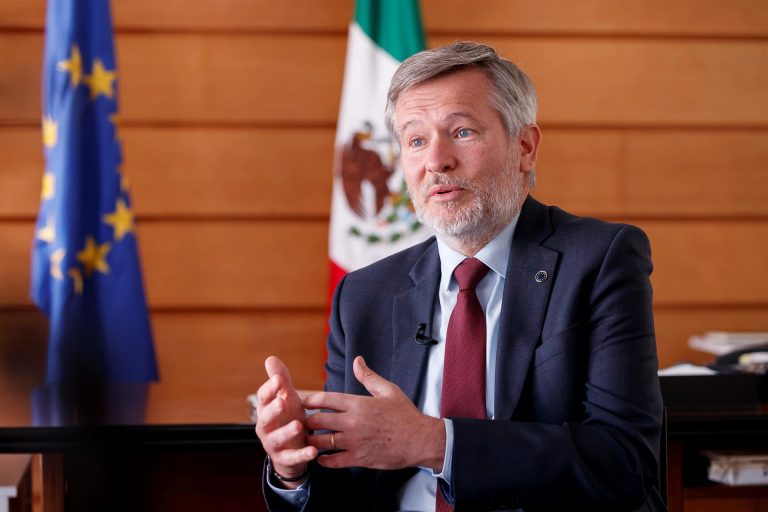
The European Union has called for decisive and coordinated action to address the growing threat of Technology-Facilitated Gender-Based Violence (TFGBV), warning that digital spaces are increasingly being weaponised against women and girls in Nigeria and across the world.
The Head of the EU Delegation to Nigeria and ECOWAS, Ambassador Gautier Mignot, appealed to the 11th Network Conference of Sexual Assault Referral Centres (SARCs), held as part of activities marking the 2025 16 Days of Activism Against Gender-Based Violence.
Mignot, in a statement yesterday, said that while digital platforms play a crucial role in civic participation, communication, and economic opportunities, they have simultaneously become powerful tools for harassment, intimidation, and persecution of women, especially those involved in public life.
He warned that TFGBV was “rapidly expanding the landscape of violence against women and girls” through online harassment, cyberstalking, non-consensual distribution of intimate images, deepfakes, and coordinated disinformation campaigns.
“Digital attacks and disinformation are being weaponised to intimidate, silence, and discredit women, undermining their participation in democracy,” he stated.
The Ambassador commended the Nigerian Government for measures introduced to improve digital security, including the Cybercrimes Prohibition and Prevention Act 2024 and the National Cybersecurity Strategy.

However, he emphasised that the rapid evolution of technology demanded more adaptive and responsive legal protections, backed by strong institutional enforcement.
He revealed that the EU was currently working with the Federal Ministry of Justice to enhance efforts to prevent, detect, prosecute, and deter cyber-enabled abuse targeting women and girls, saying: “This support will be expanded through a forthcoming €18 million EU-funded programme with International IDEA, aimed at strengthening survivor support systems, driving legal reform, promoting digital rights advocacy, and improving justice sector response.”
International IDEA’s Regional Director, Dr Roba Sharamo, echoed the concerns, noting that while technology had broadened civic engagement, it had simultaneously made violence “cheaper, faster, more anonymous, and infinitely scalable.”
He cautioned that unchecked digital abuse posed threats to democratic participation and election integrity, especially when gendered disinformation and deepfake technologies are deployed to distort political discourse.

