 Follow Us on Google News
 Follow Us on Google Discover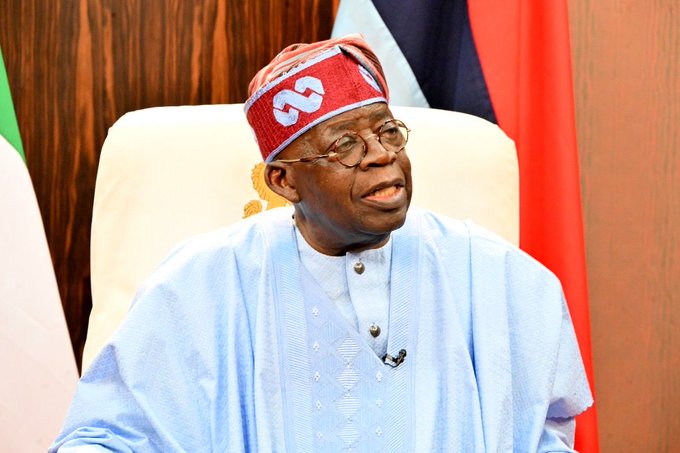
• Reaffirms Nigeria’s global peace agenda as 21 new envoys present credentials
• Group kicks, urges merit in selection, posting
• Atiku slams President for nominating INEC ex-boss
• Ambassadors face more fire than soldiers, says diplomat
President Bola Tinubu has forwarded 65 new ambassadorial nominees to the Senate for confirmation.
Tinubu also reaffirmed Nigeria’s unwavering commitment to global peace, stability and economic cooperation as he received Letters of Credence from 21 newly accredited foreign envoys – 17 ambassadors and four high commissioners – at the State House, Abuja.
This was as the coalition of civil society groups, Rescue Movement for New Nigeria (RMNN), called on the Federal Government to audit the names of the nominees and ensure that those appointed on foreign missions were posted to represent the nation on merit.
Censuring Tinubu for nominating the immediate past Chairman of the Independent National Electoral Commission (INEC), Mahmud Yakubu, for an ambassadorial position, former Vice President Atiku Abubakar stated that such a nomination raises serious concerns.
Meanwhile, the outgoing Director of Reforms and Renovations at the Ministry of Foreign Affairs, Amb Akinremi Bolaji, said Nigerian diplomats face greater risks than soldiers, despite receiving far less recognition, remuneration and institutional support.

The new nominees include the immediate past Sole Administrator of Rivers State/former Chief of Naval Staff (CNS), Ibok-Ete Ibas; former presidential aide, Ita Enang; former Imo State First Lady, Chioma Ohakim; and former Minister of Interior/former Chief of Army Staff (COAS), Abdulrahman Dambazau.
The President’s request, read at plenary yesterday by the President of the Senate, Godswill Akpabio, consists of 34 career ambassadors and high commissioners and 31 non-career ambassadors and high commissioners.
Other notable nominees among the 34 career ambassadorial nominees are Ahmed Sulu-Gambari from Kwara State and Segun Ige from Edo State. Notable among the non-career ambassadorial nominees are Senator Folasade Grace Bent from Adamawa State and Senator Jimoh Ibrahim from Ondo State.
The three nominees, Kayode Are (Ogun State), Aminu Dalhatu (Jigawa) and Ayodele Oke (Oyo), earlier forwarded to the Senate last week, have been screened, while the new 65 nominees have been forwarded for screening within one week.
Welcoming the diplomats, the President said his administration “remains open” to deeper bilateral and multilateral engagements that advance shared prosperity.
“On behalf of the government and people of Nigeria, I warmly welcome you to the State House and congratulate you on your appointments,” Tinubu said. “Nigeria values its longstanding friendships and strategic partnerships across all regions. Your accreditation today reaffirms the depth of our ties and our shared commitment to expand cooperation in areas of mutual interest.”
Tinubu noted that his administration’s focus on strengthening democratic institutions, implementing bold economic reforms, and creating an enabling environment for investment, innovation and sustainable development.
Speaking on behalf of the diplomats, the Ambassador of Japan, Suzuki Hideo, described the ceremony as historic, and acknowledged Nigeria’s pivotal role in the Economic Community of West African States (ECOWAS) and the wider African continent.
“We are honoured to present our Letters of Credence today,” he said. “It is a historic moment as we embark on a new chapter in deepening relations with Nigeria.”
The envoys received by Tinubu include:
Hideo (Japan); Brah Mahamat (Chad); Rodolf Lekogo (Gabon); Mehmet Poroy (Türkiye); Muhannad Alhammouri (Palestine); Felix Artioda (Spain); Banbang Suharto (Indonesia); Ba Abdoulaaye Mamadou (Mauritania); Peter Guschelbauer (Austria); Thirapath Mongkolnavin (Thailand); and Miah Kabir (Bangladesh).
Others are Anna Westerholm (Sweden); Tomas Vyprachticky (Czech Republic); John Ballout Jr. (Liberia); Baba Jamal Ahmod (Ghana); Abheshek Singh (India); Michal Cygan (Poland); Roberto Mengoni (Italy); Martins Podostavek (Slovak Republic); Gholamreza Raja (Iran); and Juliette Sutherland (Barbados).
The envoys are the highest-ranking diplomats appointed to represent their countries abroad.
Speaking at his 60th birthday celebration, retirement ceremony and the public presentation of his new book, The 7-Star Diplomat, Bolaji said diplomacy remains one of the most underestimated professions, though diplomats walk into fires that weapons cannot extinguish.
Bolaji, who spent 35 years in the civil service, described his book was both a personal memoir and a guide for young diplomats, capturing the values, discipline and silent sacrifices that define the profession.
He noted that while the military is rightly respected, diplomats face hazards that no battlefield bomb could resolve, adding that all wars ultimately end at the negotiation table.
Chairman of the occasion, Kolawole Agbaje, described Bolaji as one of the few officers who consistently placed Nigeria’s national image above personal ambition.
“People like him are rare. He has strengthened investor confidence globally and upheld Nigeria’s dignity on the world stage,” he said.
Agbaje said Bolaji’s story offers a powerful model for young public servants and diplomats, demonstrating resilience, patriotism and integrity.
Atiku stated: “Let me state without ambiguity: under no circumstance would I, as President of Nigeria, nominate the immediate past INEC chairman for an ambassadorial position.
“Such a nomination raises serious concerns. It risks appearing as a quid pro quo rather than a recognition of merit. It presents terrible optics for an administration already struggling with credibility. It sends the wrong message to the current @inecnigeria leadership that partisan, compromised, or poorly executed elections may ultimately be rewarded. And most importantly, it is morally indefensible for an umpire at the centre of one of the most disputed elections in our history to become a beneficiary of its outcome.”
According to the Wazirin Adamawa, this is not the path to strengthening our democracy or restoring public trust in our institutions.
A statement issued by RMNN yesterday, and made available to journalists, condemned the Federal Government’s recent list of ambassadorial nominees, describing it as “a list driven by political compensation, not merit.”
The statement, signed by the National Secretary of the group, Oluwarotimi Daniels, noted that the inclusion of many politically-connected individuals with “questionable reputations” threatens Nigeria’s international image.
It reads: “The inclusion of many nominees widely regarded as political beneficiaries rather than qualified foreign-service professionals, reinforces the troubling culture of patronage that has long undermined Nigeria’s progress.”
The group further warned that the nominees could damage Nigeria’s reputation abroad and divert attention from pressing issues such as kidnappings, banditry and violent attacks.
RMNN then called on the Senate to reject nominees lacking competence and moral standing, and urged the Federal Government to adopt a transparent, merit-based selection process for ambassadorial posts.
“We demand that the Federal Government adopt a transparent and merit-driven selection process for ambassadorial positions. Nigeria is blessed with seasoned career diplomats, technocrats, scholars and professionals who can be deployed to strengthen the nation’s global partnerships.
“Nigeria cannot continue on a path where political appeasement is prioritised over competence. The consequences are evident; deteriorating governance, emboldened criminals, rising insecurity, and a weakened international reputation,” Daniels said.
He stressed that the group “stands for a Nigeria where leadership is earned, not gifted, and where public office reflects integrity, not political reward. We urge the Senate to do it right.”

