 Follow Us on Google News


 Follow Us on Google Discover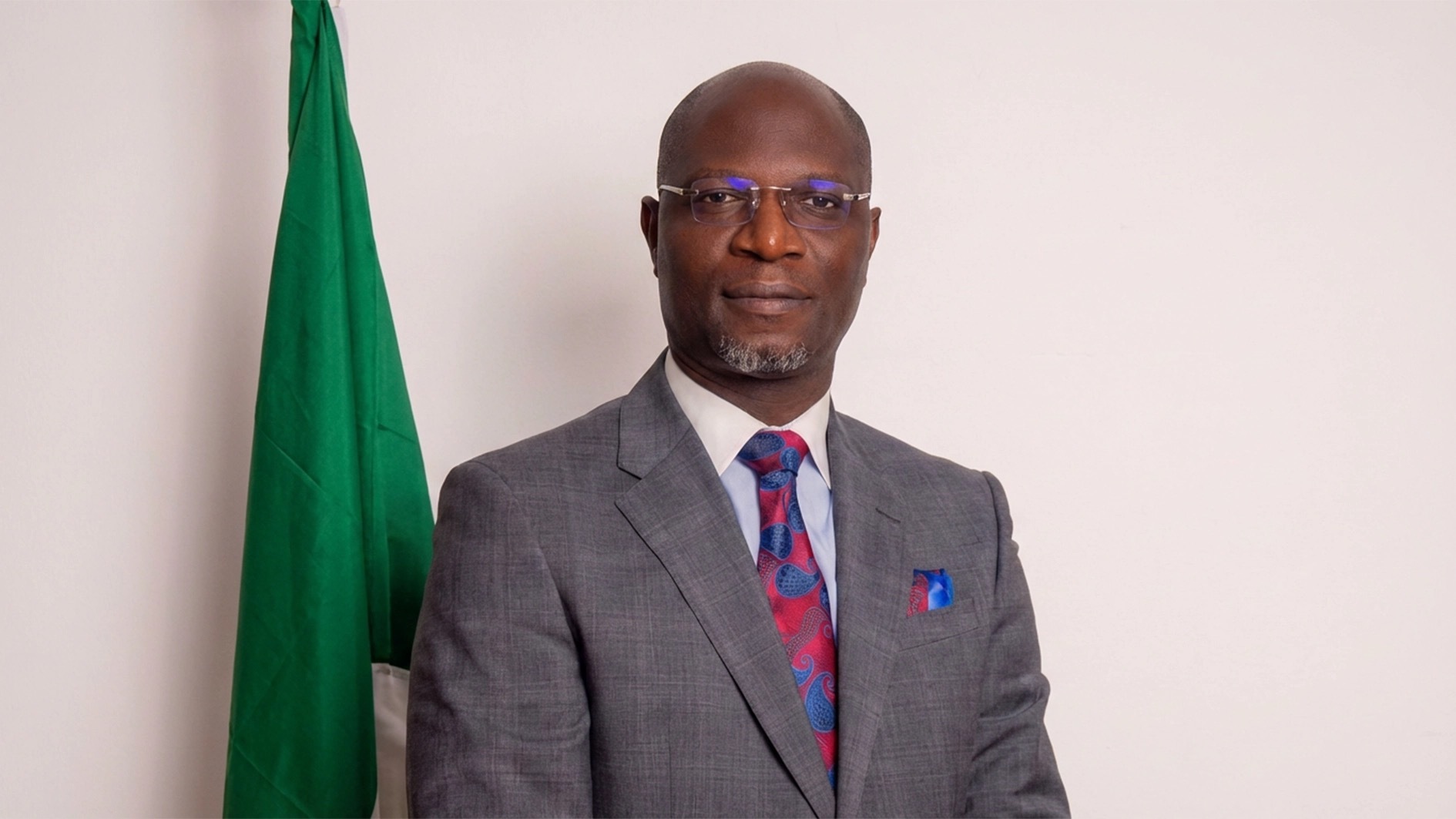
The Securities and Exchange Commission (SEC) has announced a series of wide-ranging reforms aimed at strengthening market efficiency, deepening investor confidence and accelerating the digital transformation of Nigeria’s capital market.
SEC Director-General, Dr Emomotimi Agama, unveiled the initiatives during the second Capital Market Committee (CMC) meeting for 2025, where he also confirmed Nigeria’s transition to T+1 and possible move to T+0 settlement cycle.
He disclosed that the SEC would implement a harmonised corporate governance reporting template for public companies to streamline disclosures, eliminate duplication and reduce compliance burdens.
According to him, the template would unify reporting across SEC regulations, the Nigerian Code of Corporate Governance 2018 and the Business Facilitation Act 2022.
Agama said the Commission was intensifying its market development and financial inclusion efforts through education-based initiatives, including the integration of capital market studies into the national secondary school curriculum in collaboration with the Nigerian Educational Research and Development Council.
At the tertiary level, he said, SEC has also partnered with Nnamdi Azikiwe University for a conference focused on leveraging capital market opportunities for SME growth.

He said the SEC would continue to reinforce Nigeria’s leadership in non-interest finance.
The Commission, he said, recently engaged a Bank of Ghana delegation on regulatory frameworks for non-interest capital markets, highlighting Nigeria’s N1.4 trillion sovereign Sukuk issuance and growth of Islamic mutual funds. He added that plans are underway for a Municipal Bond and Sukuk Summit scheduled for the first quarter of 2026.
Agama emphasised ongoing efforts to deepen the commodities and derivatives ecosystem.
He revealed that the SEC is collaborating with the Standards Organisation of Nigeria to update commodity standards, working with insurance brokers to enhance risk mitigation, and partnering with the Ministry of Solid Minerals to unlock funding for mining companies.
The institution is also engaging the Central Bank of Nigeria (CBN) to secure liquidity status for warehouse receipts while strengthening oversight of commodity exchanges through inspections and financial reviews.
He also pointed out that the commission is advancing new rules under the Investments and Securities Act (ISA) 2025 to support commodity exchanges, collateral managers, warehouse operators, and warehouse receipt issuers.
Study tours of exchanges and clearing agencies are informing updated regulatory frameworks, while work continues on harmonising rules to align with ISA mandates, he said.
In the derivatives market, he said, the SEC was collaborating with stakeholders to deploy a real-time surveillance system to reinforce market integrity.
Updated rules on central counterparties, derivatives trading, online forex and NG Clearing operations have been submitted to the Rules Committee.
A draft systemic risk management rule is also being developed to require stronger risk governance frameworks across regulated entities.
Agama highlighted the Commission’s technology-driven regulatory reforms, including automation through the Digital Transformation Portal, which now allows capital market operators to submit applications, upload documents, and track approvals online.

