 Follow Us on Google News
 Follow Us on Google Discover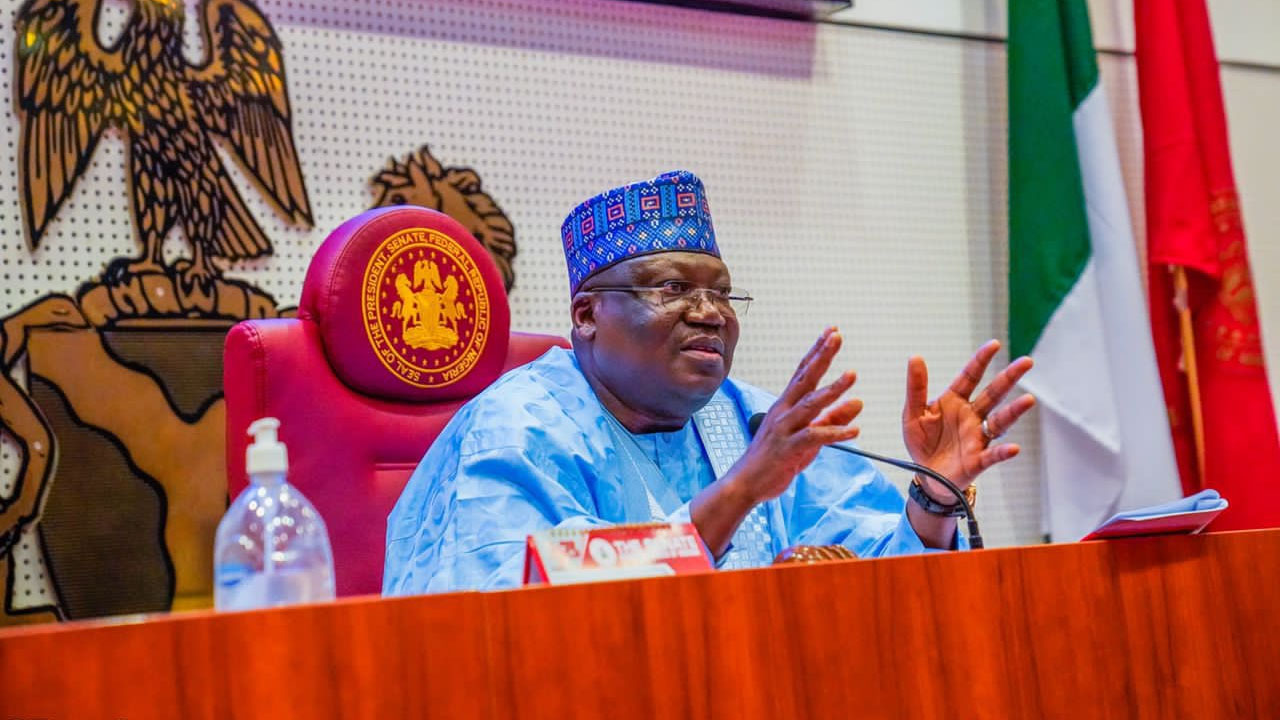
A new biography of late former President Muhammadu Buhari has lifted the lid on intense power struggles within the Presidential Villa, revealing how influential aides allegedly issued fake presidential orders to top security chiefs in a failed bid to impose former Senate President Ahmad Lawan as the All Progressives Congress (APC) presidential candidate ahead of the 2023 primaries.
The book also discloses that former First Lady Aisha Buhari played a key role in the eventual removal of the then Director-General of the Department of State Services (DSS), Lawal Daura, while detailing a family dispute that culminated in gunfire within the Presidential Villa.
The revelations are contained in “From Soldier to Statesman: The Legacy of Muhammadu Buhari,” authored by Dr Charles Omole, and presented on Monday at the State House Conference Centre, Abuja.
The high-profile launch was attended by President Bola Ahmed Tinubu, Gambian President Adama Barrow, First Lady Senator Oluremi Tinubu, wife of the Vice President Nana Shettima, governors, traditional rulers, members of the diplomatic corps, former First Lady Aisha Buhari, Buhari family members, former aides and senior security officials.
According to the book, influential individuals close to Buhari approached the Inspector-General of Police (IGP), the DG of the DSS, and the DG of the National Intelligence Agency (NIA) on the eve of the APC presidential primaries in Abuja, claiming to be acting on Buhari’s instruction to deploy security forces to ensure Ahmad Lawan emerged as the party’s “consensus” candidate.
Former IGP Alkali Baba, quoted in the book, said he rejected the directive outright and persuaded his counterparts that the matter required immediate clarification from the President himself.

“The trio decided to seek an urgent audience with the President,” the book recounts. “When they asked if there was any additional instruction regarding the convention, the President said there was none.”
Buhari, according to the account, laughed when told that celebrations were already underway in Lawan’s neighbourhood over claims of presidential endorsement.
“He made it clear: he had not anointed anyone. Nigerians should choose, and the security agencies must not interfere,” the book states.
The IGP subsequently returned to inform those behind the move that Buhari had no preferred candidate and that the security services would not be used to manipulate the primaries.
The episode, the author notes, illustrated Buhari’s consistent resistance to turning state security institutions into political tools, even when such restraint proved uncomfortable for his party.
On the controversial removal of DSS boss Lawal Daura in 2018 by then Acting President Yemi Osinbajo, the book reveals that Buhari deliberately refused to overturn the decision, despite intense pressure.
“Buhari had handed executive authority to his vice president. To reverse the action would have undermined institutional order,” the book quotes an aide as saying.
It further states that Aisha Buhari was a major instigator of Daura’s removal, a detail not widely documented at the time.
The book also recounts a disturbing incident in which gunshots were fired inside the Presidential Villa following a family dispute involving a policeman attached to the First Lady’s office.
Buhari’s Chief Security Officer, Idris Abubakar, promptly arrested and detained the officer. When investigations revealed deeper involvement by members of the First Family, Buhari ordered consequences without hesitation.
“A nephew was told, in essence, to pack his things and leave this house,” the book records, adding that Buhari made it clear that blood ties would not shield misconduct.
Dr Omole writes that these episodes collectively portray a leader often misrepresented as passive, but who, in reality, exercised restraint rooted in principle rather than weakness.
“Again and again, people close to Buhari exploited proximity and misrepresented him, sometimes with grave consequences, but often without his knowledge,” the book states.
By documenting these moments, the book, From Soldier to Statesman, specifically seeks to separate Buhari the man from the myths around his presidency, offering what the author describes as a factual, insider account of power, loyalty, restraint and betrayal at the highest levels of the Nigerian state.

