 Follow Us on Google News


 Follow Us on Google Discover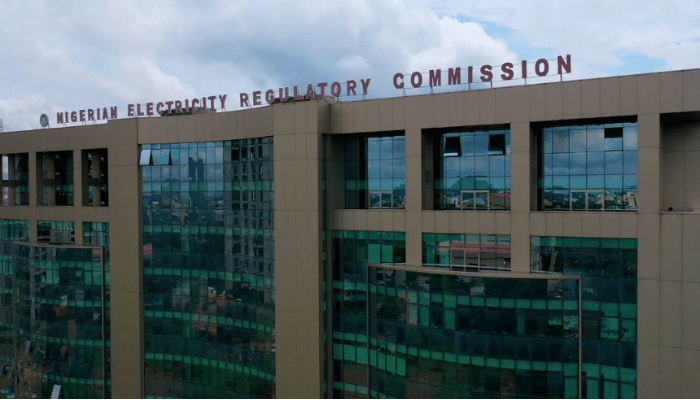
Nigerian Electricity Regulatory Commission (NERC) has issued new guidelines establishing a commercial and settlement framework for interconnected mini-grids (IMGs), a move aimed at removing long-standing ambiguities that have constrained private investment and slowed the deployment of distributed energy solutions across the country.
The regulatory instrument, titled,‘Guidelines on the Commercial Framework for Interconnected Mini-Grids, 2025’, was issued in December 2025 pursuant to the powers conferred on the commission under sections 63, 164, and 226 of the Electricity Act 2023 (“EA” or the “Act”).
According to NERC, the guidelines apply to all Distribution Licensees (DisCos), IMG developers and operators, as well as entities involved in the planning, installation, and operation of interconnected mini-grids with Nigeria’s distribution networks.
The commission stated that the framework offers clarity on commercial arrangements and settlement mechanisms between DisCos and IMG operators, particularly in areas where grid-connected mini-grids are deployed to enhance reliability and expand access.
In the background to the guidelines, the commission noted that Sections 63, 164, 165, and 226 of the Electricity Act mandate it to promote the adoption of renewable energy, streamline licensing processes, and issue regulatory instruments to ensure efficient operations in the electricity market.
It also referenced the April 2024 Supplementary Multi-Year Tariff Order (MYTO), which directed DisCos to improve service reliability and migrate feeders to higher service bands by deploying distributed energy resources under the IMG and Embedded Generation frameworks.

The guidelines, taking effect from December 2025, are expected to play a key role in accelerating the deployment of interconnected mini-grids as Nigeria seeks to close its electricity access gap and improve supply reliability through decentralised and renewable energy solutions.
While acknowledging that the Mini-Grid Regulations 2023 have supported expanded electricity access in previously unserved and underserved communities, NERC said: “The full potential of IMGs to address Nigeria’s substantial electricity access deficit remains underutilised.”
The commission attributed this largely to unresolved commercial issues, including rental fees, distribution use of system (DUoS) charges, cost of energy (CoE), and the treatment of legacy debt inherited by mini-grids.
To address the gaps, the new guidelines introduce a two-part pricing framework for IMG services. This consists of a fixed component for capital recovery, referred to as the Rental Fee, and a variable component covering pass-through energy costs, known as the Cost of Energy. Under the framework, the Rental Fee is payable by IMG operators to DisCos regardless of energy flow and is designed to recover the cost of capital associated with distribution assets allocated to the mini-grid.

