 Follow Us on Google News
 Follow Us on Google Discover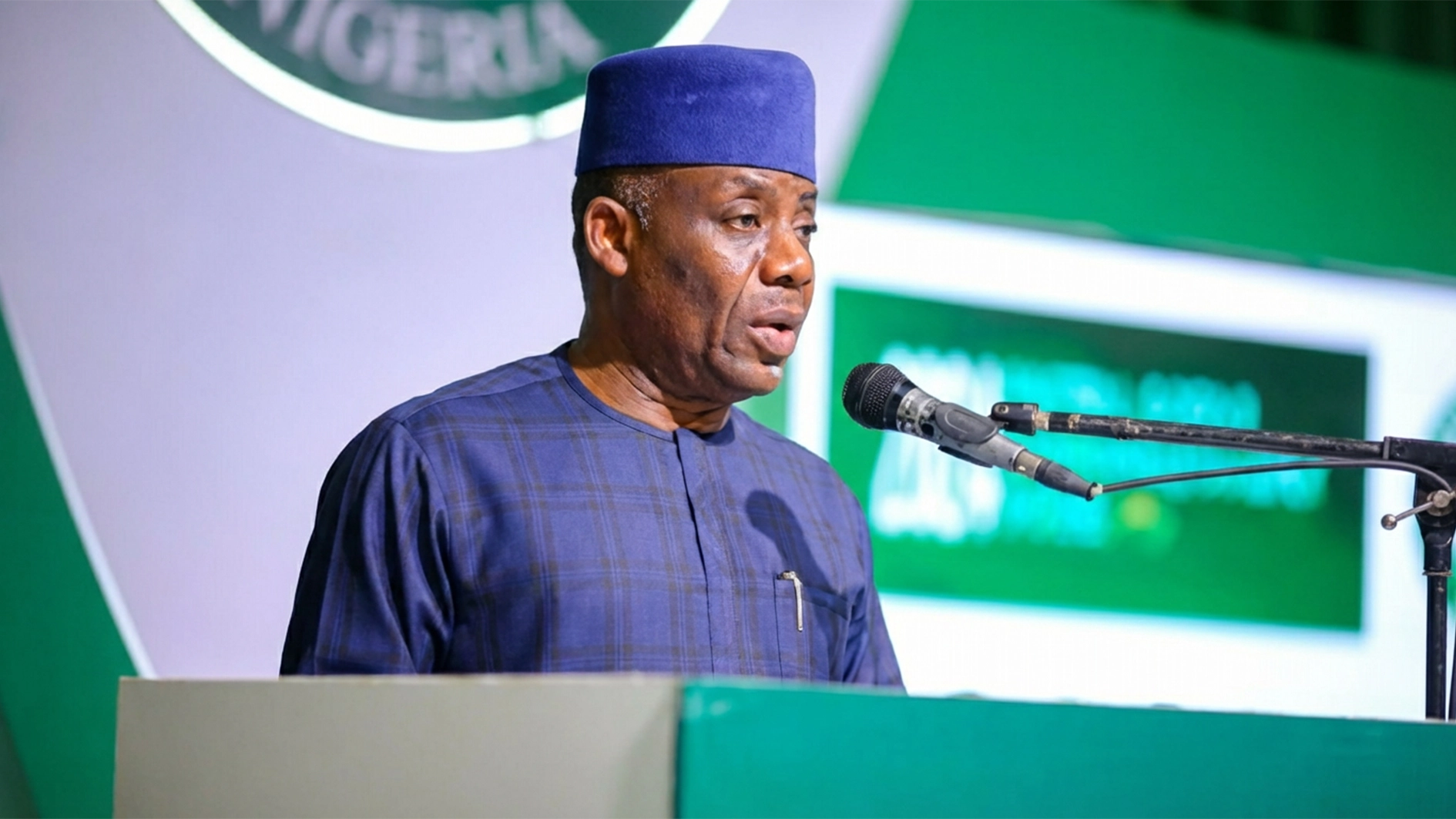
It is lamentable that barely three years after the 2022 National Language Policy (NLP) took off to promote indigenous Nigerian languages and improve early childhood learning in the country’s educational institutions, the Federal Government had to cancel it for reasons that have become controversial and trenchantly criticised by other stakeholders in the education sector.
The revoked NLP mandated the use of the mother tongue or language of the immediate community as the medium of instruction from early childhood education to primary six. Thereafter, English, which is the official language used in formal settings countrywide, took over as the language of instruction from secondary school to tertiary institutions. Basically, the ideals of the terminated policy were: preservation of the local languages in the face of a serious threat posed by the overwhelming influence of foreign languages, particularly English; and improvement in early childhood learning outcomes, which the use of mother tongue has been found to remarkably boost when applied at the foundational level by children.
However, what the country is now being fed is a narrative of new and controversial realities that are purportedly unravelling the vision of the policy, which took years of great and painstaking efforts by experts to formulate, with a view to preserving the nation’s linguistic heritage. Some stakeholders are not convinced by the reasons adduced by the government and are calling for a reversal of the cancellation.
The preservation of Nigeria’s linguistic heritage is crucial, and one way to achieve this is by adopting them for instruction, at least at the foundational learning level. Indigenous languages constitute a cherished feature of a sovereign and liberated nation. English is not a Nigerian language; it is a relic of colonialism. The government has a responsibility to make conscious efforts not only to preserve local languages in Nigeria but also to ensure they are spoken by the majority of Nigerians.
While announcing the revocation of the NLP at this year’s edition of the Language Education International Conference held in Abuja on November 12, Minister of Education, Dr Tunji Alausa, stated that English had been adopted as the language of instruction in Nigerian schools from primary to the tertiary level. His reason was that, through extensive data analysis and some evidence, children were found to be performing below expectations in public examinations because of being taught in their mother tongue. “We have seen a mass failure rate in WAEC, NECO and JAMB in certain geo-political zones of the country, and those are the ones that adopted this mother tongue in an over-subscribed manner,” Alausa claimed.
Some stakeholders faulted his claim, contending that it was neither rooted in facts nor strong enough to warrant the revocation of the language policy. The Chief Executive Officer of Prakis Educational Services and Visiting Professor, University Institute of Applied Human Sciences, Aderemi Obilana, said the revocation was premature, unfounded and harmful to Nigeria’s cultural and educational development.
He argued that the action was not only misleading but also failed to reflect global research and best practices in education, adding that there is no empirical evidence to support the minister’s conclusion that the use of indigenous languages negatively impacts the performance of candidates in national examinations. To the contrary, according to him, there is substantial evidence to prove that students taught in their mother tongue during foundational schooling develop stronger reading comprehension skills.
Obilana cited the position of the United Nations Educational, Scientific and Cultural Organisation (UNESCO), which, at the 25th anniversary of the International Mother Language Day, reaffirmed that instruction in indigenous languages enhances learning outcomes and cognitive development. Some other stakeholders said that, contrary to the minister’s claim, there is an overwhelming body of research, including what they described as the landmark Ife Six-year Primary Project, which demonstrated that early education in a child’s first language enhances comprehension, literacy, numeracy, and overall cognitive development. They described the situation at hand as a classic case of misdiagnosis by an unqualified practitioner. To the Human Rights Writers Association (HURIWA), the cancellation of the NLP amounts to a government-sponsored cultural, scientific and educational suicide.
Going by these observations and the absence of proof of the minister’s claim, it would appear that the termination of the policy is premature and devoid of adequate consultation, if any, with other major stakeholders in the education sector before the decision was taken. Alausa apparently shocked other stakeholders at a meeting of the National Education Group (NEG) held in October, when he declared that English would be Nigeria’s only language for learning assessment because of what he called the difficulty in recruiting teachers for the numerous languages in Nigeria. He put the figure at 460.
The minister’s declaration at the meeting was perceived as dictatorial not only because he is neither an educationist nor an expert in matters of language and linguistic but also because of the expectation that in such a crucial matter relating to children education, other stakeholders should have been carried along in deciding whether or not the NLP should be terminated in view of the fact that experts can always find a way around observed challenges and unintended effects in the implementation of the policy.
It is worth noting that the document required considerable effort to compile, and it was during the implementation process that the minister’s claim was allegedly observed. As Alausa said, the poor performance of the affected children, attributed to the use of their mother tongue, was noticed only in some parts of the country. In such a situation, it is expected that experts will be mobilised to investigate what, within the policy or outside it, could be responsible for the observed poor performance of the children in the affected areas, with a view to finding a way around the problem and ensuring the implementation continues rather than terminating it. Cancellation should not be a first or easy option unless experts have established that the unintended effect of the policy is really caused by the use of the mother tongue and that the problem is unsolvable.
Granted that Nigeria has many indigenous languages and none of them has been generally adopted for learning instruction in school, is this challenge peculiar to Nigeria? Countries where indigenous languages have been successfully integrated into the school system include China, Finland, Singapore, and South Africa. In China, there are about 300 local languages. How China has been able to effectively use the languages for instruction in school and is today one of the leading countries of the world is what Nigeria needs to study and replicate.
Preservation of Nigeria’s linguistic heritage is not just a worthy cause but a crucial part of nation-building. In every society, indigenous languages form the foundation of the unique cultural identity, history and development of that society. Beyond being tools of communication, local languages play a vital role in preserving ancestral wisdom. They drive local economies, foster social cohesion and self-determination.
To this extent, any policy aimed at preserving local languages deserves priority attention. The Federal Government should mobilise other stakeholders in the education and other relevant sectors to take a fresh look at the NLP, with a view to salvaging it and allowing it to run for the crucial purpose of achieving its objectives. In addition, the government should encourage parents to teach their children local languages as another way of preserving the country’s fundamental cultural heritage.

