 Follow Us on Google News
 Follow Us on Google Discover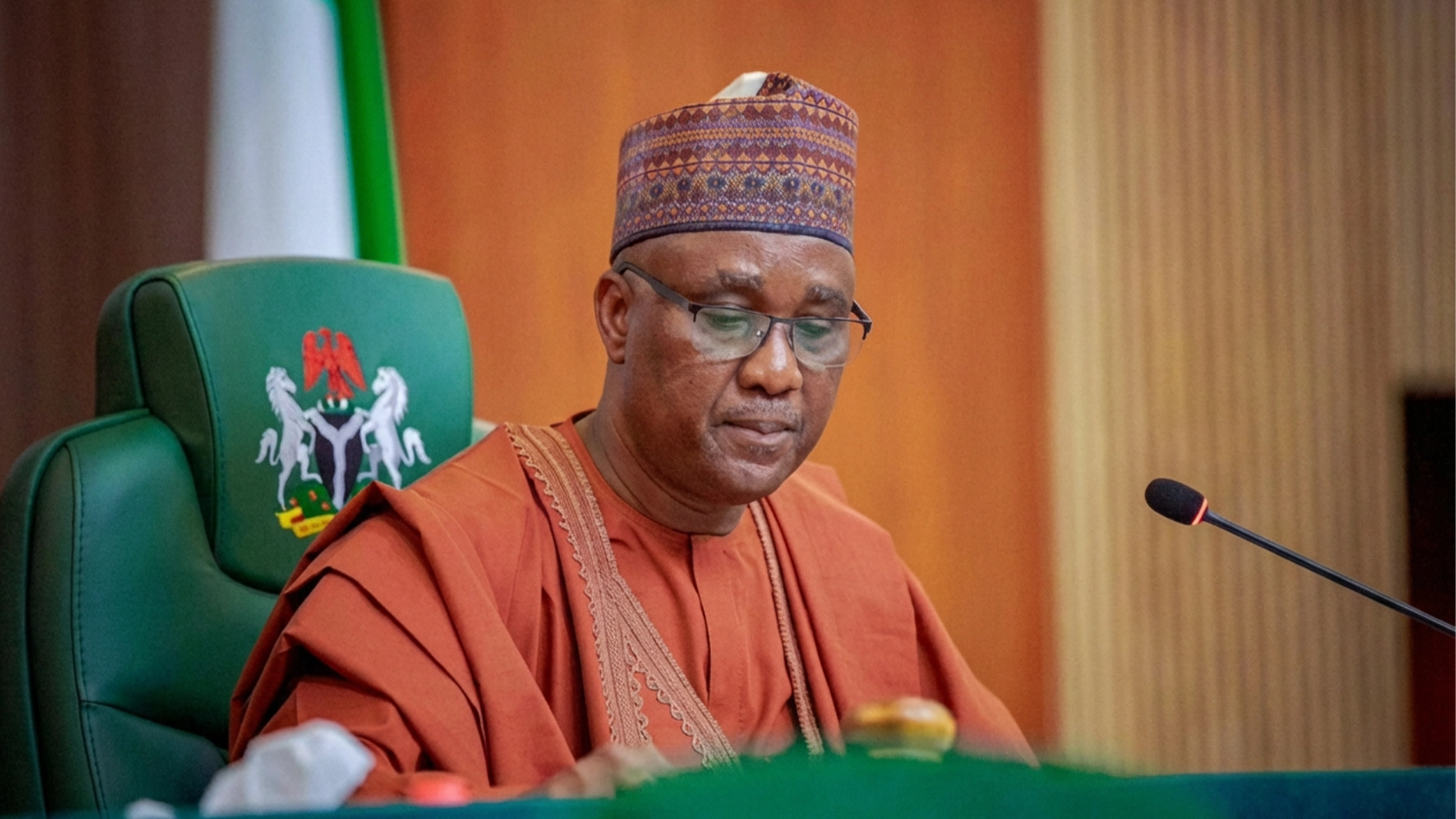
• Gender inclusion bill proposing 182 seats faces resistance, Senate pushback
• State police proposal gains traction amid insecurity, governance concerns
• Lawmakers warn state creation faces toughest constitutional hurdles
• Zonal hearings expose regional demands over resource control, devolution
• Final passage hinges on supermajority votes, state assembly ratifications
• House to vote on proposed amendments via electronic system
Nigeria’s most far-reaching constitutional review since 1999 reaches a decisive moment today as lawmakers vote on electoral reforms, state police, gender inclusion and state creation: bold proposals that promise democratic renewal but expose deep political, regional and institutional fault lines threatening consensus.
The Speaker, Tajudeen Abbas, yesterday disclosed during plenary that voting on the proposed amendments would take place today, stressing that the process would be conducted through an electronic voting system.
The lower legislative chamber commenced the constitutional amendment process in accordance with Sections 4, 8, and 9 of the 1999 Constitution, as well as Order 20, Rule 11, of the Standing Orders (11th Edition) of the House of Representatives.
In a bid to receive citizens’ inputs, the House Committee on Constitutional Amendment toured the six geopolitical zones through zonal public hearings, while also displaying the items proposed for review.
A compendium of the proposals, organised under thematic subheadings, listed areas such as electoral reforms, judicial reforms, the legislature, inclusive governance, security and policing, and devolution of powers.

Other areas include strengthening traditional institutions, fiscal reforms, citizenship and indigeneship, fundamental human rights, local government reform, and state and local government creation.
Setting the tone for today’s exercise, the House yesterday approved key amendments to the Electoral Act 2022, formally mandating the use of the Bimodal Voter Accreditation System (BVAS) and real-time electronic transmission of election results from polling units.
The amendment also introduces a five-year jail term for presiding officers found guilty of declaring false results.
The approval followed a clause-by-clause consideration of the report on a bill to amend the Electoral Act 2022, presented by the House Committee on Electoral Matters, after which the House adopted sections that repeal aspects of the 2022 Act and embed stricter technological provisions.
In addition, the House approved Clause 47, which designates BVAS as the primary tool for voter accreditation, replacing the smart card reader and allowing voters to present electronic identification, including downloadable voter cards with unique QR codes.
With the alteration, the section now reads: “To vote, the Presiding Officer shall use a Bimodal Voter Accreditation System or any other technological device that may be prescribed by the Commission for the accreditation of voters, to verify, confirm or authenticate the particulars of the intending voter in the manner prescribed by the Commission.
“Where a Bimodal Voter Accreditation System or any other technological device deployed for the accreditation of voters fails to function in any unit, and a fresh card reader or technological device is not deployed, the election in that unit shall be cancelled and another election shall be scheduled within 24 hours, if the Commission is satisfied that the result of the election in that polling unit will substantially affect the final result of the whole election and the declaration of a winner in the constituency concerned.”
Accordingly, Clause 60 also mandates that presiding officers transmit results directly to the INEC Result Viewing (IREV) portal in real time, concurrently with physical collation.
For Section 60(3) of the Electoral Act, as amended, “The Presiding Officer shall electronically transmit the results from each polling unit to the IREV portal in real time, and such transmission shall be done after the prescribed Form EC8A has been signed and stamped by the Presiding Officer and/or countersigned by the candidates or polling unit agents, where available, at the polling unit.”
The House also approved Clause 62, which introduces strict penalties for falsifying results, stipulating that returning or collation officers who intentionally announce false results now face a minimum jail term of five years.
While approving a 10-year jail term without an option of fine for any presiding officer or collation officer who fails to stamp and sign a ballot paper or result sheet without a lawful reason, the lawmakers did not conclude consideration of the entire report. The Deputy Speaker announced that deliberations on the remaining sections of the bill would continue today.
Once fully passed and transmitted to the Senate for concurrence, the bill will require presidential assent to become law.
Doubts over reserved seats for women bill
It was learned that an ambitious constitutional proposal to create 182 reserved legislative seats for women may face significant obstacles during voting in both chambers of the National Assembly.
The bill, sponsored by the Deputy Speaker of the House of Representatives, Mr Benjamin Kalu, and 12 other lawmakers, seeks to address Nigeria’s severe gender imbalance in elective offices.
If passed, the proposed amendment would expand the Senate, the House of Representatives and state assemblies, and mandate the Independent National Electoral Commission (INEC) to delineate women-only constituencies for four election cycles (16 years) before a review.
Currently, women occupy less than five per cent of elected positions nationwide, with only three female senators in the 109-member Senate and 17 women in the 360-member House of Representatives.
However, while the House of Representatives supports the creation of 182 new seats, a counter-proposal from the Senate is reportedly pushing to drastically slash the number of women-only seats in the upper chamber from 37 to just six, one per geopolitical zone.
The bill sighted by The Guardian proposes that the Senate would gain 37 additional seats. It seeks to replace Section 48 of the Constitution to provide for one additional female senator for each of the 36 states and the Federal Capital Territory (FCT), immediately creating 37 new seats dedicated to women. The bill also mandates a review after 16 years.
The House of Representatives would likewise add 37 new female-only seats. A new Section 49 would expand the lower chamber to 360 general seats, plus one women-only seat for each state and the FCT, bringing the total membership of the House to 397.
Section 71(2) would compel INEC to create new senatorial districts for women-only seats and to constitute each state as a federal constituency for the female seats in the House.
Under the proposed legislation, state assemblies would add a total of 108 seats. A substituted Section 91 would require each state assembly to create three additional women-only seats, one per senatorial district. This would add 108 new seats nationwide, bringing the total number of reserved seats to 182.
The bill also proposes new subsections in Sections 77 and 117 to define a “special constituency” as a women-only district.
Despite strong backing in the House of Representatives, the Senate is reportedly resisting the scale of the proposed expansion.
It was learned that some senators are proposing only six new seats, one per geopolitical zone, compared with the 37 seats outlined for the upper chamber in the House bill.
Dr Chidozie Ajah, Special Adviser on Legislative Matters to the Deputy Speaker, during a session described the discussions as fluid, noting that a consensus on the scale of the reserved seats has yet to be reached.
Even if the House and Senate reconcile their differences, the bill faces formidable constitutional hurdles.
It must secure the support of two-thirds of members in both chambers of the National Assembly, followed by ratification by at least 24 of Nigeria’s 36 state assemblies. Only then can it be transmitted to the President for assent.
The proposed legislation would also require amendments to seven sections of the 1999 Constitution and may include a modification to Section 42, the country’s anti-discrimination clause, to explicitly permit affirmative action frameworks.
There are also indications that the bill may lack the support of some northern lawmakers, who view the proposed legislation as anti-Islam.
State policing
The House of Representatives has placed state policing, state creation, electoral reforms and gender inclusion at the centre of an ambitious constitutional amendment exercise widely regarded as the most far-reaching since Nigeria’s return to civil rule in 1999.
As of December 2025, more than 46 harmonised alteration bills are before the House, with lawmakers saying the review is designed to address deep-seated structural weaknesses in the federation, respond to worsening insecurity and correct decades of imbalance in political representation.
Foremost among the proposals is a renewed push for state police, driven by Nigeria’s escalating security challenges. From insurgency in the North-East to banditry, kidnapping and communal violence across several regions, critics of the current centralised policing structure argue that the Nigeria Police Force is overstretched and ill-equipped to secure a country of more than 200 million people.
Proponents of state policing contend that decentralising security would allow states to recruit officers familiar with local terrain, language and culture, improve intelligence gathering and ensure faster responses to crime. They also note that many states already bear significant security costs through logistical support for federal police commands and the funding of vigilante and community security outfits.
However, resistance remains strong in some quarters, with critics warning that governors could abuse state-controlled police forces to harass political opponents or manipulate elections. In response, the bills before the House propose safeguards, including federal oversight standards, constitutional limits on state authority and stronger protections for citizens’ rights.
Alongside security reforms, lawmakers are also considering landmark gender inclusion proposals, particularly bills seeking constitutionally guaranteed reserved seats for women in the National Assembly and state legislatures, as well as special representation for persons with disabilities.
Despite women constituting nearly half of Nigeria’s population, they occupy less than 10 per cent of seats in the National Assembly. Of the 993 state assembly seats nationwide, only 54 are held by women, while more than 10 state assemblies have no female member at all, placing Nigeria last in Africa in women’s political representation.
Speaking at a media training workshop on strengthening reportage of the Reserved Seats for Women Bill at the National Assembly Complex, Abuja, the convener of the Reserved Seats for Women Bill Campaign Coalition, Chief Mrs Osasu Igbinedion Ogwuche, described the situation as “embarrassing” for Africa’s largest democracy.
“We say we are the giant of Africa, yet we are performing so poorly when it comes to women in government,” she said, stressing that the push for reserved seats is a structural response to systemic barriers such as high campaign costs, political violence, intimidation and cultural bias.
Meanwhile, state creation remains one of the most contentious issues before the House of Representatives. The Constitution Review Committee has received no fewer than 46 formal requests for new states across the six geopolitical zones, alongside numerous proposals for additional local government areas. The agitations are driven by claims of marginalisation, uneven development and the administrative overstretch of existing states.
The South-East has renewed calls for an additional state to achieve parity with other zones, while proposals such as Ijebu and Oke-Ogun in the South-West, Warri, Toru-Ebe and Ogoja in the South-South, as well as multiple demands from the North-West and North-Central, continue to generate debate.
Lawmakers have cautioned that state creation faces the most stringent constitutional hurdles, requiring broad legislative approval, referendums and ratification by at least two-thirds of state Houses of Assembly. So far, none of the proposals has crossed these thresholds.
Although deliberations were briefly delayed to allow constituency consultations, the House has resolved to proceed, with electronic voting to be deployed for the first time during final consideration of the bills to enhance transparency.
If passed by the National Assembly, the amendments will still require approval by two-thirds of state legislatures, setting the stage for a nationwide test of consensus on security reform, restructuring and inclusive governance.
Zonal propositions
Power devolution, state police, local government autonomy and state creation dominated discussions at the South-East zonal public hearing in Enugu on the ongoing proposed alteration of the 1999 Constitution of the Federal Republic of Nigeria.
The South-East specifically called for the creation of an additional state in the region to bring it at par with other zones that have six states, before any further state creation elsewhere in the country. Therefore, it recommended Anim, Anioma and Adada states, arguing that each met the constitutional criteria for state creation.
In the South-South, stakeholders, including the Ijaw National Congress (INC) and the South-South Elders Forum, insisted that resource control and fiscal federalism remain the region’s primary demands, with states allowed to manage and control their natural resources.
The coordinator of the South-South Elders Forum, Chief Anabs Sara-Igbe, said the system would be the best way to tackle long-standing challenges of marginalisation and sentiment. He added that states could then pay taxes to the Federal Government.
Similarly, the national spokesman of the Pan Niger Delta Forum (PANDEF), Dr Obiuwevbi Ominimini, aligned with Sara-Igbe, insisting that states should be allowed to manage and control their resources and remit taxes to the Federal Government.
Meanwhile, other regional leaders, including Bayelsa State Governor, Mr Douye Diri, advocated an upward review of the current 13 per cent derivation fund to at least 25 per cent or 50 per cent, arguing that more funds are needed to address environmental degradation caused by oil production.
The region also called for several items to be moved from the Exclusive Legislative List to the Concurrent List, thereby reducing what it described as the “excess burden” on the Federal Government and granting states greater autonomy over local matters.
There was a strong consensus in favour of establishing state-controlled police forces to address grassroots insecurity more effectively.
The INC also called for the creation of additional states within the region to ensure equitable representation and development. Stakeholders further demanded that states be empowered to create and manage their own local government areas (LGAs) and Local Council Development Areas (LCDAs), criticising the current imbalance in LGA distribution across the country.

