 Follow Us on Google News
 Follow Us on Google Discover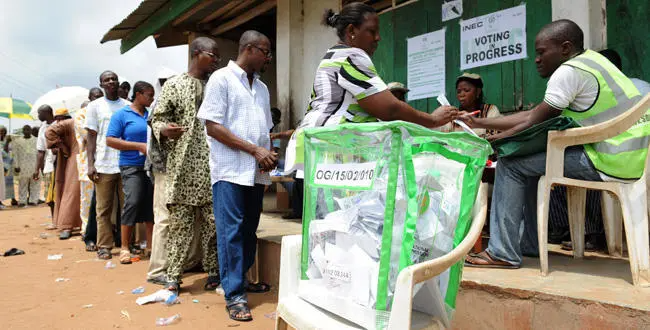
I thank my friend Clem for inviting me to make some preliminary remarks at this Stakeholders’ Forum, which has been convened as we begin yet another process of preparations for the next set of national elections that are due in barely two years. Indeed, as the 2027 general elections approach, those of us who have refused to give up on Nigeria; yes, those of us who still believe that a new Nigeria is possible even from the rubble of the moment, including I presume everyone here, must remain proactive and continue to interrogate our audaciously degenerate leadership recruitment process, to engage our electoral laws that have proved to be so easily manipulable, and to confront our vexatiously jaundiced post-election judicial processes, which have all combined to deliver to Nigerians all levels of governance, many characters that in saner climes would be cooling off in asylums or serving time in correctional centres.
I have told Clem now and again that till this day, Nigerian have continued to pay a heavy price for the fatal mistake made when he and his colleagues who championed the pro-democracy struggle, resolved not to quickly get involved in party politics, following the sudden expiration of General Sani Abacha in June 1998.They let the same professional politicians whose self-serving connivance helped to prolong the decades of military adventurism in Nigerian politics.
A whole 26 years after the country’s return to democratic governance, and eight election cycles, the ethnic nationalities that make up our nation state appear more divided than ever before, our democracy appears more fragile than ever before, the conduct of our elections appear more jaundiced than ever before, our national economy appears more tenuous than ever before, our security situation across the country bears the marks of a failing state, and the level of trust we have in those who superintend our local, state and national affairs has never been so low. Yet we must acknowledge the doggedness and tenacity of the major stakeholders in the Nigeria Civil Society Situation Room on Elections all through these years of debauchery, when a swarm of devouring locusts invaded the land and wreaked havoc on our national landscape. I thank you all for your patriotism, your resilience, and your relentless commitment to the emergence of the Nigeria of our dream.
Invasion of our national landscape
Let me also thank the foreign agencies that have supported the Civil Society Situation Room in the past, and those supporting today’s Forum, especially the UK Foreign Development and Commonwealth Office.
Let me state that beyond the approaching general election circle, the task of securing Nigeria’s democracy and building national political consensus, are beyond that which could be accomplished in any single general election circle.
The task before Nigerians goes far beyond the regular rituals of political parties fielding candidates, of Independent National Electoral Commission’s (INEC) planning and executing its often- questionable election conduct, or the task of ensuring the safety of persons on election day, with the mobilisation of tens of thousands of heavily armed security operatives that often appear like combatants at the warfront.

The task includes the judicial processes that over the last few election cycles have sufficiently exposed the embarrassing contradictions in our legal jurisprudence, yes, in ways that defy any presumption of legal certainty which should otherwise be the anchor of every legal system.
Securing Nigeria’s democracy through credible elections will involve the actualisation of the much-needed reform of the extant provisions, which insist that voters must appear physically at their designated polling units before they can cast their votes.
This effectively disenfranchises millions of Nigerians, robbing them of their civic right to elect their leaders. There are millions of Nigerians in the Diaspora. There are millions of others who are engaged insecurity services, election monitoring, media coverage, and other essential duties on the election day, as well as the sick, aged, or ill-disposed persons who are effectively disenfranchised by the extant laws which require in-person voting, even in our digital technology driven 21st Century society.
This Forum as the foremost indigenous election watchdog, must begin to do much more than the monitoring, observation and reporting on our election management processes. With the collection of highly educated and experienced civil society practitioners that are active in this Forum.
I look forward to a more robust, and more creatively new patterns of engagement with the three arms of government, with political parties and the political elite, and with the generality of Nigerians, towards achieving the much required sanitisation of our leadership recruitment processes, to make it harder for pathological thieves, megalomaniacs, and kleptomaniacs, as well as those with a history of drug and alcohol addiction, or those associated with killer bandits and terrorist insurgents, to get into high office at any level in Nigeria. I look forward to this Forum championing the galvanisation of Nigerian voices to reject in its entirety the outcome of any election that is deemed fraudulent.
This Forum should take maximum advantage of the ongoing constitutional amendment and electoral reform processes, to champion the pursuit of, and attain the desired changes in our electoral jurisprudence. The current position of the law which presumes regularity on the part of INEC in the conduct of elections should be rejected and repealed forthwith. The conduct of the Yakubu Mahmood-led INEC in the last general elections sufficiently demonstrates that such presumption of regularity on the part of the umpires is misplaced. In its place therefore, the onus probandi or the burden of proof that elections were free, fair and credible should henceforth be imposed on INEC.
Similarly, all electoral disputes arising from the conduct of elections at the various hierarchies of our courts must be heard and determined timeously before the swearing-in of the candidates declared as winners.
Again, we must insist on the full-scale utilisation of the available technology in our election processes – from the biometric registration of voters, to their mandatory accreditation with the Bimodal Voter Accreditation System (BVAS) or other more efficient technological devices.
We must insist that votes counted and declared at the polling units must be uploaded electronically, and immediately transmitted to the IRev portal.
And, for the avoidance of ambiguity, and undue reliance by the courts on technicalities, all the relevant guidelines and regulations (of INEC) in that behalf must henceforth constitute part of our corpus juris in Nigeria to be explicitly stated in the new Electoral Act soon to be enacted.
To be continued tomorrow.
Rev. Fr. Ehusani, executive director, Lux Terra Leadership Foundation, delivered this as keynote address at the Nigeria Civil Society Situation Room Stakeholders’ Forum on Elections in Abuja, on December 11, 2025.

