 Follow Us on Google News
 Follow Us on Google Discover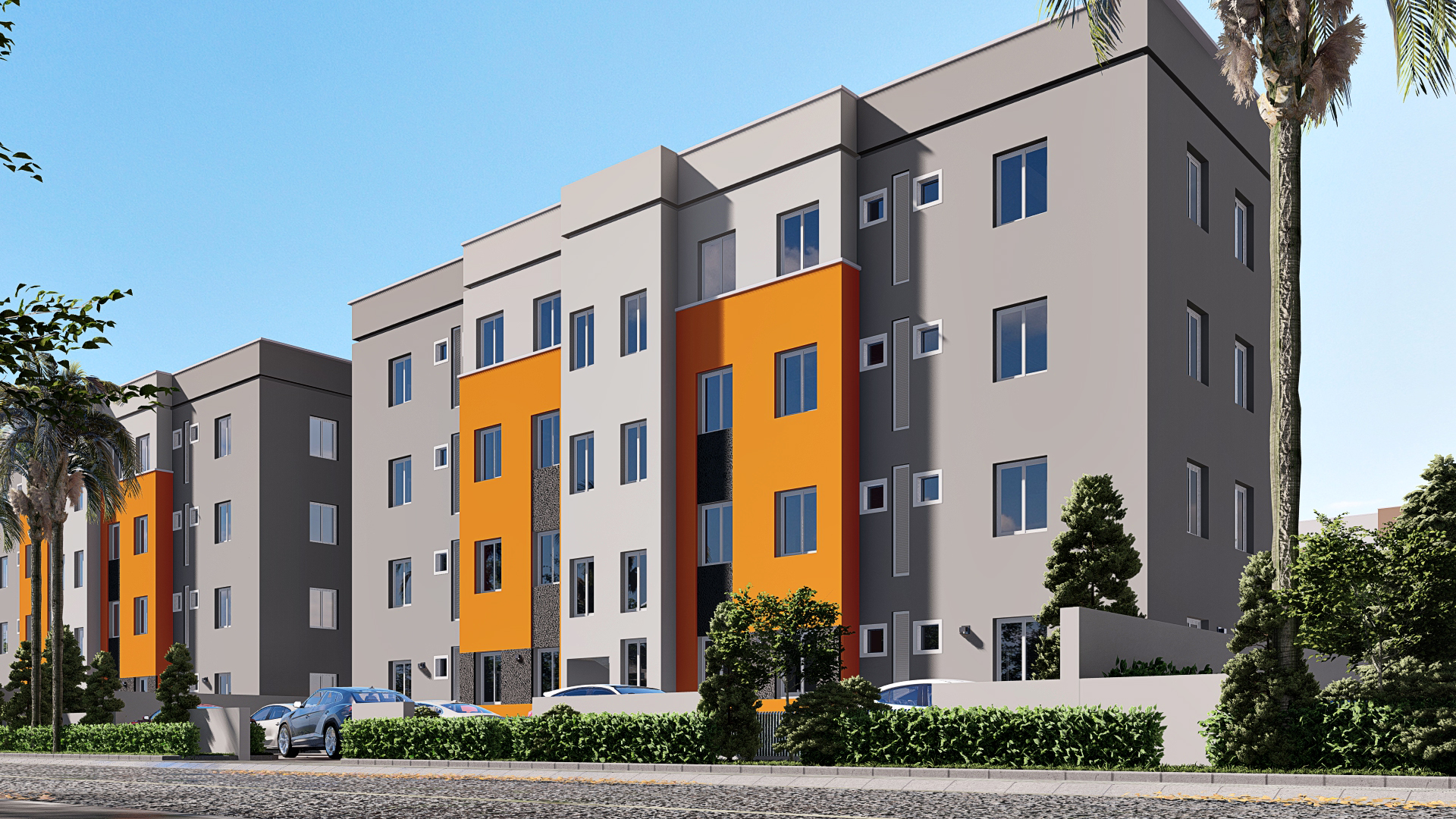
The devaluation of the naira is attracting foreign capital into the real estate market as Nigerians in diaspora are leading the market sales, many of whom have been participating through the once thriving off-plan scheme, direct purchases of completed projects and ‘solidarity buying’ to earn rental income in future. Despite unstable naira and surging prices, the sector has proven to be a way to build wealth, and a unique opportunity for both seasoned and first-time investors, VICTOR GBONEGUN reports.
Diasporan investors are increasingly shaping Nigeria’s real estate market, driving sales, influencing design standards and injecting much-needed capital into residential and mixed-use developments across the country.
From Lagos and Abuja to Port Harcourt, Ibadan and emerging urban corridors, Nigerians living abroad have become a critical force in property transactions. Yet, even as their investments accelerate market growth and support developers amid economic headwinds, they are also exposing long-standing structural weaknesses that threaten the sector’s sustainability.
Industry players said diaspora-led transactions now account for a sizeable share of off-plan sales, particularly in gated estates and master-planned communities. Armed with stronger purchasing power, access to foreign currency and a longer-term investment outlook, many diaspora buyers can pay outright or commit to structured payment plans, giving developers the liquidity required to execute large projects.
For many investors abroad, property ownership is both an emotional and financial decision. It represents a retirement plan, a hedge against inflation and currency depreciation, as well as a lasting connection to home. This sentiment, combined with rising rents and capital appreciation in select locations, has helped fuel demand for premium developments offering improved infrastructure, security and lifestyle amenities.
Prime locations and pricing dynamics
Findings by The Guardian show that location remains a top priority for diaspora investors. In Lagos, highbrow areas such as Victoria Island, Oniru, Ikoyi, Ikeja GRA and the Lekki–Epe–Ajah corridor have emerged as preferred destinations. In Abuja, locations including Maitama, Asokoro, Gwarimpa, Lugbe and Kuje continue to attract strong interest.
Most of the projects targeted at diaspora buyers are located within gated estates and are often luxury apartments or duplexes funded through off-plan sales models. The properties typically come in two-bedroom, three-bedroom and duplex configurations, with prices reflecting their premium positioning. Two-bedroom apartments sell from about N250 million, while three-bedroom units hover between N350 million and N450 million. Duplexes in top-tier locations can cost over $3 million, underscoring the scale of diaspora participation in the luxury segment.
Developers agreed that the off-plan model has become particularly attractive to Nigerians abroad, as it allows buyers to spread payments over 12 to 24 months while locking in prices early. In return, developers benefit from pre-payment that reduces reliance on expensive bank loans.
Structural weaknesses come to the fore
However, the growing influence of diasporan investors has also highlighted deep-seated challenges within the sector. One of the most pressing issues is land title insecurity. Buying from abroad, investors often struggle to independently verify land ownership and statutory approvals, leaving them vulnerable to multiple land claims, slow land registry processes and fraudulent documentation. In some cases, properties purchased in good faith later become the subject of legal disputes, eroding confidence.
Fraud remains a major concern. Unregulated agents and fake developers have exploited distance and trust, marketing non-existent or poorly approved projects to unsuspecting buyers abroad. Social media, while an effective marketing tool, has also become a channel through which dubious operators reach diaspora Nigerians. These experiences have fuelled scepticism and reinforced a trust deficit that continues to limit the full potential of diaspora investment.
Project delivery is another weak point. Many off-plan developments face delays caused by inflation, rising construction costs, weak financing structures and poor project management. Such delays undermine expected rental income and long-term returns, which are key motivations for diaspora investors seeking income-generating assets.
Currency volatility has further complicated transactions. While a depreciating naira can make Nigerian property cheaper in dollar terms and boost diaspora purchasing power, it also drives up the cost of imported building materials. Developers often respond with price reviews mid-project, leading to disputes with buyers who had budgeted based on earlier rates.
Beyond delivery, poor post-construction estate management also affects value. In some estates, unreliable power and water supply, inadequate maintenance and weak security arrangements reduce rental yields and long-term appreciation, dampening investor enthusiasm.
Reforms driven by diaspora demand
Despite these challenges, stakeholders say the pressure exerted by diaspora investors is driving reforms within the sector. Some state governments are digitising land registries to improve transparency and speed up title verification. Real estate professionals argue that accessible digital records would significantly reduce fraud and boost investor confidence, especially for buyers abroad.
Developers targeting diaspora markets are also increasingly adopting escrow accounts and milestone-based payment structures, ensuring funds are released only after verified construction progress. Technology has become a critical tool, with virtual inspections, drone footage, digital contracts and real-time project updates enabling investors to monitor developments remotely.
There are also growing calls for stronger regulation, including mandatory licensing of developers and agents, public registers of approved projects and tougher penalties for fraud. Analysts believe clearer consumer protection frameworks and faster dispute resolution mechanisms would further strengthen confidence and attract more structured diaspora capital.
Remittances underpin market growth
Figures show that diaspora remittances to Nigeria totalled $20.93 billion as of 2024. Industry estimates suggest that about 30 per cent of these inflows, roughly $6.28 billion, are directed toward home acquisition or building annually. This positions diaspora investors as the primary drivers of the luxury and off-plan segments of Nigeria’s real estate market.
With Nigeria’s overall real estate market value projected to reach $2.61 trillion by the end of 2025 and an estimated $3.41 trillion by 2029, the sector remains one of the country’s fastest-growing, driven largely by strong demand for residential properties.
In response, top developers have embarked on a series of international property expositions in the United Kingdom, Canada and the United States, particularly in cities such as London, Toronto and Houston. These roadshows are aimed at educating Nigerians in the diaspora about real estate investment opportunities and building confidence in Nigerian real estate brands.
Policy enablers and institutional support
Government policies have also helped encourage diaspora participation. The Central Bank of Nigeria’s Diaspora Mortgage Schemes allow overseas Nigerians to pay for homes in instalments without relocating, making property ownership more accessible. Developers, in turn, are adapting global best practices to foster transparency, credibility and accountability.
The Nigerians in Diaspora Commission (NiDCOM) has played a significant role in boosting diaspora real estate investment through initiatives such as the ‘Home and Abroad Platform’. The secure, tech-driven system, launched with partners including Sydani Group and FirstBank, aims to combat fraud by offering verified properties and transparent transactions.
NiDCOM also supports platforms such as Trustcrow, which provide pre-vetted listings and expert guidance, including programmes tailored to specific groups like Nigerian doctors abroad under the ANPA Foundation. These initiatives address concerns of diaspora Nigerians who have been defrauded by agents or even family members when trying to buy property back home.
The commission further facilitated the establishment of the Diaspora NHF Mortgage Scheme by the Federal Mortgage Bank of Nigeria, which offers mortgage loans to Nigerians abroad to build or buy houses in Nigeria.
One of NiDCOM’s flagship housing projects is the Diaspora City initiative established by the Federal Housing Authority (FHA)in the Federal Capital Territory. Covering over 675 hectares, the project aims to deliver more than 17,000 housing units of various types, with a projected value exceeding N300 billion.
These initiatives are gradually creating a more formal and secure ecosystem for diaspora investors, enabling the country to better leverage high remittance inflows for economic growth.
Diaspora investors as market drivers
Reports indicate that Nigerians in the diaspora remitted over $20 billion in 2023 and about $20.93 billion in 2024. Industry experts say while over 60 per cent of remittances go to household consumption and education, about 30 per cent—around $6 billion annually—is allocated to housing and construction.
Diaspora investors are a major driving force in high-value areas such as Ikoyi, Lekki and Victoria Island in Lagos, as well as prime districts in Abuja. According to real estate firm Northcourt, developers in leading markets like Lagos, Abuja and Port Harcourt attribute between 70 and 80 per cent of their sales to diaspora clients, largely due to the strong purchasing power created by the appreciation of the dollar against the naira.
Experts weigh in
Managing Director of Noble Ground Real Estate, Olajide Dosunmu, said off-plan investments help Nigerians abroad access emerging markets through instalment payments. He noted that many diaspora investors are familiar with instalment-based systems overseas and are comfortable buying properties through off-plan schemes, provided the developers are trustworthy.
Dosunmu acknowledged that social media has helped diaspora buyers become more aware of unscrupulous operators, but lamented the high cost and complexity of obtaining land titles. He called on governments at both the state and federal levels to make the process more transparent and affordable.
“A situation where getting title to property costs as much as 100 to 200 per cent of the market value is too high. In the U.S., it is about 0.5 per cent, and you get the document at the point of purchase. Our process is exploitative rather than developmental,” he said.
Former Chairman of the Nigerian Institution of Estate Surveyors and Valuers (NIESV), Faculty of Estate Agency and Marketing, Mr Sam Eboigbe, confirmed that property investment for owner-occupation among diaspora Nigerians has increased significantly. He said many diaspora Nigerians still believe in the country’s long-term prospects and invest in real estate as a show of solidarity.
However, Eboigbe noted that while off-plan sales remain popular, diaspora investors have become more cautious due to failed project deliveries. “In the past, investors relied on videos and pictures. When they come home and see something different, they are disappointed. Now, they only deal with developers with strong reputations,” he said. He added that currency instability has reduced the attractiveness of Nigerian property purely as an income-yielding investment.
Some diaspora investors, dissatisfied with rental returns when converted to foreign currency, are selling off assets and redirecting funds to more stable markets such as Dubai.
“If we don’t fix our economy, attracting diaspora investors like before will be a huge challenge,” Eboigbe warned. A past chairman of the NIESV Lagos Branch, Mr ‘Dotun Bamigbola, said emotional attachment remains a key driver of diaspora investment, alongside the advantage of earning in stronger currencies. He noted that flexible payment options have helped sustain diaspora participation.
However, Bamigbola stressed that trust remains a major issue, as many diaspora investors rely on friends and family rather than professionals. He called for better organisation of the property market, faster title registration processes and stronger government involvement to make the sector more business-friendly.
“If professionals are hidden, diaspora investors will work with anyone available, and that often leads to losses. Government must lead by ensuring speedy, transparent property registration, while professionals must up their skills and visibility,” he said.

