 Follow Us on Google News


 Follow Us on Google Discover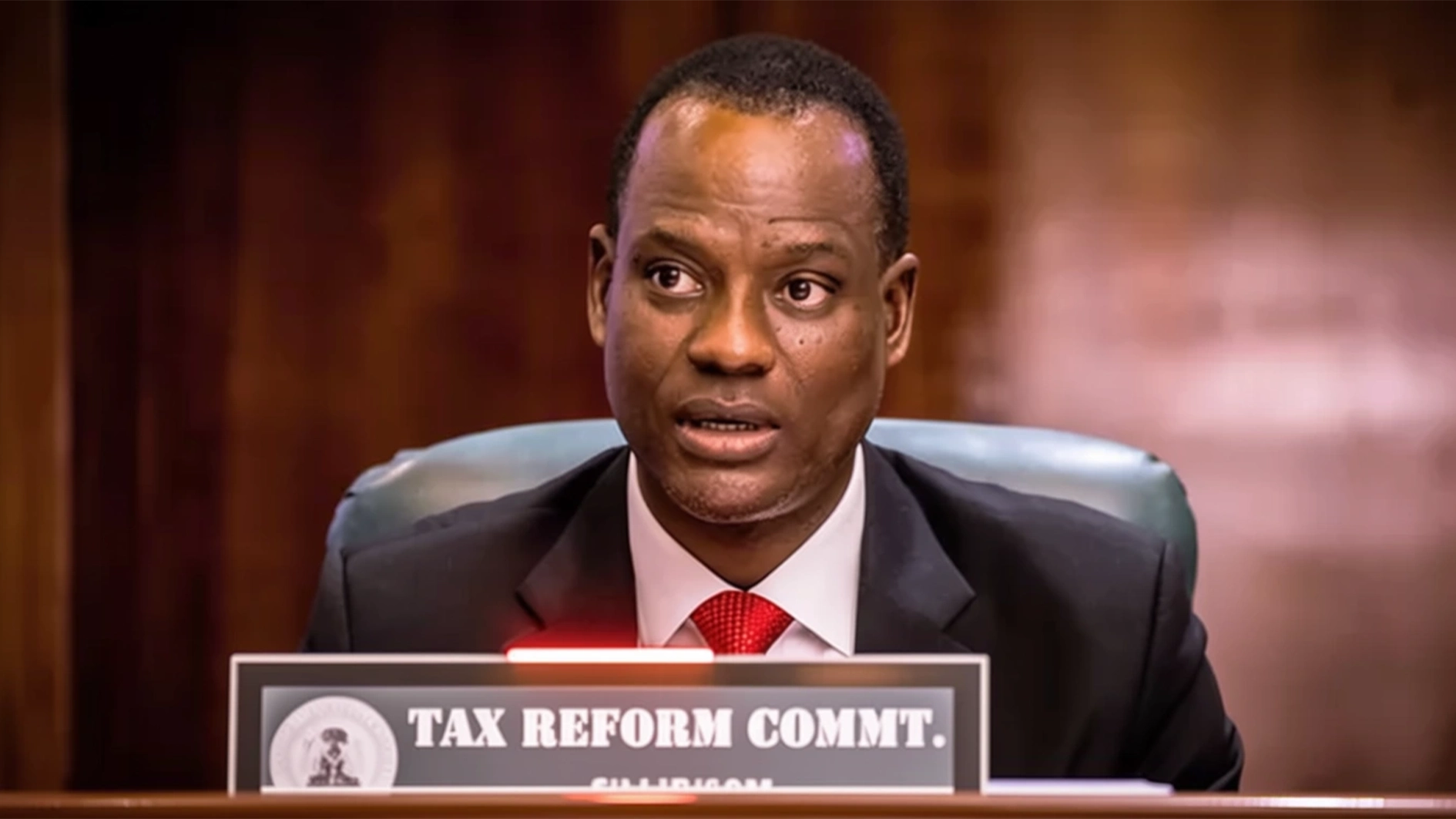
Taiwo Oyedele, Chairman of the Presidential Committee on Fiscal Policy and Tax Reforms, says the Federal Government remains firmly on schedule to commence the full implementation of Nigeria’s landmark tax reform laws on January 1, 2026, describing the reforms as people-focused and growth-driven.
Speaking in Lagos, after a briefing with President Bola Tinubu, Prof. Oyedele said the meeting was convened to update the President on the progress made so far in implementing the four tax reform laws recently signed into law.
According to him, two of the four laws, the Nigerian Revenue Service (Establishment) Act and the Joint Revenue Service (Establishment) Act, have already taken effect, having commenced on June 26, 2025.
The remaining two, the Nigerian Tax Act and the Nigerian Tax Administration Act, are scheduled to commence on January 1, 2026, as planned.
“We met with Mr President to provide an update on the implementation of the tax reform laws. Two of the laws have already commenced, while the remaining two are on track to take effect on January 1, 2026,” Oyedele said.
He welcomed the intervention of the House of Representatives Committee on issues surrounding alleged alterations to the bills, noting that the Federal Government remains committed to working with the National Assembly wherever clarification or corrective action may be required.

“We welcome the statement and findings of the House Committee. The Federal Government will continue to engage constructively with the National Assembly if and when any action is required. However, the implementation timeline remains unchanged,” he said.
Oyedele explained that the reforms are deliberately structured to ease the tax burden on Nigerians, stressing that about 98 per cent of workers would either pay no personal income tax or pay significantly less under the new regime.
He added that about 97 per cent of small businesses would be exempted from corporate income tax, VAT and withholding tax, while larger businesses would also benefit from lower effective tax rates.
“The whole idea is to promote economic growth, inclusivity and shared prosperity. These reforms are designed to provide relief to Nigerians, not to impose additional hardship,” he said.
On the level of preparedness, Oyedele noted that work on implementation began from the moment the bills were submitted to the National Assembly in October 2024 and continued through their passage in June 2025.
“Preparation started from day one. Since the laws were signed, we have spent the last six months on capacity building, system upgrades and extensive sensitisation. Tax reform of this scale is a work in progress, you don’t get perfection immediately, but you improve continuously,” he said.
He explained that the early commencement of two of the laws was intentional, to allow key institutions, including the Office of the Tax Ombudsman, to be properly established and operational before full rollout.
Responding to questions on expected revenue, Oyedele clarified that the reforms are not designed to generate immediate revenue windfalls.
“The intention is not short-term revenue extraction. Over time, revenue will grow from economic expansion, not because tax rates have increased, but because the tax base has broadened,” he said.
He added that the reforms would eliminate wasteful and distortionary incentives, strengthen Nigeria’s tax culture, and improve compliance across the board.
“When people who were previously outside the tax net begin to comply, not because they are overburdened, but because the system is fair, society becomes more equitable and revenue improves sustainably,” Oyedele said.
He expressed confidence in the progress achieved so far and said the government is fully prepared for the January 1, 2026 commencement date.

