 Follow Us on Google News
 Follow Us on Google Discover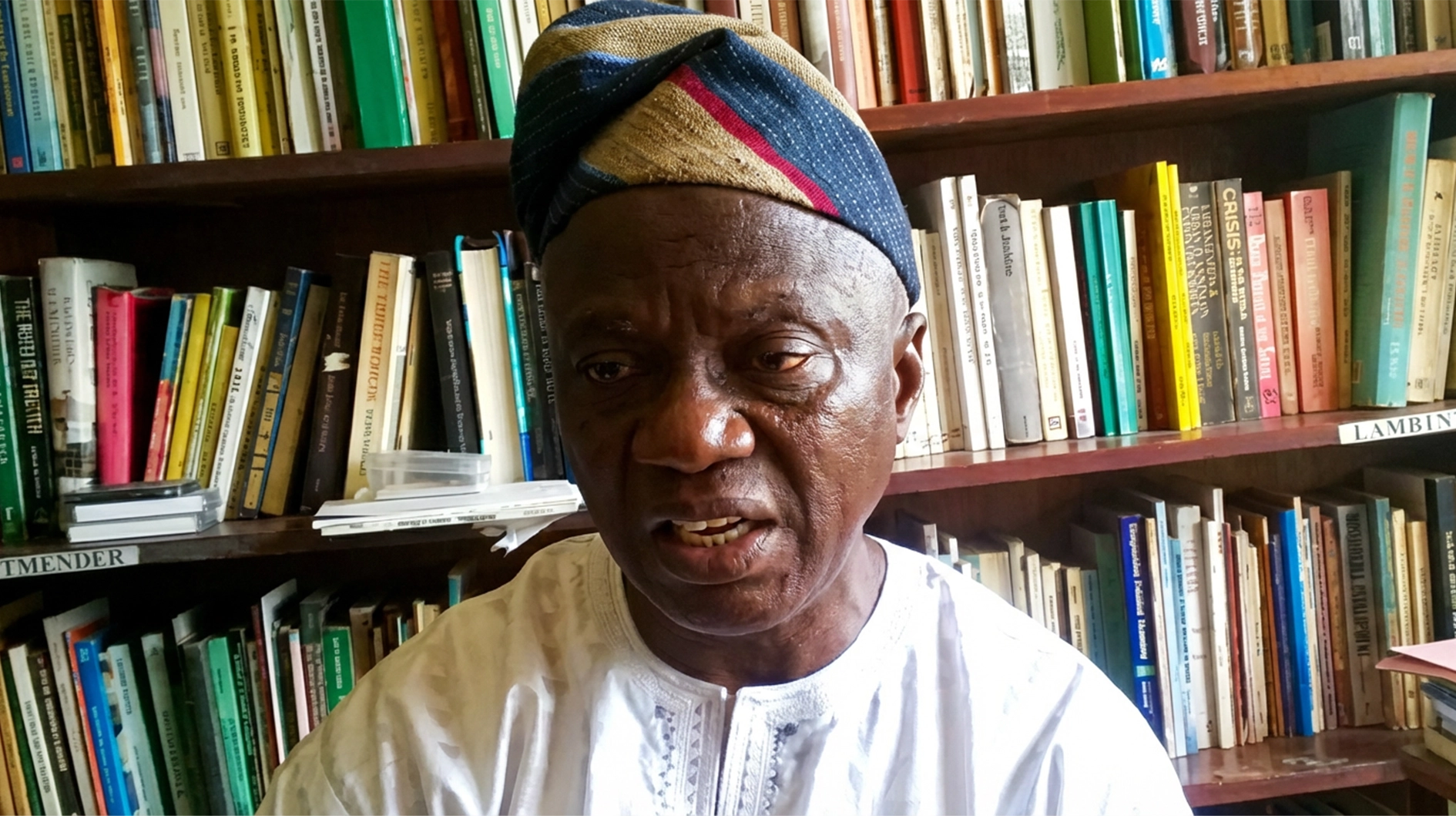
Leadership has long sparked debate, straddling the lines between theory and practice, instinct and strategy, and art and science. In a thought-provoking lecture delivered at Baptist High School, Iwo, on December 20, 2025, Professor Lai Olurode, President of the Iwo Board of Trustees, dissected the essence of leadership and followership, offering insights that resonate profoundly across Nigeria’s complex political and social landscape.
Olurode began by framing leadership as fundamentally about service to others. “Resources must be invested in the public good,” he asserted, stressing the importance of goodwill, the readiness to absorb criticism, and the prioritisation of communal interests over personal gain. Quoting Shakespeare, he observed that “whatever touches us shall last be served,” emphasising that leadership is measured not by fleeting popularity but by the durability of its impact on society. He argued that leadership is about commitment to long-term societal well-being rather than transient personal advantage.
He highlighted the often solitary nature of leadership. Leaders frequently face criticism and misunderstanding while the public, in contrast, may perceive themselves as infallible. In such circumstances, a leader must remain principled, informed, and resistant to the allure of immediate gratification. “A leader should not allow himself to be cheaply led by opinion or transient popularity,” Olurode said, drawing lessons from Nigeria’s complex political history and its pattern of governance missteps. He illustrated this with examples of leaders who were initially unpopular yet whose decisions ultimately strengthened institutions and improved social outcomes.
A central theme of the lecture was the inseparable relationship between leadership and followership. “Both are two sides of the same coin,” he explained. Leaders cannot succeed in isolation, and citizens cannot thrive without competent governance. Reflecting on Nigeria’s governance journey, Olurode noted that decades have been marked by leadership without vision and followership without engagement. Yet he acknowledged that, occasionally, credible leaders and critical followers have emerged, catalysing transformative change. In his view, society cannot afford passive citizens or disengaged leaders; each has a duty to the other.
On the perennial question of whether leadership is an art or a science, Olurode offered a nuanced perspective. Leadership is a science because it relies on principles, structures, and processes that guide its emergence and continuity. Ignoring elements such as consultation, discipline, transparency, justice, and public opinion can quickly erode even the most promising leadership. “Without these ingredients, pasturing or fertilising leadership is simply not feasible,” he said, likening leadership to cultivating a fertile field that requires constant attention and nourishment. Science, in this sense, is not merely theory but the deliberate application of structured practices.
Yet leadership is also an art. Effective leaders deploy creativity, discretion, and judgement to respond to routine and extraordinary challenges alike. Exceptional leadership often involves balancing rules with results, sometimes requiring bold, unconventional action to achieve outcomes that serve the wider community. “A leader needs to be a rebel in some settings,” Olurode said, emphasising the delicate equilibrium between adherence to norms and responsiveness to pressing circumstances. Here, he underscored the need for adaptability, intuition, and emotional intelligence, which cannot be taught in textbooks alone.

Olurode examined prevalent theories of leadership, challenging the notion that some individuals are inherently born to rule. While lineage or privilege may influence access to positions of authority, effective leadership is rarely guaranteed by birth. History demonstrates that leadership combines innate qualities and learned skills, and charisma or transformative potential can emerge unexpectedly. He cited historical leaders in Nigeria who, though initially underestimated, achieved profound societal impact through vision, courage, and strategic thinking.
The professor highlighted the role of socialisation and mentorship in shaping leaders. In Yoruba society, for instance, prospective kings undergo structured training to learn history, genealogy, and protocols required for office. Olurode suggested that contemporary Nigeria could adopt similar frameworks to prepare leaders, ensuring they are equipped with knowledge, discipline, and perspective. Formal education, mentorship programmes, and civic training, he noted, can nurture leadership potential and bridge the gap between ability and opportunity.
He categorised leadership into several forms: democratic or consultative, dictatorial or dogmatic, traditional or modern. Technology, he argued, plays a prominent role, influencing how leaders communicate, implement policies, and interact with citizens. Regardless of style, leadership must remain grounded in the aspirations and needs of the people rather than alienating those it is intended to serve. He noted that failure to align leadership with citizen expectations often breeds mistrust and instability.
Transitioning to practice, Olurode outlined strategies for strengthening leadership skills among both leaders and followers. Institutional strength, he argued, is paramount. Institutions form the scaffolding that supports sustainable achievements, and without robust structures, even the most talented leaders are unlikely to effect lasting change. He emphasised that a well-functioning institution ensures continuity, accountability, and adherence to principles beyond the tenure of individual officeholders.
Ethical consciousness was another cornerstone of his lecture. In a society where greed and corruption often dominate discourse, transparency and accountability are indispensable. Leaders must proactively publish financial reports and demonstrate integrity in all dealings. “Money culture, trust, and integrity must never be trivialised,” Olurode asserted, highlighting the corrosive effects of financial misconduct on public confidence.
Ethical leadership, he said, is foundational to the sustainability of any administration, and without it, even technically competent leaders may fail to earn respect or effect meaningful change.
Communication, according to Olurode, is essential for effective governance. Information must flow freely within institutions and across communities. Hoarding knowledge undermines trust and obstructs collaboration, whereas transparency fosters engagement, collective problem-solving, and accountability. In an era where citizens increasingly demand access to information, the ability of a leader to communicate effectively is as critical as the decisions they make. He added that digital platforms offer unprecedented opportunities for dialogue but also require careful, responsible management.
Conflict of interest, legal adherence, and cultural sensitivity were also emphasised. Leaders must navigate competing interests fairly, respect the law, and understand the cultural nuances of the communities they serve. Elasticity in tolerating dissenting perspectives is essential, allowing diversity of thought without compromising core principles. This, Olurode argued, is central to building trust, legitimacy, and cohesion in governance.
Throughout his lecture, Olurode returned to service as the essence of leadership. Leaders should approach office with reflection, not jubilation at personal gain. “Everyone lays claim to success, whereas failure is an orphan,” he said, emphasising that leadership is measured by its ability to resolve societal challenges and enhance communal well-being rather than by the perquisites of office. He also highlighted that humility, patience, and a willingness to listen to stakeholders are marks of enduring leadership.
He reflected on Nigeria’s governance challenges, noting that opportunism, populism, and short-term thinking often undermine leadership effectiveness. By framing leadership as both science and art, Olurode advocated a dual approach: adherence to structured principles combined with creative problem-solving and adaptability. This approach, he noted, applies not only to politicians but to civil servants, community leaders, and citizens seeking meaningful participation in governance.
A central point of the lecture was the mutual responsibility of leaders and followers. Citizens must not only critique but also support institutions and hold leaders accountable. Leadership, he emphasised, thrives only in an ecosystem of informed, engaged, and ethically conscious participants. Governance is a partnership, not a one-sided imposition of authority.
Olurode also explored the evolving demands of leadership in a technologically driven world. Digital tools have transformed communication, policy implementation, and civic engagement. Leaders must be adaptable, forward-looking, and capable of responding to the fast-changing dynamics of society while remaining anchored in enduring principles of fairness, transparency, and cultural respect. His synthesis of tradition and modernity offers a framework for leadership that is both culturally grounded and prepared for contemporary challenges.
He stressed that leadership is not an end in itself. Positions of authority are a means to an end: resolving societal challenges and improving human life. Success is not measured by personal triumph or accumulation of wealth, but by the impact on the community. Leadership, when approached with integrity, insight, and creativity, leaves a legacy that endures far beyond an individual’s tenure.
The lecture also examined followership, noting that citizens play an active and indispensable role. Engaged followership requires support for institutional objectives, critical scrutiny of leaders’ actions, and active participation in collective problem-solving. Leadership cannot thrive in isolation; it requires a network of informed, responsible, and participatory citizens who understand their role in shaping governance outcomes.
Throughout, Olurode illustrated his points with historical examples, recounting leaders who transformed communities through vision, discipline, and innovation, and contrasting them with those who failed due to lack of preparation, accountability, or public engagement. These examples reinforced his argument that leadership is both an art to be honed and a science to be mastered.
He highlighted the psychological dimensions of leadership, observing that effective leaders must cultivate resilience, empathy, and emotional intelligence. They must absorb criticism, withstand opposition, and maintain composure under pressure. “Leadership is a test of character,” he said, noting that public service demands both courage and humility.
Olurode reflected on the tension between tradition and modernity. While Nigeria’s governance challenges are often framed as contemporary, solutions can often be drawn from historical practices, particularly structured preparation for traditional leaders. Integrating lessons from the past with innovative strategies for today, he argued, produces a governance style that is both culturally anchored and forward-looking.
He concluded by calling for a redefinition of success in leadership, arguing, “it should not be measured by personal accolades or material accumulation, but by the systems, policies, and practices leaders create to serve the common good.” Olurode urged prospective leaders to approach office with reflection, discipline, and ethical rigour. “Positions of authority are instruments of change, not symbols of status,” he said.
With the lecture, it was clear that Olurode’s vision of leadership is holistic. It blends science and art, tradition and modernity, structure and creativity. His framework encompasses ethical consciousness, institutional strength, communication, cultural sensitivity, and a commitment to service. Most importantly, it recognises that leadership is inseparable from followership, requiring society-wide engagement.
For Nigeria, often criticised for governance failures, his insights offer both guidance and a challenge. Leaders are called to transcend personal ambition and focus on long-term societal impact, while citizens are reminded of their critical role in shaping, supporting, and holding accountable those in authority. Together, this dual responsibility forms the foundation for a resilient, ethical, and progressive governance system.
Ultimately, Olurode’s lecture left a lasting impression: leadership is neither a privilege to be enjoyed nor a position to flaunt. It is a responsibility to fulfil, a craft to hone, and a science to master. The future depends on leaders and citizens embracing this vision, investing in public good, cultivating trust, and exercising wisdom and creativity in every decision

