 Follow Us on Google News
 Follow Us on Google Discover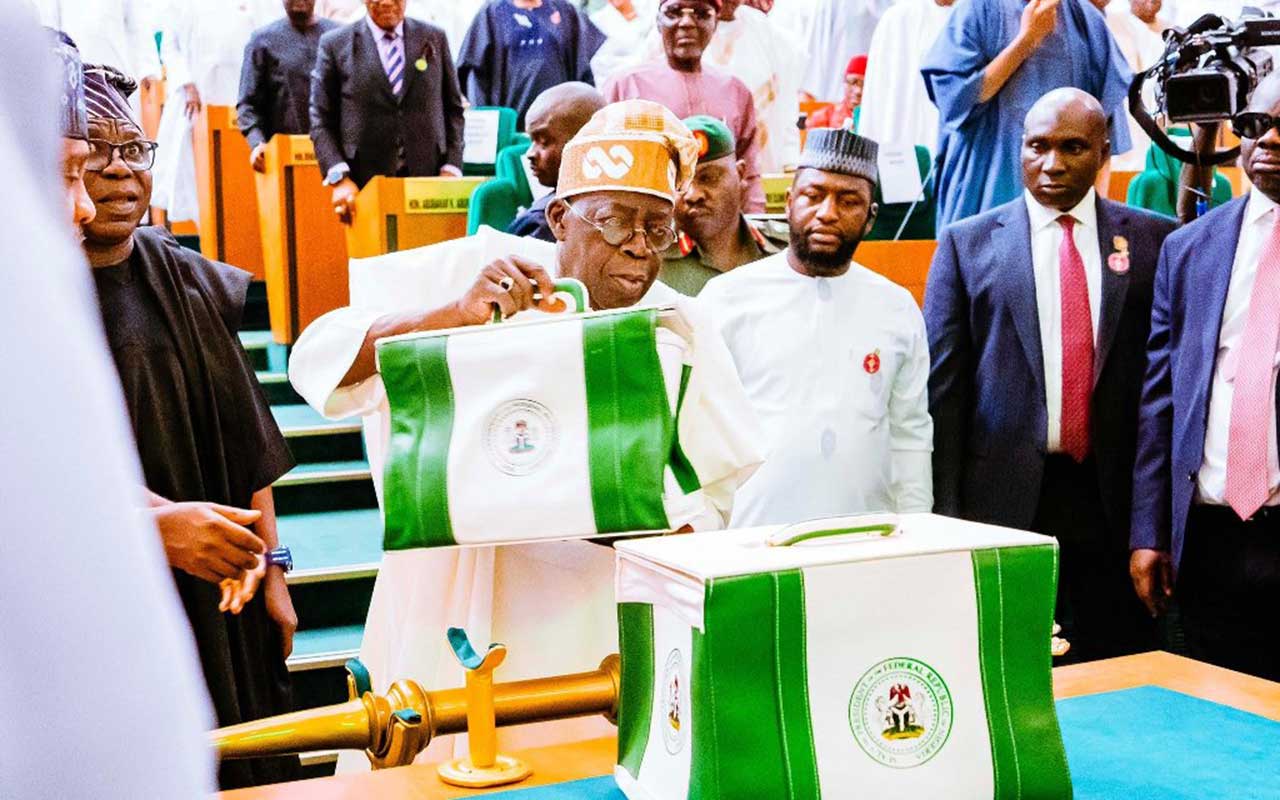
The consideration of President Bola Ahmed Tinubu’s 2026 Appropriation Bill in the Senate unfolded with an unusual degree of ease, speed and unanimity, underscoring a rare moment of near-total alignment between the executive and the legislature.
From the opening moments of plenary, the mood in the chamber was warm, cooperative and almost celebratory, with senators appearing keen to move in lockstep with the presidency.
There was no visible resistance, dissent or procedural delay as lawmakers took turns endorsing the proposal. Contributions were largely affirmative, often echoing similar themes of praise for the size, ambition and structure of the budget. Rather than a battleground of competing fiscal philosophies, the chamber functioned as a forum of affirmation, reinforcing the impression that consensus had been secured long before debate formally commenced.
Perhaps the most striking feature of the process was the pace. The 2026 budget was presented to a joint sitting of the National Assembly on Friday, December 19, and by Tuesday, December 23, it had already cleared second reading in the Senate—an exceptionally swift three legislative days for a spending plan of such magnitude and complexity.
This compressed timeline left limited space for detailed interrogation of revenue assumptions, debt sustainability, macroeconomic projections or sectoral trade-offs at plenary. The desire to conclude legislative business ahead of the Christmas recess, combined with the prevailing political harmony, appeared to outweigh any inclination towards extended scrutiny. As a result, debate prioritised endorsement over examination.
Leading the debate, Senate Leader Opeyemi Bamidele (Ekiti Central) formally outlined the objectives and structure of the bill, which seeks authorisation for withdrawals from the Consolidated Revenue Fund to finance government operations for the year ending December 31, 2026. He reminded colleagues that the bill had already passed first reading following its presentation by President Tinubu.
Bamidele characterised the proposal as a “budget of consolidation”, designed to stabilise the economy while deepening reforms introduced since the beginning of the administration. He detailed the expenditure framework: ₦4.097 trillion for statutory transfers, ₦15.909 trillion for debt servicing, ₦15.252 trillion for recurrent (non-debt) expenditure, and ₦23.214 trillion for capital expenditure.
According to him, the unusually large capital component reflects a deliberate policy choice to prioritise growth, productivity and infrastructure development. Key sectors targeted include transport, power, agriculture, housing, industrial expansion and the digital economy. He added that recurrent spending was structured to support efficient service delivery, backed by commitments to strict cost controls, improved payroll management and broader public-sector efficiency reforms.
On fiscal sustainability, Bamidele acknowledged the heavy debt service burden but said the Federal Government was pursuing aggressive revenue mobilisation, expansion of the tax base and improved performance of government-owned enterprises to gradually reduce reliance on borrowing. He noted that the projected deficit—about 4.28 per cent of GDP—remains within the medium-term fiscal parameters approved by the National Assembly, with expected revenues for 2026 estimated at ₦34.33 trillion.
Senators across party lines largely aligned with this framing. Senator Adamu Aliero described the proposal as a budget of “consolidation and resilience”, applauding what he called unprecedented capital spending. He singled out the ₦26 trillion capital allocation as historic, expressing hope that disciplined implementation would transform Nigeria’s infrastructure landscape.
Senator Mohammed Sani Musa (Niger East) emphasised the importance of the ₦15.9 trillion earmarked for debt servicing, warning that failure to honour Nigeria’s obligations could destabilise the economy and erode confidence among international development partners. He also highlighted infrastructure spending—particularly road construction—as critical to boosting productivity and addressing long-standing deficits.

Despite the overwhelmingly supportive tone, a handful of senators introduced cautionary perspectives. Senator Adams Oshiomhole framed his contribution around job creation, arguing that the administration’s heavy emphasis on infrastructure spending represents a shift towards job-led growth rather than jobless growth. He, however, stressed that effective oversight would be essential to ensure that infrastructure investments translate into real employment opportunities.
On security, Oshiomhole urged the Senate’s defence-related committees to ensure prudent utilisation of funds, transparent procurement processes and adequate remuneration for personnel in the armed forces. He warned against repeating past failures where inadequate equipment and poor logistics undermined security efforts, insisting that value for money must be the guiding principle.
Former Senate President Ahmed Lawan (Yobe North) also struck a measured tone. He described the budget as “historic, bold and courageous”, commending its strong emphasis on security, development and social welfare. Lawan noted that defence and security received the largest share of the budget, reflecting the administration’s priority of safeguarding lives and property.
However, he cautioned that political activities ahead of the 2026 election cycle must not disrupt budget implementation, particularly during the critical first quarter. Drawing lessons from previous budget cycles, he warned that delays in fund releases could lead to abandoned projects and weaken the effectiveness of future budgets.
Lawan further highlighted the creation of the Ministry of Livestock Development, noting that the sector—valued at over ₦35 trillion—holds immense potential for economic growth, job creation, food security and conflict reduction. He argued that current budgetary allocations to the ministry appear insufficient and fragmented, calling for greater focus and investment to fully unlock its potential.
In practical terms, the Senate deferred rigorous scrutiny to the committee stage. Lawmakers repeatedly emphasised that detailed examination would occur during budget defence sessions before the Committee on Appropriations and relevant sectoral committees.
Consequently, plenary served less as a site of fiscal interrogation and more as a platform for political affirmation.
Branded around the themes of consolidation, resilience and shared prosperity, the bill advanced smoothly to second reading without amendment or controversy. The motion was moved and seconded without incident and passed by voice vote, underscoring the absence of division within the chamber.
With plenary consideration concluded, the Senate adjourned until January 27, 2026, transferring responsibility for detailed scrutiny to its committees.
The handling of the 2026 budget at second reading reveals a legislature prioritising speed, unity and executive–legislative harmony over exhaustive debate at plenary. Supporters may argue that this approach reflects institutional maturity and trust in the committee system. Critics, however, may question whether such rapid consensus risks diluting transparency and accountability.
Ultimately, the true test of the 2026 budget will not lie in the speed of its passage but in the rigour of its implementation—and in how assertively the National Assembly exercises oversight in the months ahead.

