 Follow Us on Google News
 Follow Us on Google Discover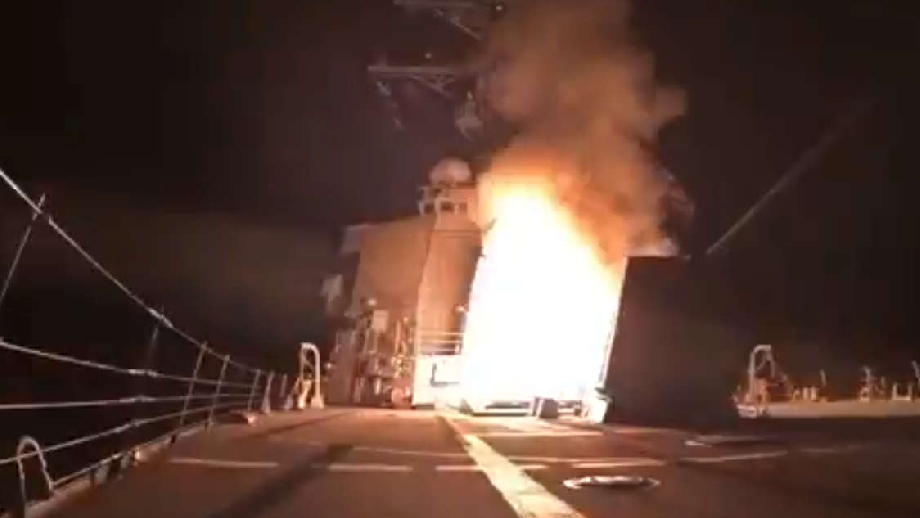
Against the grim background of Nigeria’s horrendous experience from terrorism, the military airstrike by the United States on terrorists in Nigeria is a positive step in the decades-old campaign against the scourge. For one thing, the attacks were carried out with full cooperation and understanding of the governments of Nigeria and the U.S. The U.S. has appropriately warned that there would be more strikes, so long as terrorists keep killing innocent Nigerians.
The precision strikes were launched from maritime platforms based in the Gulf of Guinea after extensive intelligence gathering, planning, and reconnaissance. The attack is an initial culmination of the launching of a Joint Working Group between the country and the United States, which provides a potential for effectively tackling the terrorism scourge. It equally offers some hope that the President Donald Trump threatened invasion of Nigeria, ‘with guns-a-blazing’, will be modified into a real collaboration, in the interest of the two countries.
The U.S. airstrike, approved by President Bola Tinubu, took place between 12:12 a.m. and 1:30 a.m. on Friday, December 26, 2025. The Federal Government explained that Nigerian security forces, working in close coordination with the United States, carried out successful precision strike operations against Islamic State, ISIS, terrorists’ enclaves in Sokoto State. The Federal Government stated that a total of 16 GPS-guided munitions were deployed using MQ-9 Reaper unmanned aerial platforms (drones). They successfully neutralised the targeted ISIS elements attempting to enter Nigeria through the Sahel corridor.
The government disclosed that debris from expended munitions fell in Jabo, Tambuwal Local Government Area of Sokoto State, and in Offa, Kwara State, near a hotel premises. It, however, assured that no civilian casualties were recorded, adding that security agencies promptly secured the affected areas. The Minister of Information and National Orientation, Mohammed Idris, said the strikes targeted two major ISIS camps located within the Bauni forest axis of Tangaza Local Government Area.
There is no gainsaying that Nigeria is experiencing one of the most dangerous periods in its modern history. Terrorist massacres, banditry killings, and mass kidnappings have surged to unprecedented levels. Schools are attacked, worship centres raided, and rural communities terrorised with ruthless precision. It is against this grim backdrop that Nigeria and the United States formally launched a Joint Working Group (JWG) to confront the crisis.
The new partnership emerged after a high-level Nigerian delegation, led by National Security Adviser, Nuhu Ribadu, travelled to Washington, D.C. There, Nigerian officials engaged with the U.S. Congress, the White House Faith Office, the State Department, the National Security Council, and the Pentagon. Washington reaffirmed its commitment to supporting Nigeria, promising deeper intelligence sharing, expedited defence equipment requests, and expanded humanitarian support for communities ravaged by violence.
For a country whose security forces have often been forced to “fight in the dark,” the JWG and the air strikes in Sokoto State could mark a turning point. Real-time intelligence—long lacking in Nigeria’s counterterrorism operations—may finally become accessible. In a war where minutes can save hundreds of lives, this is no minor development.
For years, Nigeria has struggled with sluggish, bureaucratic processes that delay the acquisition of essential U.S. military hardware. The JWG aims to break that bottleneck. Equally significant is the promise of excess U.S. defence articles—highly effective equipment that America no longer needs but Nigeria urgently does. Such support could substantially boost Nigeria’s firepower without overwhelming its strained defence budget.
Yet security is not built on weaponry alone. Many communities—especially across the Middle Belt—have endured displacement, reprisals, and serial massacres. The JWG’s provisions for early-warning systems, humanitarian relief, and technical support introduce a more holistic approach to protecting civilians and preventing violence before it spirals.
For the first time in years, Nigeria has a structured, institutionalised mechanism to coordinate with a global power on security threats. In a region where crises spill across borders with ease, structured cooperation is not optional—it is essential.
Still, the JWG is not a silver bullet. It cannot replace strong institutions, accountable leadership, or political will. Without reforms in Nigeria’s security architecture, no volume of foreign support will deliver lasting peace. And there are worrying signals coming from within. A recent public claim by a terrorist leader that the Nigerian government can “end terrorism whenever it wants”—a claim left unchallenged by authorities—only deepens public fears that complicity and corruption may lie at the heart of the crisis.
The Katsina State “peace meeting,” where heavily armed terrorists walked into a government facility and issued accusations on camera, reinforces the perception that Nigeria’s internal contradictions are as dangerous as the terrorists themselves. Why do wanted criminals stroll into government premises with ease? Why do their inflammatory allegations go unanswered? And why do poorly conceived peace deals repeatedly collapse, only to be recycled under new names? These are questions Nigerians deserve answers to.
Critics warn that the JWG could erode Nigeria’s sovereignty—making its security agencies dependent on Washington’s direction. They fear a scenario in which Nigeria’s top security officials spend more time shuttling between Abuja and Washington than addressing insecurity at home. Others worry about intelligence-sharing arrangements that, if poorly managed, could expose sensitive national information or open the door to foreign influence in domestic affairs.
These concerns must not be dismissed. They reflect legitimate anxieties about the balance between national independence and international cooperation. Yet, the harsh truth remains: Nigeria has been unable to contain terrorism on its own. Weak institutions, fragmented intelligence, and chronic underfunding have left the country vulnerable. In the absence of a coherent homegrown solution, refusing external help is not an act of sovereignty—it is a gamble with citizens’ lives.
A transparent, effective partnership with the United States offers Nigeria more than military muscle. It provides a chance to rebuild its global reputation, often tarnished by accusations of human rights violations and religiously motivated violence. If Nigeria demonstrates real progress—better civilian protection, fewer mass killings, improved intelligence coordination—it will regain credibility and attract long-needed foreign investment.
A secure Nigeria is beneficial for West Africa, conducive to global stability, and undoubtedly beneficial for the United States. Washington understands this. Nigeria is a pivotal state at the heart of an arc of instability that stretches from the Sahel to the Gulf of Guinea. As terrorist networks grow more sophisticated—tapping into global financing, arms trafficking, and digital propaganda—neither country can afford to fight alone.
The U.S.–Nigeria Joint Working Group is not a charity. It is a strategic alignment born of necessity. Nigeria needs stronger intelligence, better equipment, and more coordinated support. The United States needs a stable partner in a region that is increasingly being courted by Russia and China. Both countries stand to gain—and both stand to lose if the partnership falters.
The alliance must be guided by transparency, mutual respect, and accountability. Nigeria must reform its security institutions, confront internal sabotage, and protect civilians with renewed seriousness. The United States should support without dominating, advise without dictating, and partner without undermining Nigeria’s autonomy.
If both countries rise to the moment, the JWG could become one of the most consequential security partnerships of the decade. If they fail, it will be recorded as yet another missed opportunity in a war that Nigeria cannot afford to lose.
It is reassuring that the federal government has, following the Sokoto strikes, reaffirmed its commitment to national security, saying it remains resolute in confronting, degrading, and eliminating terrorist threats, particularly those posed by transnational extremist networks seeking to undermine Nigeria’s sovereignty.
The government further assured Nigerians that it remains firmly in control of the country’s security architecture and is fully committed to protecting lives and property. It urged citizens to remain calm and vigilant as operations against terrorist groups continue.
It is time for the government to walk its talk. The progress made in Sokoto State should not only be consolidated, but it should also be extended to other crannies of the country where terrorists hold sway. The Tinubu government should take the Sokoto airstrikes as the beginning of an imminent end to terrorism, banditry, kidnapping and other criminal onslaughts on innocent Nigerians, no matter the motive behind those dastardly attacks.

