 Follow Us on Google News
 Follow Us on Google Discover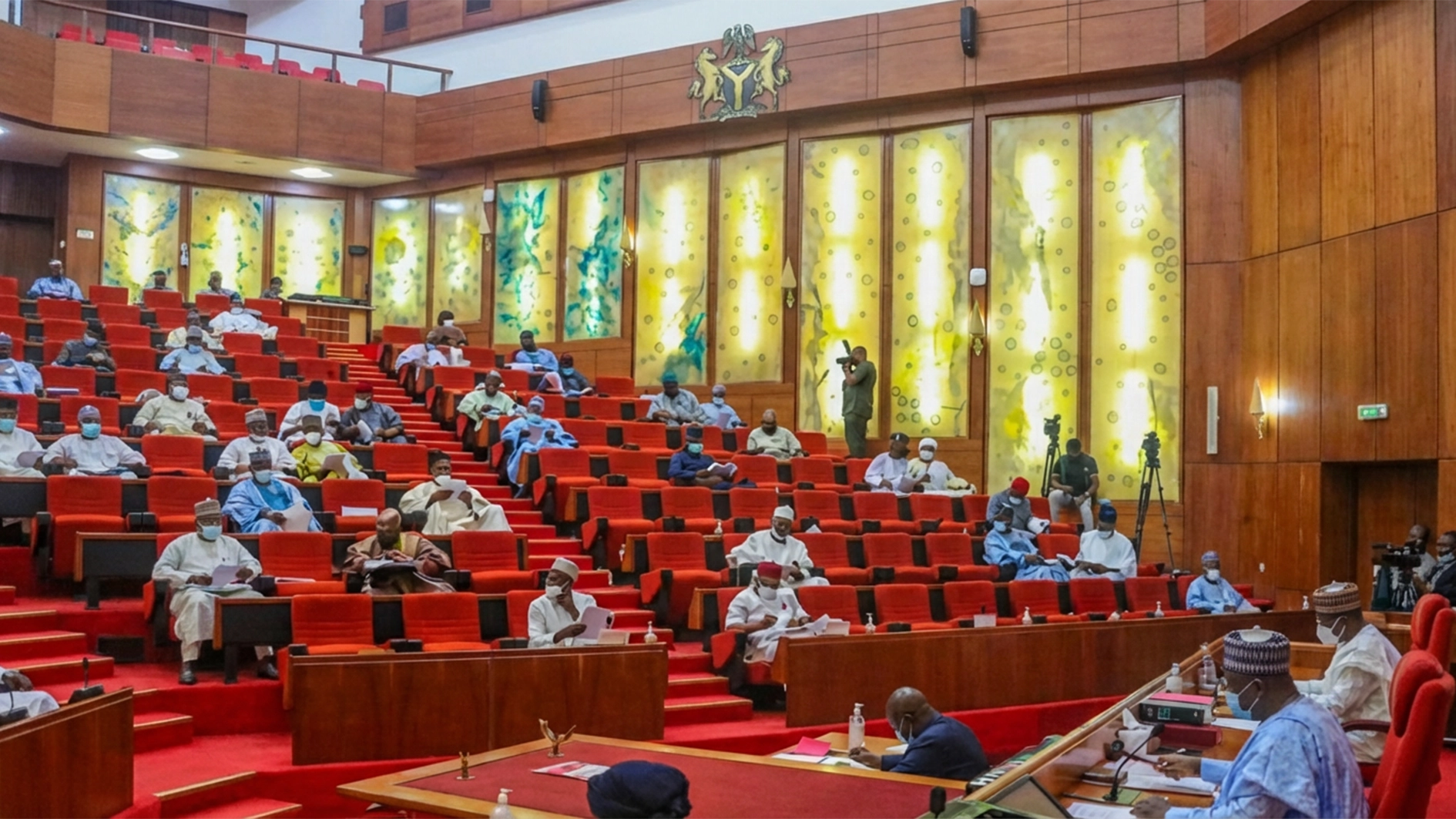
Party-switching has long been part of the country’s political milieu, but the wave of defections ahead of the 2027 general elections is causing growing concern among Nigerians. For many citizens, it is no longer politics as usual but a betrayal of the electorate’s trust. AZIMAZI MOMOH JIMOH and SODIQ OMOLAOYE report that refocusing on people-oriented legislation is key if the country is to move forward.
With at least five sitting governors, 20 senators, and over 70 members of the House of Representatives defecting from opposition parties since the 2023 general elections, the country’s political space is witnessing a familiar trend of ship-jumping in the name of realignment.
From the executive to the Senate and to the House of Representatives, defections have become the order of the day, with the ruling All Progressives Congress (APC) being the major beneficiary.
The latest wave of defectionshighlights the magnitude of the issue. On Tuesday, December 23, 2025, two senators, AllwellOnyesoh (Rivers East) and Barinada Mpigi (Rivers South-East), and six members of the House of Representatives from Rivers State formally defected from the Peoples Democratic Party (PDP) to the ruling All Progressives Congress (APC).
The announcement, made during plenary, was given unusual prominence, with Senate rules suspended to allow the APC National Secretary, Ajibola Basiru, and other party executives to enter the chamber and witness the exercise.
With these defections, the APC further consolidated its dominance in the Senate, increasing its tally to 78 seats and securing a commanding majority.
The move added to a growing list of high-profile political realignments, including the recent alignment of Rivers State Governor Siminalayi Fubara with the ruling party.
Indeed, the most politically consequential defections have occurred at the gubernatorial level.
Since the 2023 elections, four other state governors elected on the platform of the Peoples Democratic Party (PDP) have defected to the APC and the Accord Party.
They include Sheriff Oborevwori of Delta State, who crossed over in April 2025 alongside his predecessor, Ifeanyi Okowa, commissioners, lawmakers and the entire PDP structure in the state.
In June, Akwa Ibom Governor Umo Eno followed after what he termed extensive consultations.
Enugu State Governor Peter Mbah defected in October following the need to better position the state for development through alignment with the Federal Government, according to him.
The same month, Bayelsa Governor Douye Diri announced his exit, blaming the terminal decline of the PDP.
The wave peaked in December with Fubara heading to the APC, while Osun State Governor Ademola Adeleke joined the Accord Party.
There are strong indications that Governor Caleb Mutfwang of Plateau State will defect to the APC. While in Taraba State, APC officials confirmed that Governor Agbu Kefas is expected to formally defect in January 2026.
When most of these governors leave their parties, they typically take their state assembly members with them.
Furthermore, the National Assembly has not been left behind. In the Senate, the APC’s numerical dominance is now unmistakable.
At the start of the 10th National Assembly, the Senate’s composition was 59 seats for APC, 36 for PDP, eight for Labour Party (LP), two for Social Democratic Party (SDP), two for New Nigeria Peoples Party (NNPP), one for All Progressives Grand Alliance (APGA) and one for Young Progressives Party (YPP).
However, as of December 23, 2025, the number of APC senators has increased to 79 seats, while the PDP has decreased from 36 to 22, the Labour Party from eight to three, and smaller parties have nearly disappeared from the chamber.
The House of Representatives tells an even more worrisome story. Initially, APC held 175 seats, PDP had 118, while LP had 35. Also, the NNPP held 19, APGA had five, ADC had two, SDP had two, YPP had one, while three seats were vacant. Collectively, the opposition held 182 seats, higher than the APC.
Although the opposition collectively held 182 seats at the inauguration, sustained defections have reduced their numbers to well below 110, while the APC now commands over 250 seats.
While cross-carpeting is not new in the country’s political history, the pace and volume of defections since the 2023 elections have unsettled many political observers.
Investigations by The Guardian reveal that no fewer than 383 defections occurred across two legislative sessions between 2015 and 2025, a trend that has continued into the life of the 10th National Assembly.
Beyond the optics of shifting loyalties, the consequences have been profound to the extent of undermining parliamentary performance, institutional stability, policy continuity and public trust.
While the Senate leadership insists that democracy is thriving, critics warn that the numerical swelling of one party at the expense of others carries serious implications for legislative balance and democratic accountability.
But Senate Leader Opeyemi Bamidele dismissed fears that Nigeria is drifting towards a one-party state, arguing that the APC remains a responsible stakeholder committed to collaboration across party lines.
According to him, the ruling party is focused on delivering tangible benefits to Nigerians, including food security and improved healthcare.
Senate President Godswill Akpabio, while welcoming new entrants, cautioned the APC to uphold internal democracy, justice and fairness, warning that the party must learn from the internal crises that have weakened the PDP.
Yet, beyond the assurances, the record of defections paints a troubling picture. From the 7th National Assembly to the ongoing 10th, frequent inter-party movements, often driven by personal ambition, internal party disputes, or electoral calculations, have repeatedly disrupted legislative cohesion.
Committee work has suffered, policy priorities have shifted abruptly, and institutional memory has been steadily eroded.
According to some observers, the development, which many see as ugly, transcends mere party switch. “It is about trust and politicians’ indifference to the feelings of the electorate,” they emphasised.
The governance implications of cross-carpeting are stark because mass defections erode experience, breed policy instability, and weaken oversight, given that committees that are designed to be professional, stable engines of legislative scrutiny have become arenas of partisan control, with leadership reshuffled to reflect changing party numbers rather than expertise.
Seasoned lawmakers are often sidelined, investigations truncated, and bills abandoned midway.
A case in point is Senator Ahmed Wadada, chairman of the Senate Public Accounts Committee, who risks losing his position having defected from the SDP to the APC, as Senate rules require the committee to be chaired by an opposition member.
While citizens felt betrayed and livid as they watched the political scenario, many are becoming more politically conscious, determined to vote wisely come 2027.
For instance, the defection of Peter Akpanke, who represents Obanliku/Obudu/Bekwara Federal Constituency in Cross River State under the platform of PDP, triggered reactions from his constituency.
Although he blamed his defection on the crisis within the PDP, a member of his constituents, Lishilinimle Gideon, nevertheless described his action as a betrayal of trust.
“Whatever conviction that has given you the confidence to leave the platform that brought you to political limelight, the same conviction should help you in the coming days, but the truth is that the love and confidence reposed in you by your people has been erased by your actions. Those with the voting strength are seriously going to forsake and betray you come 2027,” Gideon said.
That sentiment was also echoed by a concerned constituent from Ethiope East/West Federal Constituency in Delta State, Papiito Mofe, who addressed a public letter to his representative, Erhiatake Ibori-Suenu, following her defection from the PDP to the APC.
Mofe, though not surprised, described the defection as disappointing. He frowned at the political culture that prioritises survival over principle.
“Considering the trust and mandate given to you by the electorate amidst various political party options, how do you justify transferring this mandate to a party that we explicitly rejected at the polls? He asked.
The phenomenon of cross-carpeting is not new. In the build-up to the 2015 general elections, the then-ruling PDP, which held 73 Senate seats, lost 17 senators to the newly formed APC following the merger that birthed the opposition party. By 2014, 37 members of the House of Representatives defected from the PDP to the APC, tipping the balance of power for the first time since 1999. The defectors, drawn largely from Kano, Sokoto, Bauchi, Kwara, Rivers, Katsina and Adamawa states, boosted the APC’s strength from 137 to 174 seats, surpassing the PDP’s reduced 171.
For analysts, this is not merely about inter-party movement, but a glaring display of disloyalty and the absence of a clear political ideology, leaving the electorate with tough questions that revolve around the motives behind the defections.
The Chairman of the Peering Advocacy and Advancement Centre in Africa (PAACA), Ezenwa Nwagwu, who wondered why politicians are not faithful to the political parties that brought them into office, stressed that his organisation was proposing a constitutional amendment to end the trend without consequence.
He said, “Under the current law, legislators can switch political parties and still retain their seats. Our proposed amendment to the Constitution states that a member of the legislature who defects from the party under which they were elected shall automatically forfeit their seat, with exceptions only for instances of loss of party membership through expulsion or party merger,” he said.
For the spokesperson of the Peoples Redemption Party (PRP), Dr Bello Ishaq, the wave of defections is driven by the ruling party’s fear of electoral backlash in 2027.
He noted that the APC-led administration is aware of its poor performance, marked by policies that have worsened the living conditions of Nigerians, including the removal of fuel subsidies, increases in electricity tariffs, the introduction of multiple taxes and levies, as well as persistent corruption and worsening insecurity.
He emphasised that the ruling party’s awareness of public dissatisfaction has made it desperate and jittery, which he said has made it employ undemocratic tactics to weaken opposition parties in a bid to entrench a one-party system and evade voters’ judgment at the polls.
A former National Publicity Secretary of the PDP, Debo Ologunagba, described the celebration of defections as a disservice to Nigerians, particularly in the absence of tangible improvements in governance.
He argued that governance should be judged by policy outcomes, not by the number of political converts. “The 2027 election will not be about defections,” he said. “It will be about policies and scorecards.”
Civil society organisations share these concerns. The Civil Society Legislative Advocacy Centre (CISLAC) has repeatedly warned that partisan manoeuvring does not bode well for the polity.
Its national coordinator, Awwal Musa Rafsanjani, has called for greater transparency, accountability and citizen participation, urging lawmakers to refocus on constitutional and electoral reforms, constituency engagement and open budgetary processes to rebuild public trust.
Also speaking, the Executive Director of the Grassroots Centre for Rights and Civic Orientation, Armsfree Ajanaku, said the trend largely reflects the internal weakness of the opposition rather than any direct coercion by the presidency.
“Let me state clearly that this speaks to the weakness of the opposition itself. It points to a lack of resilience and an absence of organisational capacity within the ranks of the opposition. We must not excuse the opposition’s lack of willingness and courage.”
“They have not shown the courage to come together, to sacrifice personal ambition and form a strong front with which they can confront the ruling party and possibly beat it at its own game. That has to be established first,” he added.

