 Follow Us on Google News
 Follow Us on Google Discover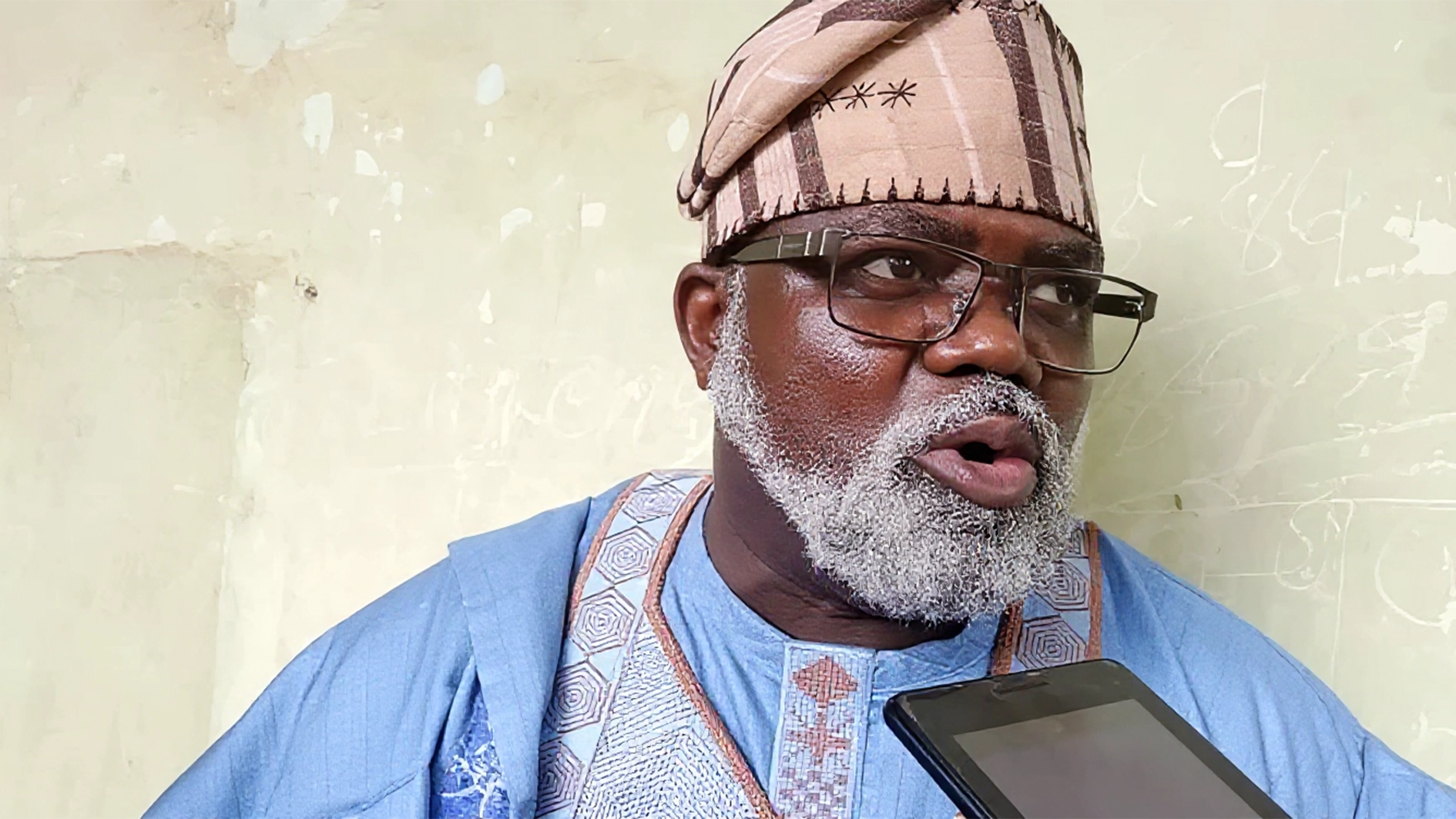
Niyi Aborisade is a United Kingdom–based human rights lawyer and a chieftain of the opposition Peoples Democratic Party (PDP). In this interview with ROTIMI AGBOLUAJE, he alleges that the ruling All Progressives Congress (APC) is deliberately fuelling crises within opposition parties to weaken them ahead of the 2027 general elections.
What are your worries over opposition parties in Nigeria, especially the Peoples Democratic Party that you belong to?
Yes, I remain a registered and committed member of the PDP. However, honesty compels me to say that the current condition of the party makes it extremely difficult to predict what the future holds. Political parties are meant to be vehicles for ideology, organisation, and the aggregation of collective interests. Unfortunately, what we are witnessing within the PDP today is a party struggling to define its identity, protect its internal cohesion, and defend its very existence. As someone who believes strongly in opposition politics as a pillar of democracy, I find the situation both troubling and painful.
Are you suggesting that the PDP may not survive its current crisis?
I would not claim prophetic powers. Politics is fluid, and unexpected turnarounds are always possible. However, when one assesses the situation objectively, the PDP is facing what can only be described as an existential crisis.
The level of internal conflict within the party is unprecedented. Factions are entrenched, reconciliation efforts have failed repeatedly, and trust among leaders has virtually collapsed. The situation has deteriorated to the point where many party members, both at grassroots and elite levels, are genuinely uncertain whether the PDP will even be able to present candidates in future elections.
That degree of uncertainty is fatal for any political organisation. A party that cannot guarantee participation in elections cannot mobilise members, raise funds, or inspire confidence among voters. If urgent and sincere corrective steps are not taken, the PDP risks being imposed.
What is driving this crisis within the PDP?
At the heart of this crisis are personal ambition and internal power struggles. The PDP is being eroded from within by individuals who have prioritised personal interests over the collective survival of the party. Rather than seeing the party as a common platform to be nurtured and protected, some actors see it merely as a ladder for personal advancement.

Once their ambitions are threatened, they are willing to burn down the entire house. What makes this particularly tragic is that several mechanisms were available to de-escalate the conflict. Even the intervention of the Independent National Electoral Commission (INEC), through a roundtable discussion convened by its chairman, failed to produce a meaningful resolution. Instead of compromise, the parties involved hardened their positions.
The crisis has now moved from internal party organs to the Court of Appeal and may eventually reach the Supreme Court. When the fate of a political party becomes dependent on prolonged litigation, anyone building their political future on that platform is taking an enormous gamble.
What can the party leadership do at this stage to salvage the situation?
The solution is simple in theory but difficult in practice: genuine compromise. Politics is not warfare; it is a form of negotiation. For the PDP to survive, its leaders must consciously abandon ego, bitterness, and the obsession with winning every internal battle. Both sides in the conflict must be willing to lose something in order to save the party.
There is no court judgment, propaganda strategy, or media campaign that can substitute for internal reconciliation. Litigation may produce technical victories, but it cannot produce unity. Only dialogue, concessions, and good faith can do that. If compromise does not happen, the PDP will continue to sink, regardless of how many court orders are obtained or how many press statements are issued.
How do you view the suspension and counter-suspension involving former Rivers State Governor, Nyesom Wike?
Frankly, it has descended into a political farce.On one side, certain party organs claim they have suspended Wike. On the other hand, Wike claims he has suspended those who purportedly suspended him. Meanwhile, he continues to declare himself a PDP member while openly working against the party’s interests.
He is reportedly organising parallel party structures, supporting rival platforms, and threatening alternative conventions. This creates confusion not just within Rivers State but across the national party structure. At this stage, it is genuinely difficult to predict who will prevail or who will blink first. But beyond the visible drama, there is a deeper philosophical and political dimension to this crisis.
What do you mean by that?
There is a Yoruba proverb that captures the situation perfectly: “The insect dancing on the surface of water is responding to the drummer beneath.” In this case, the dancer, the visible actor, is obvious. But the drummer, the one setting the rhythm, is hidden yet extremely powerful. The persistence and intensity of this crisis suggest that it is being sustained by forces beyond the PDP itself.
Who, in your view, is the drummer?
The drummer is not difficult to identify. It is the All Progressives Congress (APC)-led Federal Government, particularly the Presidency. Considering the facts, Nyesom Wike is a serving minister under the APC government.
Governor SiminalayiFubara of Rivers State has defected to the APC. Governors in Plateau and Taraba states have also moved from the PDP to the APC.
If you tally the number of governors who have defected from the PDP to the APC, and not to any other party, you begin to see a clear and deliberate pattern. This is not a coincidence; it is orchestration.
Are you suggesting that there is an attempt to destroy or deregister the PDP?
The objective may not be outright destruction, but it is certainly to weaken the PDP to the point where it can no longer function as a credible opposition force, especially at the presidential level.
If the PDP were to adopt President Bola Tinubu as its candidate tomorrow, peace would return instantly. Some states might even be conceded to the party. But as long as the PDP insists on contesting elections independently and offering Nigerians an alternative candidate, there will be no peace.
The strategy appears to be one of suffocation rather than annihilation, starving the opposition of unity, leadership, and confidence until it collapses under its own weight.
Does this mean Nigeria is drifting toward a one-party state?
Not completely. Other political parties still exist, and some remain vocal. However, what we are witnessing is a dangerous concentration of power.That said, the irony is that Nigerians are deeply dissatisfied with the APC-led government. Economic hardship is widespread. Infrastructure is deteriorating. Roads across the country are in deplorable condition. The naira has depreciated catastrophically, from about ₦500 to the British pound in 2023 to nearly ₦2,000 today.
Inflation is crushing households. People are hungry, frustrated, and angry. This dissatisfaction explains the ruling party’s aggressive effort to absorb opposition governors; it is a defensive strategy born out of fear, not strength.
But do governors actually decide elections in Nigeria?
No, they do not. Governors may control resources, but they do not control hunger, anger, or collective consciousness. It is the people who revolt, not governors. Nigerians are not even particularly happy with many of their governors, regardless of party affiliation. Ultimately, it is the electorate that determines the country’s direction. When people are pushed beyond their endurance, money and intimidation lose their effectiveness. History, both Nigerian and global, confirms this truth.
Do opposition parties have the financial capacity to challenge the APC?
There comes a point when money loses its power. Even the Bible tells us that money failed in Egypt. Hunger is stronger than money. Nigerians are approaching a stage where survival instincts outweigh inducements. People are becoming less willing to sell their votes because the consequences of bad governance are now too severe and too personal.
If electoral manipulation becomes too blatant, it could trigger widespread unrest. I am not advocating violence, but history teaches us that prolonged suffering eventually produces resistance.
What if Nigerians still chose the ruling party despite the hardship?
That is democracy. The people have the right to choose, even to choose suffering. But I genuinely believe Nigerians want positive change. They voted the APC into power based on promises of transformation. What they are experiencing now is a transformation in the wrong direction—rising poverty, worsening insecurity, collapsing public services, and declining living standards.
Do you see the current opposition parties overcoming internal ambitions and then uniting?
It will be extremely difficult, but it is absolutely necessary. If opposition parties are serious about defeating the APC, they must suppress personal ambitions in favour of a collective strategy. Consensus-building is not optional; it is essential.This is precisely why there is a deliberate effort to sow discord within opposition parties, so that unity never materialises. The PDP’s current fragmentation is a textbook example of this strategy at work.
Can you substantiate your claim that the ruling party is interfering in opposition affairs?
You do not need to be a genius to see what is happening. Nigeria has never practised politics this way before.
This level of interference is unprecedented. The President may deny it, but the facts speak louder than denials. Everyone involved knows what is happening, including those perpetuating it.
Let us turn to the Supreme Court ruling on Rivers State. What is your assessment?
The judgment is deeply troubling. The court’s interpretation of Section 305 of the Constitution, which deals with emergency powers, contains serious contradictions. While the court affirmed the President’s authority to declare a state of emergency, it failed to establish robust safeguards against abuse. This creates a dangerous precedent, especially for states governed by opposition parties.
Why do you consider this dangerous?
History provides the answer. Emergency powers in Nigeria have often been applied selectively.
In 1962, former Prime Minister Tafawa Balewa declared a state of emergency in the Western Region during a political crisis, removed elected officials, and installed an Administrator. Chief Obafemi Awolowo rightly described it as a gross abuse of power.
Yet, far more severe crises, such as the Boko Haram insurgency or widespread banditry, did not attract emergency declarations. Instead, a political dispute in Rivers State did.
By the time the Supreme Court delivered its judgment, the emergency had expired, Governor Fubara had been reinstated, and had defected to the APC, rendering the case largely academic.
Does the ruling constitute a binding precedent?
I do not believe it should. The internal contradictions within the judgment weaken its authority as precedent.
Future courts must exercise caution and avoid relying on it blindly. Emergency powers must never be normalised as political weapons.
Are you optimistic about Nigeria’s future?
Nigeria will survive this crisis. But democracy must be protected. Emergency powers must never replace elections. Economic hardship must never be ignored. The will of the people must remain supreme. Ultimately, the people will decide the future of Nigeria, and no amount of power, money, or intimidation can permanently silence them.

