 Follow Us on Google News


 Follow Us on Google Discover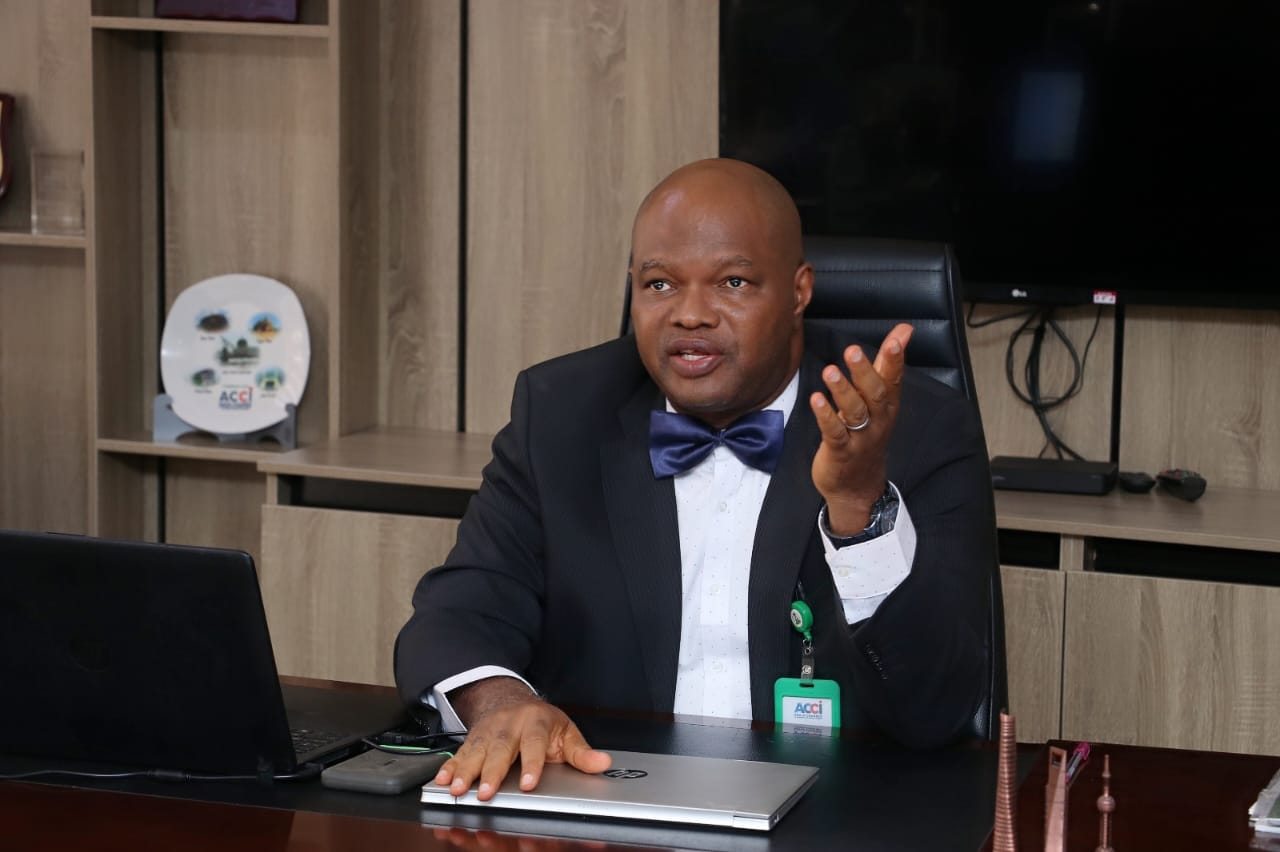
•‘Political distortions, insecurity form major setbacks’
The Director General of the Abuja Chamber of Commerce and Industry (ACCI), Agabaidu Jideani, said Nigeria’s economy will achieve modest growth this year.
Jideani said the growth would be led by non-oil contributions if it maintains its current momentum. He observed that security remains a critical concern, with the 2026 budget allocating about N5.41 trillion for modernisation, intelligence and counterterrorism.
“Overall, 2026 offers grounds for guarded optimism. If political distractions are minimised and reforms entrenched, Nigeria could transition from recovery to inclusive growth, with stronger external buffers and improved living standards,” he said.
He said that, though risks from elections, lingering insecurity and global factors persist, policy consistency positions the nation for performance surpassing recent years.
“As President Bola Tinubu’s administration consolidates gains, the year’s outcomes will hinge on balancing ambition with pragmatism in an increasingly politicised landscape,” he said. Recalling some of the achievements made in 2025, the ACCI DG said Nigeria stands at a critical juncture.

“Building on the macroeconomic stabilisation achieved in 2025, marked by moderating inflation, naira stability and improved oil output, the year ahead promises a cautious shift toward sustained growth,” he said.
The Central Bank of Nigeria (CBN) had projected gross domestic product (GDP) growth of 4.49 per cent, up from an estimated 3.89 per cent in 2025, driven by structural reforms in foreign exchange, taxation and energy sectors.
External reserves are expected to climb to $51.04 billion, supported by remittances, non-oil exports and crude production averaging 1.71 million barrels per day.
As a pre-election year, Jideani said, political manoeuvring could introduce distractions, potentially affecting governance focus, business confidence and security efforts.
“Exchange rate reforms, initiated in 2023 with the unification of the forex market, have yielded relative stability by late 2025. The naira closed the year around N1,445–N1,465 per dollar in official channels, with parallel market rates narrowing to N1,480–N1,495 amid festive remittances and reduced demand. This stability should lower import costs, bolster disinflation, and enhance investor sentiment, though global volatility remains a risk,” he said.
He noted that inflation, a persistent challenge, has eased dramatically in 2025, increasing the confidence level. Headline rates dropped to 14.45 per cent in November, the lowest in years, courtesy of bountiful harvests, naira appreciation and tight monetary policy.
The ACCI boss, however, said election-related fiscal spending could spark upward pressures, underscoring the need for disciplined policy coordination.
“Compounding these dynamics are the new tax reforms, which fully commenced on January 1, 2026. The four Acts (Nigeria Tax Act, Tax Administration Act, Nigeria Revenue Service Act, and Joint Revenue Board Act) aim to broaden the revenue base, digitise compliance and offer relief to low-income earners and small businesses.
He added: “Proponents insist the changes will stimulate growth and inclusivity, with nearly 98 per cent of workers and 97 per cent of SMEs facing reduced or zero liabilities.
“Despite controversies over alleged post-passage alterations (prompting National Assembly re-gazetting) the government maintains implementation is sacrosanct. Short-term compliance burdens may arise, but long-term gains in non-oil revenue could expand fiscal space for infrastructure and social programs.”
According to him, historical patterns suggest populist spending and delayed reforms to avert backlash, potentially fueling inflation or policy inconsistencies during the election year.

