 Follow Us on Google News
 Follow Us on Google Discover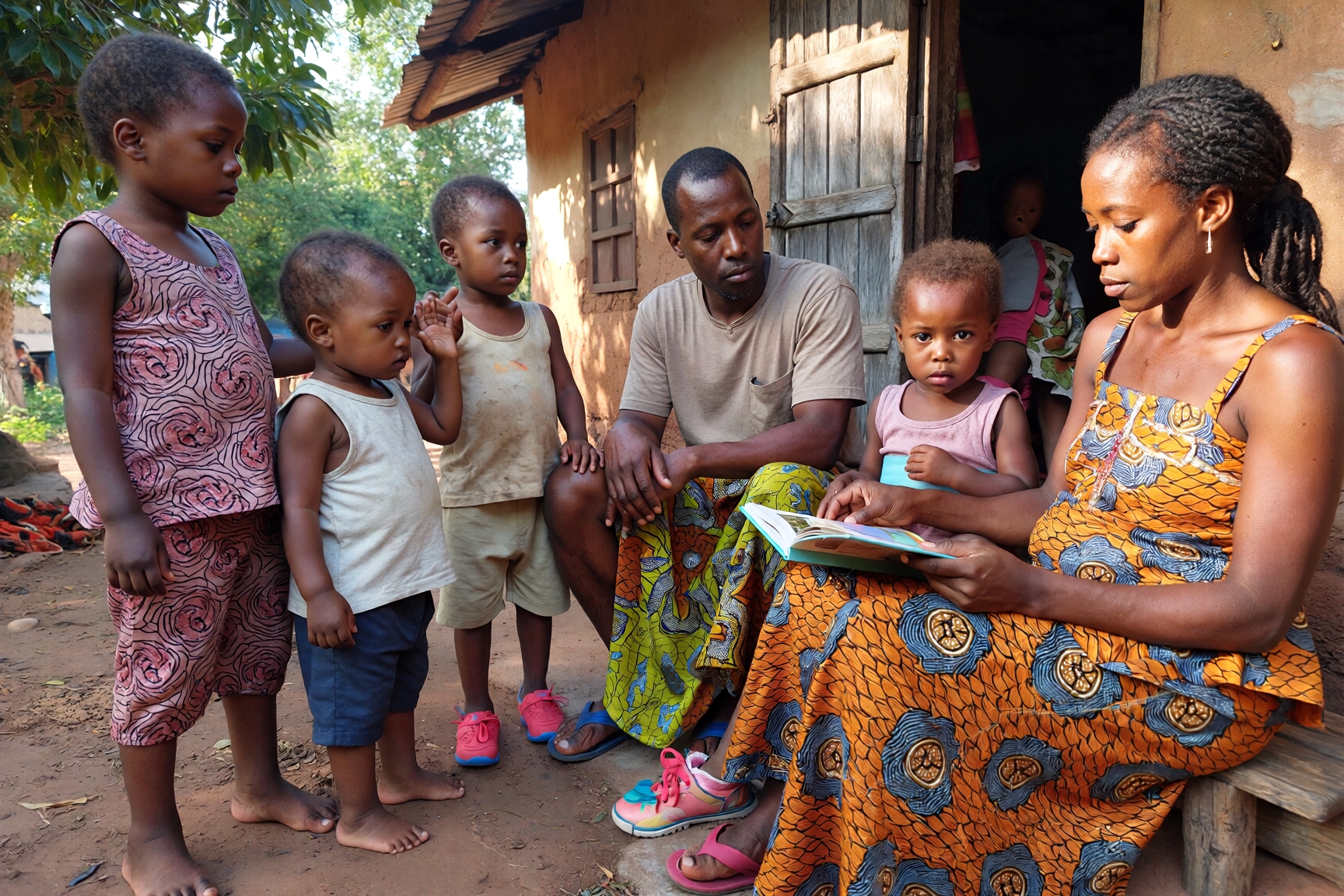
Hello there. I’ve spent months researching Nigeria’s fertility patterns, and after years of covering demographic shifts across this remarkable nation, I’m ready to share what I’ve discovered about family sizes in Africa’s most populous country.
The average Nigerian woman has 4.8 children according to the latest 2024 Nigeria Demographic and Health Survey, marking a notable decline from 5.3 children in 2018. This shift represents more than just numbers on paper. It tells the story of changing attitudes, improving healthcare access, and evolving economic realities across Nigeria’s diverse regions.
I remember interviewing Mrs Amina Hassan in Kano three years ago. She had seven children, whilst her daughter planned for just three. That generational contrast captures something essential about Nigeria’s demographic transformation.
How Many Children Do Nigerians Have on Average?
The current fertility rate of 4.8 children per woman places Nigeria among Africa’s most fertile nations, ranking eighth globally in 2020 with a rate of 5.31. But these national averages mask fascinating regional variations that reveal the true complexity of Nigerian family planning.
Northern Nigeria maintains significantly higher fertility rates than the South. In states like Sokoto and Yobe, women average six to seven children, whilst Lagos records closer to 3.6 children per woman. The National Bureau of Statistics reports document these persistent regional divides, shaped by education access, economic opportunities, and cultural traditions.
Religious and cultural beliefs play tremendous roles. In conservative Muslim communities across the North, larger families remain prized as blessings and economic assets. Children represent future labour, old-age security, and the continuation of family lineages.

Meanwhile, in Southern urban centres like Port Harcourt and Ibadan, smaller families of two to four children have become increasingly common. Economic pressures, education costs (ranging from ₦500,000 to ₦2 million annually per child in private schools), and career ambitions reshape family planning decisions.
The urban-rural divide matters enormously. According to Guardian Nigeria’s analysis, rural women average 5.4 children compared to 3.6 for their urban counterparts. This gap reflects access to family planning services, educational opportunities, and economic incentives for smaller families.
Education transforms fertility patterns dramatically. Women with no formal education average 6.2 children, whilst those with secondary education or higher average 3.5 children. The correlation between female education and family size cannot be overstated.
I’ve watched this transformation unfold in communities across Plateau, Kaduna, and Ogun states. Families increasingly balance tradition with economic reality, weighing the blessing of many children against the costs of providing quality education, healthcare, and opportunities.
What is the Average Family Size in Nigeria?
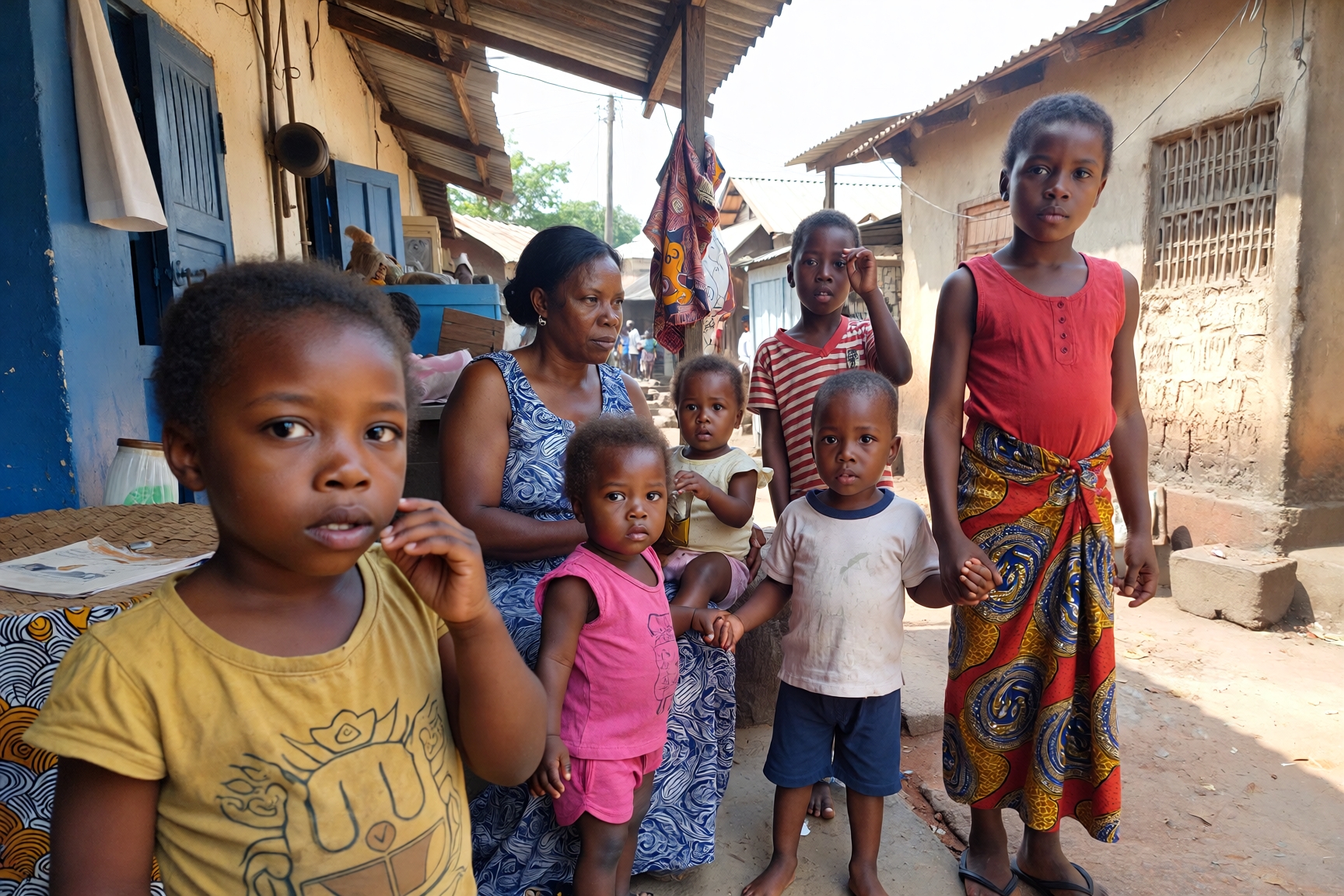
Nigerian household composition extends well beyond nuclear parents and children. The average Nigerian household contains 5.6 people, but this figure tells only part of the story.
Extended family structures remain the norm rather than exception. A typical household might include parents, their children, elderly grandparents, unmarried adult siblings, nieces, nephews, and sometimes distant relatives seeking educational or economic opportunities in urban areas.
In my research across Anambra, I encountered households of 12 to 15 people sharing compound accommodation. This wasn’t poverty (though it sometimes reflected economic constraints) but cultural preference. The Igbo concept of “umunna” (extended family) manifests in these living arrangements.
Northern households frequently exceed Southern ones in size. Polygamous marriages, permitted under Islamic law, create larger family units. A man with three wives, each bearing four children, heads a household of 15 before counting extended family members.
Lagos presents a different picture. Space constraints, rent costs (₦800,000 to ₦3 million annually for modest flats), and modern lifestyles favour smaller nuclear families. Young couples increasingly establish independent households rather than compound living.
The dependency ratio creates significant economic pressures. With 44% of Nigerians under age 14, working adults support numerous dependents. This demographic reality shapes everything from household budgets to national economic planning.
Seven Steps to Understanding Nigerian Family Sizes
Understanding why Nigerians have particular family sizes requires examining multiple interconnected factors:
- Assess regional cultural contexts – Northern communities value larger families as social capital and religious blessing. Southern regions increasingly prioritise education quality over quantity. Recognise that Sokoto’s average of seven children differs vastly from Lagos’s 3.6 children for specific cultural, economic, and educational reasons.
- Examine economic incentives and constraints – In agricultural communities, children provide essential labour for farming, particularly during planting and harvest seasons. Urban professionals face opposite incentives where each additional child costs ₦5 million to ₦15 million to raise from birth through university. These economic calculations directly influence family planning decisions.
- Evaluate healthcare access patterns – States with robust primary healthcare networks and family planning services report lower fertility rates. Federal Ministry of Health data shows modern contraceptive use among married women increased from 12% in 2018 to 15% in 2023, still far below the 27% target for 2030.
- Consider educational attainment levels – Female education serves as the single strongest predictor of family size. Women with secondary education or higher delay marriage, space births more effectively, and have smaller families. Investing in girls’ education yields measurable demographic dividends within one generation.
- Account for religious and traditional beliefs – Islamic communities often interpret large families as divine blessings not to be artificially limited. Traditional African beliefs valuing lineage continuation, ancestor veneration, and communal child-rearing support higher fertility. These deeply held convictions resist change even amid economic pressures.
- Map urban versus rural dynamics – Urban residence correlates with smaller families due to higher living costs, better education access, and greater exposure to family planning information. Rural areas maintain traditional larger families, though this gap narrows as mobile connectivity spreads family planning awareness.
- Track generational shifts in attitudes – Nigerians under 35 increasingly favour smaller families than their parents’ generation. This attitudinal shift, driven by education, economic realities, and global connectivity, signals continued fertility decline even as total population grows.
Rather like watching a river change course, these demographic transformations occur gradually yet reshape entire landscapes of Nigerian society.
Understanding Regional Fertility Patterns Across Nigeria
| Region/State | Average Number of Children | Total Fertility Rate | Modern Contraceptive Use | Key Factors |
|---|---|---|---|---|
| Lagos (Southwest) | 3.6 | 3.8 | 28% | High education, urbanisation, economic constraints |
| Kano (Northwest) | 6.8 | 7.1 | 4% | Traditional values, early marriage, limited family planning |
| Anambra (Southeast) | 4.2 | 4.5 | 18% | Education emphasis, Christian values, entrepreneurial culture |
| Rivers (South-South) | 4.5 | 4.7 | 16% | Mixed urban-rural, oil economy influence |
| Sokoto (Northwest) | 7.2 | 7.4 | 3% | Conservative Islamic values, lowest contraceptive use |
| Plateau (North-Central) | 5.1 | 5.3 | 12% | Diverse ethnic groups, transitional fertility patterns |
This table illustrates how geography, culture, religion, and economic factors create vastly different fertility landscapes within one nation. Lagos women average less than half the children of their Sokoto counterparts, demonstrating that “Nigerian family size” encompasses wildly varying realities.
Modern contraceptive use correlates directly with fertility rates. States with single-digit contraceptive usage maintain fertility above seven children per woman, whilst Lagos’s 28% usage corresponds with Nigeria’s lowest regional fertility.
How Many Children is the Average?
Defining “average” requires confronting Nigeria’s tremendous diversity. The statistical mean of 4.8 children per woman masks the reality that millions of Nigerian women have two or three children whilst millions of others have seven, eight, or more.
The median number of children (the middle value when all women are ranked) sits around four children for women who have completed their childbearing years. But this figure shifts dramatically based on age cohorts, education levels, and geographic location.
Young educated women in Abuja, Ibadan, or Port Harcourt increasingly plan families of two to three children. Their mothers’ generation averaged five to six. Meanwhile, in Yobe, Jigawa, and Zamfara, young women still commonly have six or more children, similar to their mothers’ patterns.
This generational variation matters enormously for projections. If younger cohorts maintain lower fertility preferences, Nigeria’s total fertility rate will continue declining even as absolute population numbers grow due to the large youth population entering reproductive years.
I’ve interviewed dozens of Nigerian couples about their ideal family size versus their actual children. Economic realities often force adjustments. Couples planning for four children might stop at two due to job losses, education costs, or housing constraints.
The concept of “ideal family size” surveys reveals fascinating gaps between preferences and reality. Research published by Guardian Nigeria shows 30% of Nigerian men and 21% of women prefer four or more children, but health, economic, and social barriers prevent many from achieving these preferences.
Unmet family planning needs affect 21% of Nigerian women. These women wish to delay or prevent pregnancy but lack access to effective contraception. Closing this gap would further reduce fertility rates whilst respecting individual reproductive choices.
What is the Average Number of Kids Per Family in Africa?
Nigeria’s 4.8 children per woman sits above the African average of 4.1 children but below the highest fertility rates on the continent. Niger leads globally with 6.9 children per woman, followed by Somalia, Chad, and Mali, all exceeding six children.
Southern African nations including South Africa (2.3 children), Botswana (2.7 children), and Namibia (3.2 children) demonstrate that African fertility rates span an enormous range. Economic development, urbanisation, and female education drive these variations across the continent.
East Africa shows fascinating patterns. Kenya reduced fertility from 8.1 children per woman in 1978 to 3.4 today through aggressive family planning campaigns and girls’ education investments. Ethiopia similarly dropped from 7.0 in 1990 to 4.1 currently.
West Africa, Nigeria’s region, maintains higher fertility than the continental average. Ghana averages 3.9 children, Senegal 4.4, and Benin Republic 4.8. Cultural similarities, Islamic influence in northern regions, and economic development levels create comparable patterns.
North Africa presents the lowest regional fertility. Tunisia (2.2 children), Algeria (2.9 children), and Morocco (2.4 children) approach European levels through decades of education investment, economic development, and government family planning programmes.
The demographic transition theory suggests societies progress from high birth and death rates through declining death rates (causing population explosions) to eventual low birth and death rates. Africa occupies various stages across this spectrum.
Nigeria finds itself in the second stage with declining child mortality (from 132 deaths per 1,000 live births in 2018 to 110 in 2024) but still-elevated fertility. The nation’s challenge involves accelerating through this transition to avoid unsustainable population growth.
Sub-Saharan Africa accounts for the world’s highest fertility rates. Whilst global averages dropped 51% from 4.7 children per woman in 1970 to 2.3 today, African rates declined less dramatically. This divergence creates concerns about resources, infrastructure, and economic opportunities for burgeoning populations.
The Economic Realities Shaping Nigerian Family Sizes
Money talks, even in matters as personal as family size. The cost of raising children in Nigeria has skyrocketed over the past decade, fundamentally altering family planning calculations.
Consider basic expenses. Antenatal care, delivery, and postnatal care cost ₦150,000 to ₦500,000 in private facilities, though public hospitals offer cheaper alternatives. Infant formula runs ₦8,000 to ₦12,000 per tin, with babies consuming roughly three tins weekly.
Education expenses dwarf other costs. Primary school fees range from ₦50,000 annually in modest private schools to ₦1.5 million in elite Lagos institutions. Secondary schools demand ₦200,000 to ₦3 million yearly. University education requires ₦500,000 to ₦2 million annually, multiplied by four to five years.
Multiply these figures by five children versus two, and the economic rationale for smaller families becomes crystal clear. A couple earning ₦500,000 monthly (above Nigeria’s median income) faces impossible mathematics with four or more children.
Healthcare costs create additional pressures. Children require routine immunisations, antimalarial treatments (malaria affects 60% of Nigerian children), and occasional emergencies. Private healthcare costs ₦5,000 to ₦50,000 per visit, whilst quality government facilities remain overcrowded and undersupplied.
Yet economic logic doesn’t always govern fertility decisions. In rural agricultural communities, children represent economic assets rather than liabilities. They provide farm labour, fetch water, tend livestock, and contribute household income from young ages.
The informal economy, employing 80% of Nigerians, creates different calculations than formal employment. Street vendors, artisans, and small-scale traders integrate children into their businesses, viewing large families as diversified income sources rather than financial drains.
Unemployment and underemployment paradoxically correlate with both higher and lower fertility. Jobless youth delay marriage and childbearing, whilst others pursue traditional large families absent career considerations. These contradictory patterns coexist across Nigeria’s complex economic landscape.
Cultural and Religious Influences on Fertility Decisions
Walk through any Nigerian market, church, or mosque, and you’ll hear spirited debates about proper family size. These discussions reveal deep cultural and religious currents shaping reproductive choices.
Islamic teachings in Northern Nigeria generally encourage procreation. The Prophet Muhammad’s saying “Marry and multiply” holds tremendous influence. Children represent blessings, and limiting fertility can appear to question divine providence. This theological framework supports higher birth rates in predominantly Muslim states.
Christianity’s influence varies. Catholic doctrine opposes artificial contraception, though many Nigerian Catholics use family planning methods regardless. Protestant denominations generally accept contraception, and Pentecostal churches increasingly preach responsible family planning as good stewardship.
Traditional African beliefs value lineage continuation above almost everything. Ancestors require descendants to maintain their memory and perform necessary rituals. Childlessness or small families risk severing these vital connections, creating profound anxiety beyond rational economic calculations.
The value of male children specifically influences fertility. In communities practising patrilineal inheritance, couples continue childbearing until producing sufficient sons. This preference extends childbearing years and increases total fertility, particularly when daughters arrive first.
Polygamy, practised across much of Northern Nigeria, inherently supports higher total fertility. A man with three wives naturally fathers more children than his monogamous counterpart, even if each wife bears similar numbers. This institution, deeply embedded in Islamic and traditional cultures, sustains elevated fertility.
Social pressure operates powerfully. Nigerian society celebrates large families whilst sometimes stigmatising childlessness or small families. Relatives question couples with only one or two children, asking when more will arrive. This communal interest in fertility creates pressure beyond individual preferences.
Yet attitudes shift, especially among educated younger Nigerians. Churches and mosques increasingly discuss responsible parenthood, child spacing, and maternal health. Religious leaders promoting family planning gain traction, especially when framing it as protecting mothers’ health and ensuring children’s wellbeing.
Government Policies and Population Management
Nigeria’s government faces an enormous challenge. With current fertility rates, the population will surge from today’s 226 million to nearly 400 million by 2050. Managing this growth requires coordinated policy responses that respect cultural values whilst promoting sustainable development.
The National Population Commission launched revised policies in 2022 emphasising expanded family planning access, birth spacing, and maternal health. These initiatives aim to reduce fertility to replacement level (2.1 children per woman) by 2050, though achieving this target seems optimistic given current trends.
Modern contraceptive prevalence must increase dramatically. The national target of 27% usage by 2030 requires tripling current rates of 15% among married women. This demands massive investments in healthcare infrastructure, training providers, and overcoming cultural resistance.
Government spending on reproductive health remains inadequate. Though the 2024 NDHS shows improvements, with antenatal care coverage at 63% and skilled birth attendance at 46%, these figures lag regional comparators like Ghana and Rwanda. Budget allocations haven’t matched demographic realities.
State governments vary wildly in commitment. Lagos, Rivers, and other Southern states actively promote family planning through public campaigns and subsidised contraceptives. Northern states often provide minimal support, reflecting conservative constituencies opposed to aggressive family planning promotion.
The unmet need for family planning (21% of women) represents low-hanging fruit for policy interventions. Women already wanting to delay or prevent pregnancy simply need access to services. Addressing this gap requires neither cultural persuasion nor attitudinal change but merely healthcare provision.
Education policy offers perhaps the highest leverage. Keeping girls in school through secondary level reliably reduces fertility by 1.5 to 2 children per woman. Yet 14.8 million Nigerian children remain out of school, disproportionately girls in Northern states.
Looking Toward Nigeria’s Demographic Future
Nigeria stands at a crossroads. The path chosen over the next two decades will determine whether the nation’s population becomes a dividend or a disaster.
The optimistic scenario sees continued fertility decline, accelerating economic development, and a “demographic dividend” as working-age populations swell relative to dependents. Countries like South Korea and Singapore rode similar transitions to prosperity.
The pessimistic scenario involves sustained high fertility overwhelming healthcare, education, and job creation capacities. This path leads to deepening poverty, environmental degradation, and potential social instability as frustrated youth populations exceed opportunities.
Most likely, Nigeria will muddle through with regional variations creating divergent futures. Southern states follow paths toward lower fertility and higher development whilst Northern states struggle with rapid population growth and limited resources. This bifurcation already shapes Nigerian politics and economics.
Climate change complicates everything. Rising temperatures, erratic rainfall, and desertification pressure Northern agricultural communities whilst coastal erosion threatens Southern populations. These environmental stresses will influence migration patterns, economic opportunities, and ultimately family size decisions.
Technology offers unexpected possibilities. Mobile phone penetration reaches 85% of Nigerians, creating unprecedented access to information about family planning, healthcare, and education. Digital health services could bypass traditional infrastructure constraints.
The government’s commitment remains questionable. Grand policy pronouncements rarely translate into sustained funding and implementation. Without genuine political will backed by budgetary commitments, demographic targets will remain aspirational rather than achievable.
What Nigerians Can Do About Family Size
Individual choices aggregate into national outcomes. Each Nigerian couple’s fertility decision contributes to collective demographic destiny. What practical steps can individuals take?
Start with honest family planning conversations. Couples should discuss desired family size, spacing preferences, and economic capacities before marriage and throughout childbearing years. These difficult conversations prevent unplanned pregnancies and ensure both partners share reproductive goals.
Seek quality reproductive healthcare. Visit family planning clinics to explore contraceptive options matching your health needs and preferences. Modern methods range from pills and injections to implants and IUDs, offering choices for every circumstance. Healthcare providers can explain effectiveness, side effects, and proper usage.
Invest in daughters’ education. Educated girls become educated women who have healthier, better-spaced, and smaller families. School fees represent investments in future grandchildren’s wellbeing, not just individual advancement.
Challenge cultural pressures respectfully. When relatives question your family size, explain your reasoning calmly without attacking their values. You can honour tradition whilst making different choices for your circumstances.
Budget realistically for children’s needs. Calculate education, healthcare, food, clothing, and housing costs before expanding your family. Financial planning isn’t cold-hearted; it’s responsible parenting ensuring you can genuinely provide for each child.
Many Nigerian families navigate these decisions beautifully, balancing cultural values with economic realities. I’ve watched couples thoughtfully plan families of three children instead of six, ensuring each child receives excellent education and opportunities whilst maintaining cultural connections and family pride.
Conclusion: Understanding How Many Kids the Average Nigerian Has
So, how many kids does the average Nigerian have? The current answer stands at 4.8 children per woman, down from 5.3 in 2018. But this national average conceals extraordinary diversity across regions, religions, education levels, and economic circumstances.
Northern women average six to seven children whilst Southern urban women bear three to four. Educated women have half the children of their uneducated counterparts. Rural families exceed urban ones by nearly two children per woman.
These patterns reflect Nigeria’s complex demographics, shaped by cultural traditions valuing large families, religious teachings encouraging procreation, economic realities making children both assets and liabilities, education’s transformative effects on fertility, and inadequate access to family planning services for millions.
The path forward requires respecting individual reproductive choices whilst expanding access to education, healthcare, and family planning. Nigeria can reduce fertility rates sustainably only through empowering women, improving economic opportunities, and providing quality services, not through coercive policies or cultural imperialism.
As someone who’s researched these patterns across Sokoto to Lagos, I’ve learned that Nigerian families balance competing pressures remarkably thoughtfully. They honour tradition whilst adapting to modernity, value children whilst recognising constraints, and navigate between ideal preferences and practical realities.
The average Nigerian family size will continue declining. Whether it drops to 3.5 or 4.0 children by 2030 depends on policy choices, resource investments, and millions of individual decisions. Either way, Nigeria’s demographic transformation shapes everything from economic prospects to political stability to environmental sustainability.
Key Takeaways:
- Nigeria’s current average of 4.8 children per woman varies dramatically by region, education, and urban-rural status, with Northern states averaging 6-7 children whilst Southern urban areas record 3-4 children per woman
- Female education remains the single strongest predictor of family size, with educated women having 2.7 fewer children than uneducated counterparts, making girls’ education the highest-leverage demographic intervention
- Expanding family planning access to meet the 21% unmet need whilst respecting cultural values offers immediate fertility reduction without requiring attitudinal changes, though achieving the 2030 target of 27% modern contraceptive use requires tripling current efforts
The demographic future Nigeria builds through today’s fertility decisions will determine prosperity or poverty for generations. My hope rests with the thousands of Nigerian couples I’ve met who thoughtfully plan families balancing tradition with economics, culture with opportunity, and blessings with responsibility. You might also want to read about what Nigerian family life is like to understand how these family sizes shape daily experiences, or explore how children live in Nigeria to see the realities facing Nigerian youth in different family structures.
Frequently Asked Questions About How Many Kids the Average Nigerian Has
How many children does a typical Nigerian woman have?
The typical Nigerian woman has 4.8 children according to the 2024 Nigeria Demographic and Health Survey, representing a decline from 5.3 children in 2018. However, this average masks significant regional variation, with Northern women averaging 6-7 children whilst Southern urban women bear 3-4 children.
Why do Northern Nigerians have more children than Southerners?
Northern Nigerians have more children due to earlier marriage ages (often before 18), lower female education rates, limited contraceptive access (3-4% usage versus 28% in Lagos), and cultural-religious values favouring large families as blessings. Economic structures relying on agricultural labour also incentivise more children to work family farms.
What is the ideal family size for Nigerian couples?
Research shows 30% of Nigerian men and 21% of women prefer four or more children as ideal, though actual preferences vary widely by education and location. Educated urban couples increasingly cite 2-3 children as ideal due to economic constraints, whilst rural and Northern couples often prefer 5-7 children reflecting traditional values.
How does education affect how many children Nigerian women have?
Education dramatically reduces fertility, with women holding secondary education or higher averaging 3.5 children compared to 6.2 children for women with no formal education. Each additional year of schooling delays first birth, increases contraceptive knowledge, improves economic opportunities, and strengthens decision-making power within marriages.
What percentage of Nigerian couples use family planning?
Only 15% of currently married Nigerian women use modern contraceptives according to 2024 data, up from 12% in 2018 but far below the national target of 27% by 2030. An additional 21% of women have unmet family planning needs, wanting to delay or prevent pregnancy but lacking access to effective methods.
How much does it cost to raise a child in Nigeria?
Raising a child from birth through university in Nigeria costs ₦5 million to ₦15 million depending on location and school choices, with annual expenses including education (₦50,000 to ₦3 million), healthcare (₦100,000 to ₦500,000), food, clothing, and housing. These escalating costs increasingly influence family size decisions among middle-class couples.
What is Nigeria’s population growth rate?
Nigeria’s population grows at approximately 2.5% annually, having declined from 2.6% in 2019 due to falling fertility rates. Despite fertility declines, absolute population growth remains high due to Nigeria’s young population structure, with 44% under age 14 entering reproductive years.
Which Nigerian state has the highest fertility rate?
Sokoto state records Nigeria’s highest fertility rate at approximately 7.2-7.4 children per woman, followed closely by Yobe, Jigawa, and Zamfara states in the Northwest. These states also show the lowest modern contraceptive use (3-4%) and highest rates of early marriage among girls.
How many children do Lagos residents have on average?
Lagos residents average 3.6 children per woman, Nigeria’s lowest regional fertility rate reflecting high urbanisation, education levels, living costs, and contraceptive access (28% modern method usage). Economic constraints including rent averaging ₦800,000 to ₦3 million annually strongly incentivise smaller families.
What is the average Nigerian household size?
The average Nigerian household contains 5.6 people, though this includes extended family members beyond nuclear parents and children. Northern polygamous households often exceed 10-15 people, whilst Southern urban nuclear families average 4-5 members reflecting different family structures and living arrangements.
How does Nigeria’s fertility rate compare to other African countries?
Nigeria’s 4.8 children per woman sits above the African average of 4.1 but below the highest continental rates like Niger (6.9), Somalia (6.4), and Chad (6.2). Southern African nations like South Africa (2.3) and Botswana (2.7) show much lower fertility due to earlier demographic transitions.
Will Nigeria’s fertility rate continue declining?
Nigeria’s fertility rate will likely continue declining gradually to approximately 4.0-4.5 children per woman by 2030 based on current trends in education expansion, urbanisation, and contraceptive access. However, sustained declines require increased government investment in girls’ education, family planning services, and maternal healthcare infrastructure.

